
How Viv Grannell brought Sonic’s Green Hill Zone into the LEGO fan community
A retrospective on the fan idea behind set 21331, and the small design choices that turn a fast-moving game into a scene you can rearrange.
A fan idea with a familiar landscape
Some LEGO projects begin with a building; Viv Grannell’s began with a world in motion. The UK fan designer’s Sonic Mania concept reached 10,000 supporters on LEGO Ideas, and LEGO announced its selection for development in February 2021. The original inspiration was the Green Hill Zone environment in the 2017 game.
That history matters when looking back at set 21331. It was a community-supported proposal before it became a product. Fans were responding to someone’s interpretation of a shared favorite, with a recognizable place doing much of the work of introducing the idea.
From a digital route to a tabletop scene
The finished Sonic the Hedgehog — Green Hill Zone set arrived in January 2022 with 1,125 pieces. LEGO designer Sam Johnson worked on translating the concept into the released model. This article is a retrospective based on official materials, rather than a hands-on review.
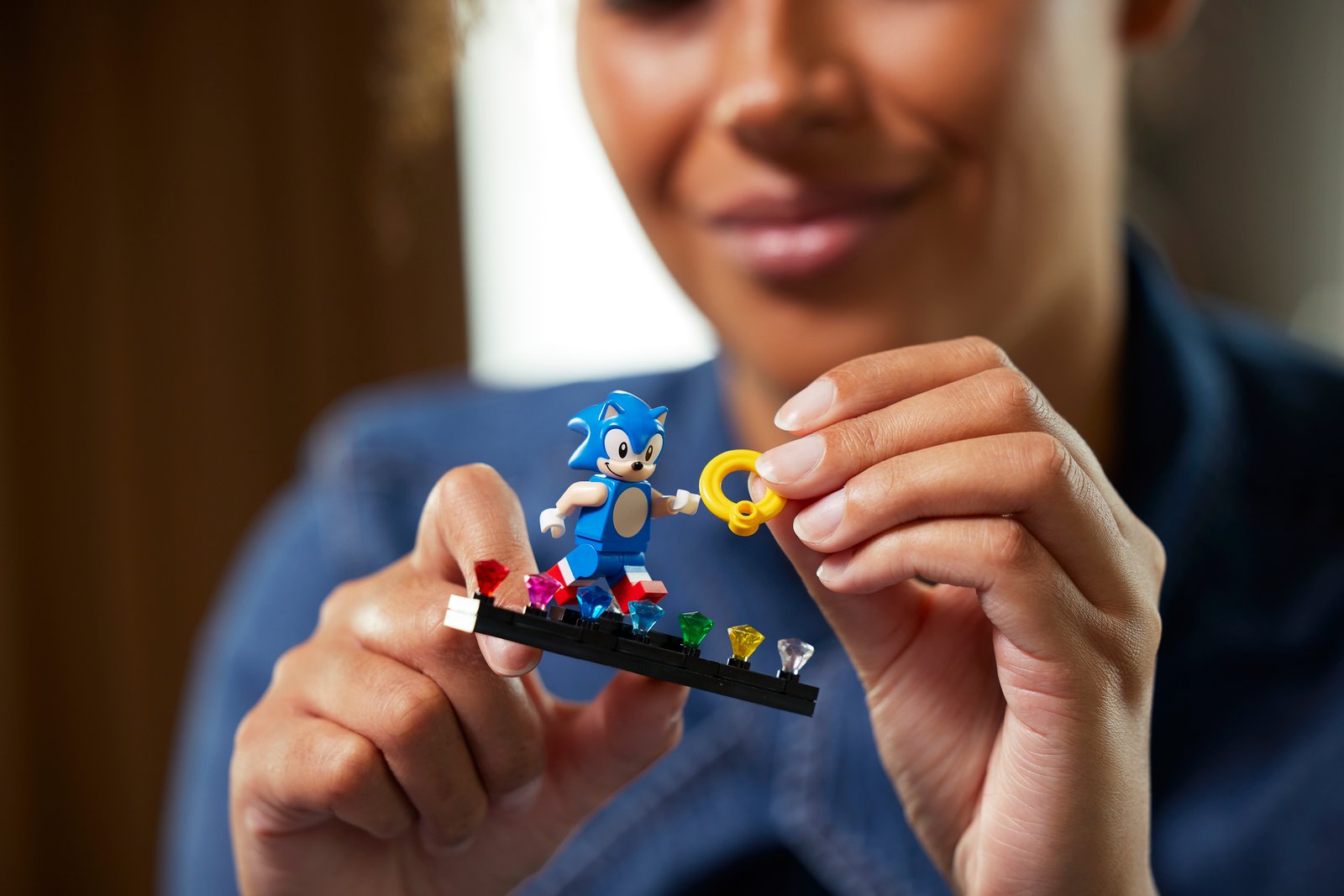
LEGO’s account of the finished design describes separate modules, a spring-loaded platform and TV-shaped item boxes. It also distinguishes the Sonic minifigure from the brick-built enemies. Those distinctions are useful: this is a small environment with several kinds of construction, not simply a collection of conventional minifigures.
A level you can read at a glance
Our reading of the design is that its strongest feature is the implied route. Platforms, rings and the loop invite your eye to move through the landscape, even when nothing is actually moving. The recognizable scenery carries the energy of the game into a static display.
That offers an interesting challenge for fan builders making their own game-inspired scenes. Decide where a character would enter, what would interrupt their journey and where the viewer should look next. A clear route can make a modest model feel purposeful without requiring a huge base or a large cast. These are design observations, not instructions for extending this particular set.
Leave room for the person who plays
The official launch also describes a lever that sends a character upward and gems collected during the build. Such small interactions help connect the display to the actions that made its source memorable.
For a community building activity, start with bricks already on hand and choose one action from a favorite game: crossing a gap, finding an object or reaching a lookout. Build the surroundings that make that action understandable. Grannell’s story is a reminder that enthusiasm becomes especially compelling when another person can immediately see what they might do inside the world you have made.
Reporting checked October 17, 2026. Plans and programs can change; follow the linked organizations for current information.