
Truman Cheng’s Starry Night turns the direction of a brushstroke into a building decision
How the fan behind LEGO Ideas 21333 found a connection between stacked plates and van Gogh’s painted sky.
The useful discovery was in the pieces
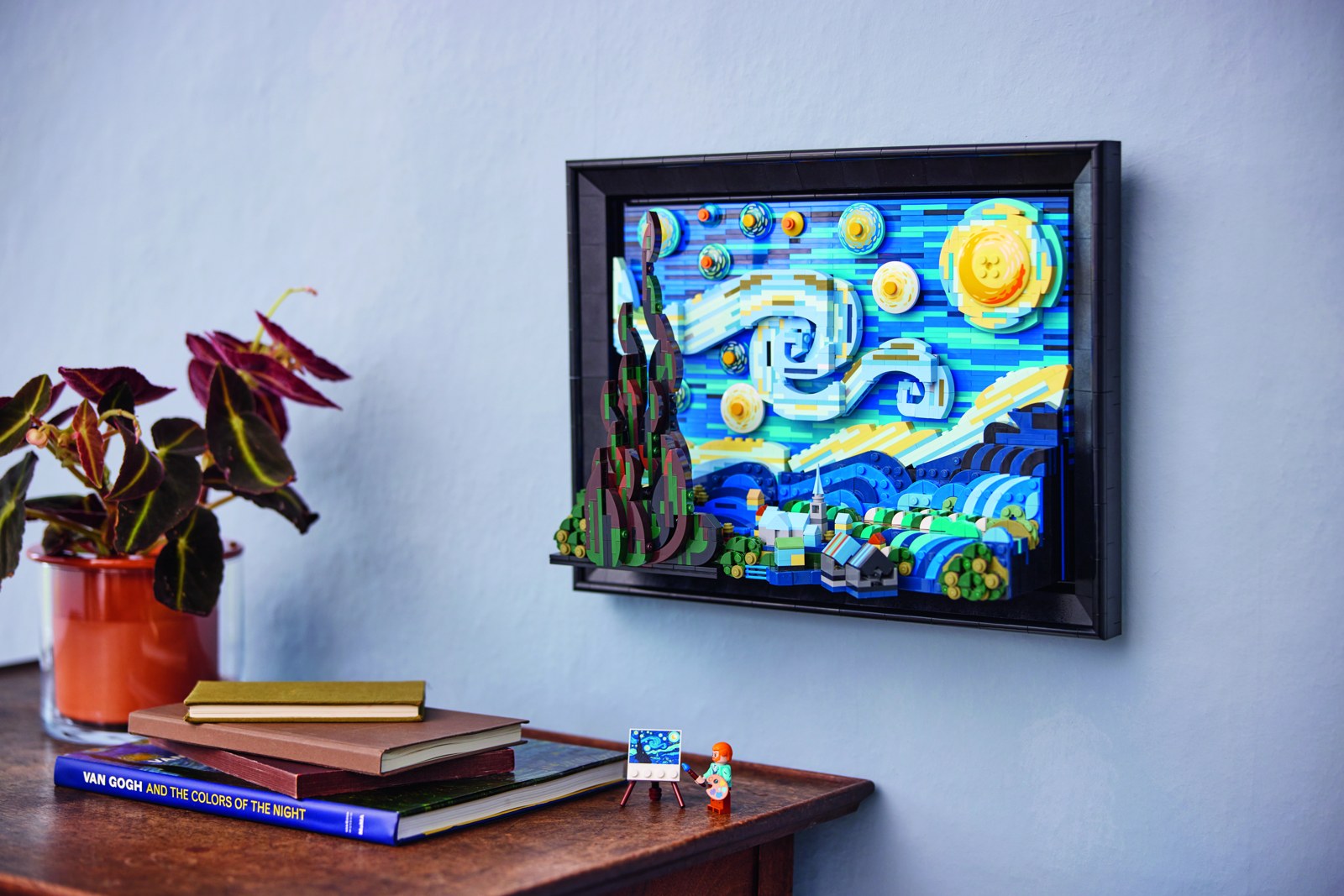
Truman Cheng had wanted to recreate Vincent van Gogh’s The Starry Night before he found the technique that made the project click. In LEGO’s published fan-designer interview, he recalls noticing that stacked plates of different lengths resembled the painter’s brushwork. The observation gave a familiar LEGO element a different job: suggesting the marks of a brush.
The Hong Kong-based creator’s project became LEGO Ideas 21333. Looking back at it now, the interesting community story is not only that fans supported a painting made from bricks. It is that a small experiment with the material helped determine the form of the whole model.
A painting becomes an object with depth
LEGO announced the set in May 2022 in collaboration with The Museum of Modern Art in New York. Its subject is van Gogh’s 1889 painting, and the model interprets the scene in three dimensions. In the release, Cheng explains that reproducing the changing direction of the brushwork around the moon and clouds called for bracket and clip elements.
That gives a useful way to examine the design: look for changes of direction, not just changes of color. A patch of blue can describe a flat area; the way the pieces are arranged can suggest the sky moving across it.
Read the scene from more than one angle
Cheng identifies the diorama effect as his favorite part in LEGO’s interview. Our interpretation is that this depth asks viewers to do something slightly different from looking at a printed reproduction. Move to one side, then return to the front, and consider which shapes overlap. The relationship between foreground and background becomes something physical.
This is an observation exercise, not a claim about the historical painting’s intended meaning. Keep a reproduction of the original nearby if you want to compare them. The differences are part of the interest: a LEGO interpretation has its own edges, thickness and connections.
Try the technique before choosing the subject
For builders inspired by Cheng’s process, our suggestion is to start with a tiny sample rather than another full painting. Arrange a handful of plates into parallel lines, then vary their lengths and spacing. Photograph the result from the front and from an angle. Decide whether it suggests water, wind, fur or something else entirely.
That experiment does not require copying his composition. It borrows a broader creative habit: notice what the pieces already suggest, then develop a subject around that discovery. A fan model can begin with a grand ambition, but sometimes its most useful starting point is one small arrangement on the table.
Reporting checked October 3, 2026. Plans and programs can change; follow the linked organizations for current information.