
The LEGO Fender’s larger headstock helped choose its musical era
Tomáš Letenay’s fan-designed Stratocaster became a 1970s-inspired model, with an amplifier whose interior rewards a closer look.
A guitar idea with a personal starting point
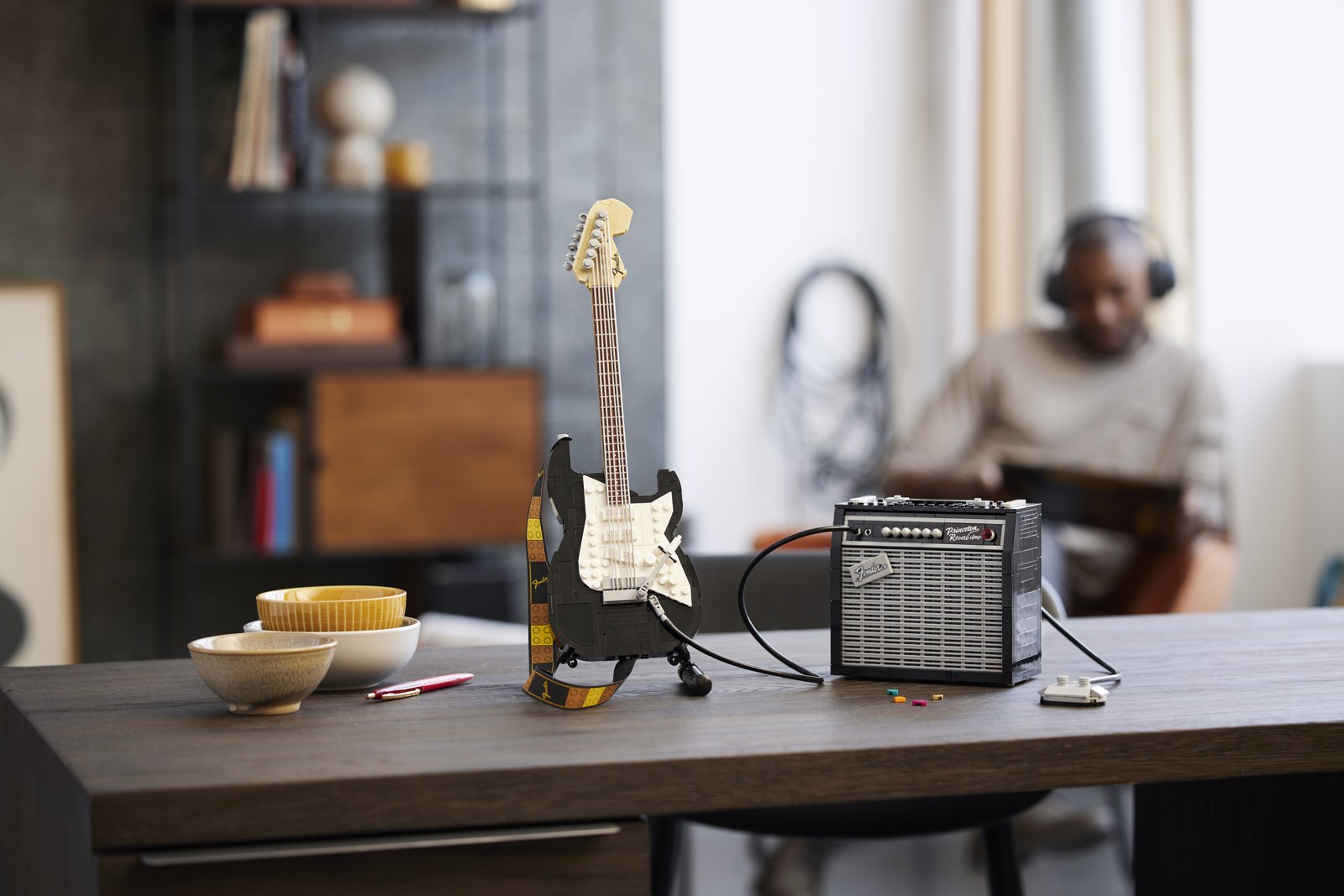
LEGO Ideas Fender Stratocaster, set 21329, reached stores on October 1, 2021. Its starting concept came from Slovak fan designer Tomáš Letenay, who entered the Music to Our Ears competition. In the announcement, he recalled playing electric guitar as a teenager and wanting a Stratocaster of his own.
Five years later, the model offers an engaging example of how a personal interest can turn into a carefully observed LEGO object. The guitar is recognizable at a glance, but its development also involved choices about proportion, era and the equipment that belongs beside an instrument.
A part constraint became a period detail
In LEGO’s published design feature, Design Manager Samuel Liltorp Johnson explains that the available brick scale made a smaller headstock difficult. The team chose the larger headstock associated with a 1970s Stratocaster. That gave a practical construction constraint a historically appropriate solution.
Our interpretation is that this is one of the most interesting details in the set’s story. A replica is not simply a real object made smaller. The builder must decide which version of the subject works convincingly with the available shapes. Here, the choice of period and the choice of construction supported each other, helping the finished silhouette remain recognizable.
The amplifier has an inside story
The same design feature describes the accompanying ’65 Princeton Reverb amplifier as a build with an outer body and a speaker assembly fitted inside. It also points to a small circuit-board representation and a LEGO jewel used for the indicator light. These are brick-built details, not claims that the model is an operating amplifier.
For display, our suggestion is to occasionally look beyond the guitar’s front view and explore what the amplifier adds to the scene. The smaller companion model introduces another kind of construction, with a box-like exterior surrounding internal details. That contrast gives the set more variety than a guitar silhouette alone would provide.
Choose the color that tells your story
The 1,074-piece set includes the parts to build the guitar in red or black, along with six strings, tuning pegs, a tremolo arm and a folding stand. The choice is between versions of one guitar; the lifestyle photography should not be taken to promise two complete instruments from one box.
Our display preference would be to choose the finish that connects most strongly with your own musical memories, then leave the amplifier enough space to read as its companion. This is a source-based retrospective, not a hands-on sound or build review. Letenay’s idea is appealing because the object can mean something different to each fan while remaining a specific, thoughtfully interpreted instrument.
Reporting checked October 7, 2026. Plans and programs can change; follow the linked organizations for current information.