
LEGO Titanic 10294 makes its engineering visible in three sections
A retrospective look at the ocean-liner model’s interior access, moving engines and the difference between seeing a ship and understanding a model.
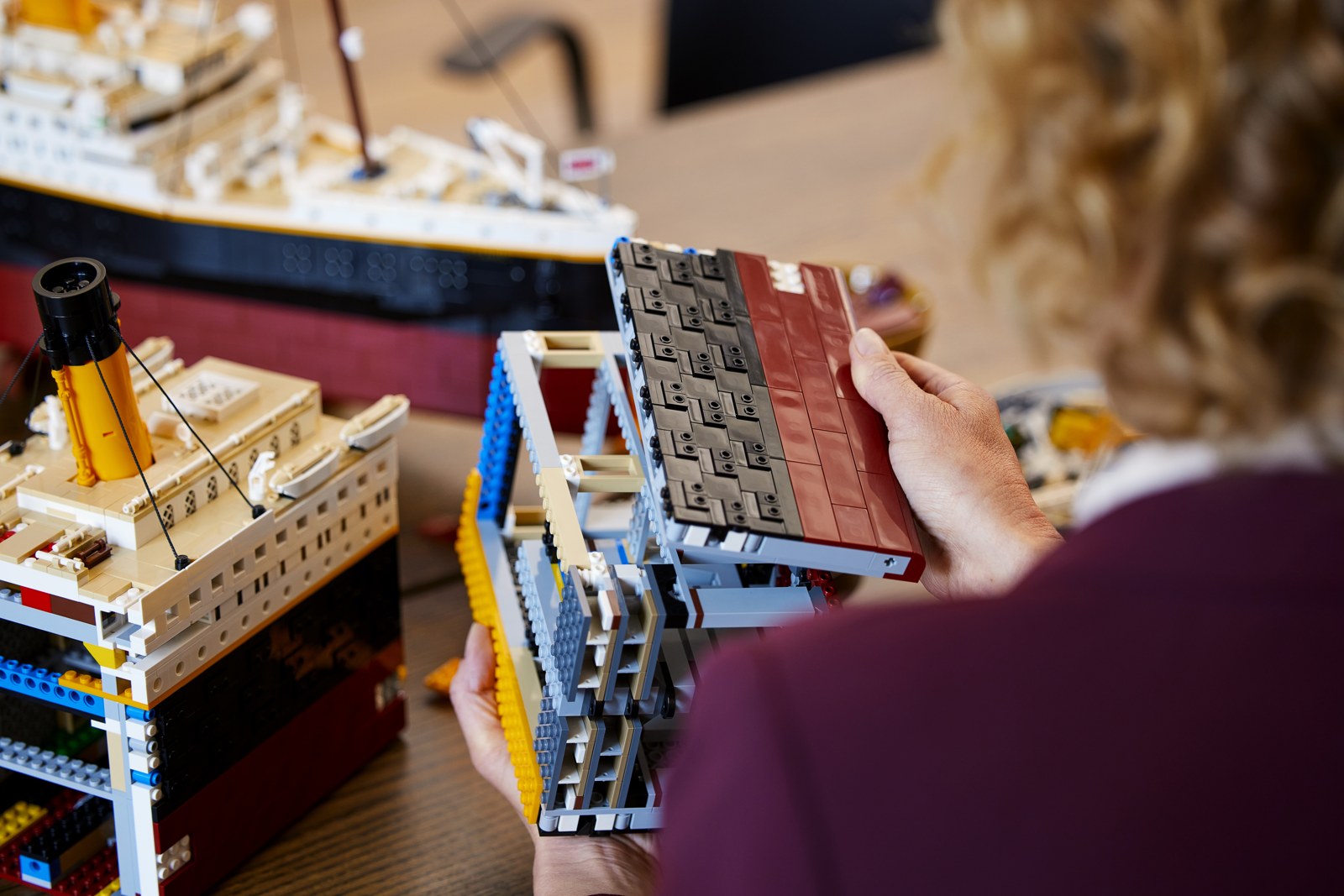
A long model with a closer story inside
LEGO announced Titanic 10294 in October 2021, with general release that November. The 9,090-piece model measures approximately 135 centimeters long, 44 high and 16 wide. Designer Mike Psiaki described consulting century-old blueprints as part of the development process.
The size naturally attracts attention, but the more interesting design question is what happens after that first impression. Our reading is that the model offers two scales of interest: the outline of an ocean liner from across the room, and a collection of smaller spaces and mechanisms when examined closely.
Three sections open the interior to view
The official product description identifies a 1:200 model divided into three sections. The cutaway views reveal rooms including a dining space, staircase, boiler room and passenger cabins. Turning the propellers makes the piston engines move, while the tension of the line between the masts can be adjusted.
These are documented features, not results from our own build. They give a useful reason to examine the ship beyond its exterior: a visitor can connect something visible outside with a mechanism or space inside. The model’s design makes that relationship available without permanently hiding the interior behind a completed hull.
A mechanism can explain a relationship
Our interest in the linked engines and propellers is the opportunity to follow motion. For a visitor, seeing two parts move together can prompt a better question than simply asking how many pieces the model contains. Which part is connected to which, and what is being represented by that movement?
A LEGO mechanism is still an interpretation. It should not be treated as a complete technical account of the real ship’s machinery. For a curious builder, though, a simplified relationship can become a starting point for further reading, with the physical model keeping the original question easy to remember.
Make room for a thoughtful visit
This is a model of a ship whose history includes great loss, so a display benefits from a respectful description rather than a claim that the real story was simply glamorous. A short note can distinguish the historical vessel from the LEGO interpretation and identify the model’s scale.
Our practical suggestion is to decide whether the display will mostly show the complete silhouette or occasionally open for a closer look. Leave a suitable clear area for that second mode and follow the instructions when handling sections. The most rewarding conversation may happen when someone notices a small interior detail and asks what it represents.
Reporting checked October 10, 2026. Plans and programs can change; follow the linked organizations for current information.