
Thomas Poulsom’s LEGO Birds began with a visitor to the vegetable patch
A robin on a garden fork helped launch the fan project that became LEGO Ideas Birds, a three-species collection with an unusually personal origin.
A familiar bird, seen differently
Before LEGO Ideas Birds became a three-model collection, Thomas Poulsom noticed a robin during a break from digging a vegetable patch. In LEGO’s November 2014 interview, he recalled the bird landing on his garden fork. He built a LEGO robin that evening.
Poulsom, a gardener and tree surgeon, had previously concentrated on vehicles and other manufactured objects. Trying to capture an organic shape offered a different challenge. He went on to make seven European birds and shared them on Flickr, one each day. A follower encouraged him to take the project to LEGO Ideas.
This retrospective follows that documented origin and the resulting set, rather than presenting it as a new release.
Three birds with individual identities
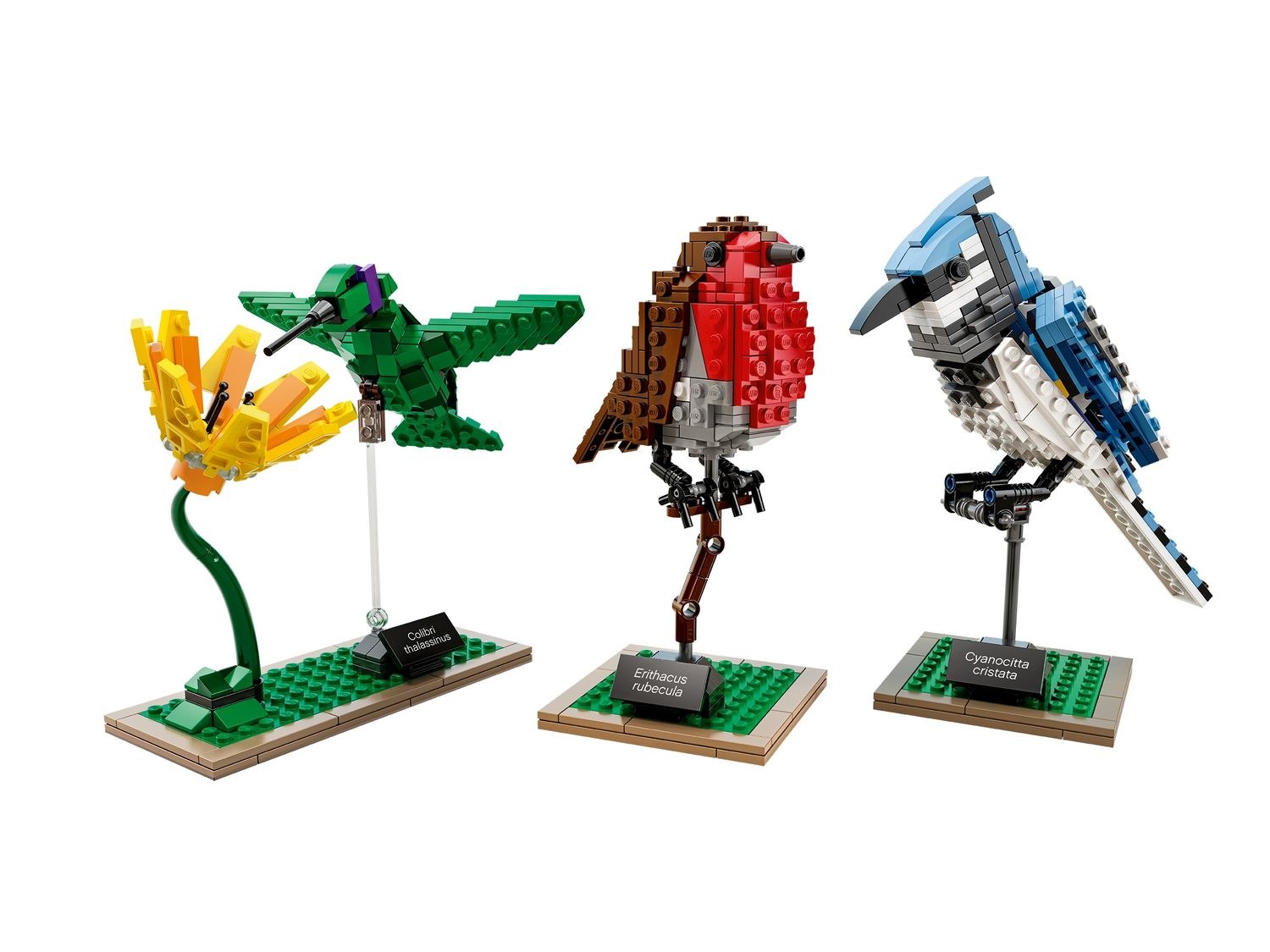
Birds 21301 contains 580 pieces and models a robin, blue jay and hummingbird. LEGO’s product page identifies the set as retired. Each bird has its own presentation stand and scientific-name label, and the hummingbird is accompanied by a flower. Three booklets provide building instructions and information about the birds and their creator.
The official image makes their differences immediately visible: the robin’s rounded body and red breast, the jay’s blue crest and longer outline, and the green hummingbird poised beside its flower. The display is unified by the bases without forcing each animal into the same pose.
The community saw a collection developing
Poulsom told LEGO that he continued adding species while promoting the project and credited supporters for helping it grow. His path was not simply one finished model followed by a request for votes. People could watch an interest become a larger body of work.
That distinction is worth celebrating. An enthusiast’s sustained attention gives a project an identity: in this case, the recognizable subject was birdlife, while each new model offered a different shape to explore.
A display that invites recognition
Our reading of the finished collection is that the labels change the conversation around it. A visitor can begin by recognizing a bird, then look at how that recognition survives the conversion into angular plastic pieces. The models make room for both natural-history curiosity and appreciation of the building choices.
The garden anecdote is especially appealing because it keeps the origin close to everyday experience. A short pause outdoors became a personal project, and other builders helped it find a wider audience. That journey remains the strongest reason to revisit Birds: it records a moment when noticing something familiar carefully led to something wonderfully shareable. This is source-based commentary, with no claim of hands-on testing.
Reporting checked October 21, 2026. Plans and programs can change; follow the linked organizations for current information.