
When LEGO Technic reached into a real excavator’s cab
Revisiting the 2019 demonstration that paired the Liebherr R 9800 model with a separate LEGO mechanism operating full-size controls.
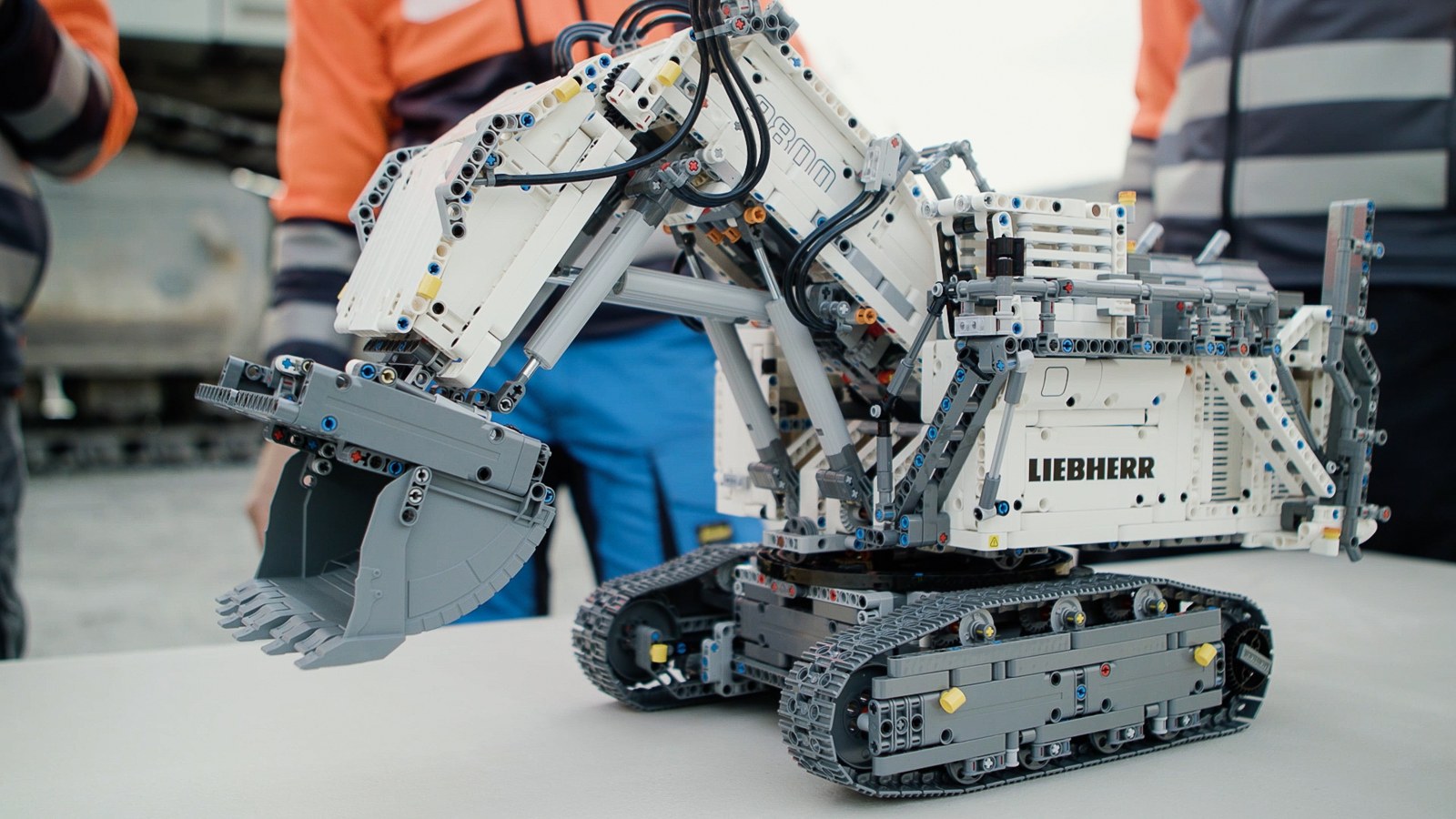
Two different builds shared one demonstration
In October 2019, LEGO marked the arrival of Technic set 42100 with an unusual demonstration. A separate Technic mechanism was installed inside a full-size Liebherr R 9800 excavator’s cab to operate its controls through the CONTROL+ app. The retail model and the cab mechanism were different builds.
That distinction is what makes the story worth revisiting. The large excavator was not powered by small LEGO motors in place of its own machinery. The Technic construction acted on the controls. Our reading is that the demonstration made a connection between model engineering and the movements an operator normally supplies.
The challenge was reaching the controls
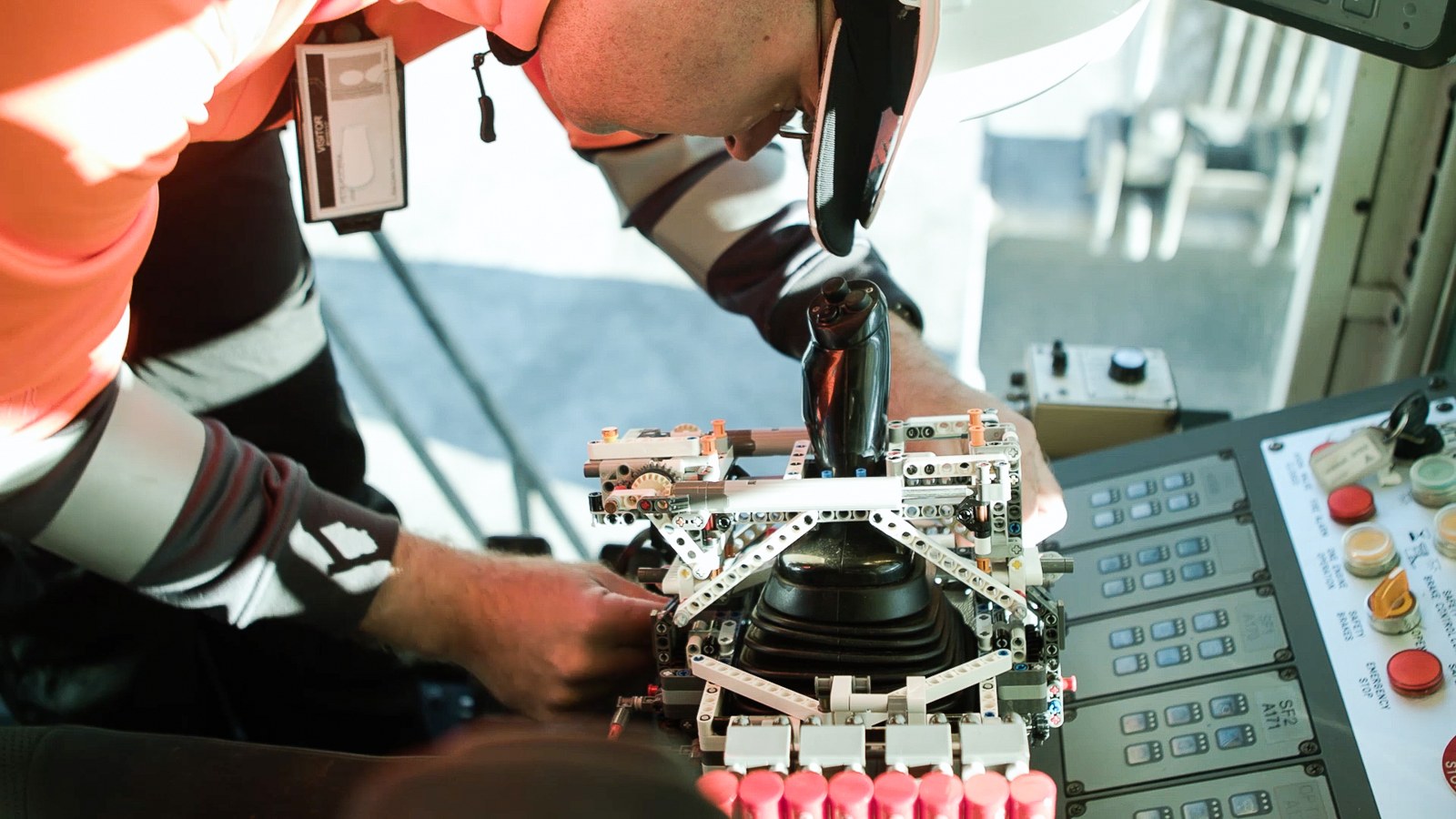
LEGO’s announcement describes mechanical arms and legs mounted around the cab’s controls and pedals. Its factsheet records 2,763 elements and 207 hours spent designing, building and testing the mechanism. It used three XL motors, four L motors and two smart hubs—the same power configuration listed for the retail excavator model.
Those numbers describe the demonstration apparatus, not the contents or expected building time of the boxed set. In our view, the interesting design task was translating small motor movements into the particular motions needed at each control. The campaign photograph showing a mechanism around a cab control makes that physical relationship easier to understand than the phrase “remote-controlled excavator” alone.
The model explored the machine at a different scale
Liebherr’s October 2019 release describes the 4,108-piece model and confirms its October 1 launch. The documented app functions included driving, rotating the upper structure and moving the boom and bucket. The company also records providing machine access and logistical support during the partnership and campaign.
For a fan looking back, the model and demonstration answer different questions. The model recreates recognizable excavator actions in a smaller mechanism. The cab installation uses a construction system to interact with controls on the real machine. Both make motion visible, but they should not be conflated into a claim that the boxed set contains the full-size control apparatus.
A useful engineering story to revisit
The appeal of this demonstration lies in its clearly defined task: make an existing control move in a required way. Our suggested way to study the photographs is to identify the contact point first, then follow the mechanism back toward its motor. That puts the purpose of the construction ahead of its complexity.
This is a retrospective of a professionally arranged 2019 campaign, not instructions for operating heavy equipment or a current app-compatibility review. It remains an enjoyable piece of Technic history because it takes a familiar building question—how can one movement produce another?—and places it in an unexpectedly large setting.
Reporting checked October 7, 2026. Plans and programs can change; follow the linked organizations for current information.