
A replica in Billund helped LEGO find the yellows in Van Gogh’s Sunflowers
Designer Stijn Oom had a life-size reference from Amsterdam and a material the painter never used: a petal that casts its own shadow.
A painting travels by proxy
When LEGO designer Stijn Oom was working on Sunflowers, the Van Gogh Museum sent a full-size replica of its painting to Billund. Oom describes the loan in LEGO’s account of the collaboration. A painting made in Arles in 1889 could stay in the museum’s care; the design team could still study the relationships between colors at the scale at which the artist had placed them.
Scale matters particularly here. The vase, the wall and the flowers occupy much of the same yellow territory. Isolate a single petal and the question sounds simple: which yellow brick matches? Place that brick next to its neighbors and a different question emerges: can the eye still tell where the flower ends?
What the shadows contribute
Oom says the designers limited how far the forms projected. They could have built a vase of freestanding flowers, but their subject was a painting of a vase. A viewer needs to be able to read the arrangement from the front. A sunflower that looks splendid on its own could spoil the picture if it hid too much of the bloom behind it.
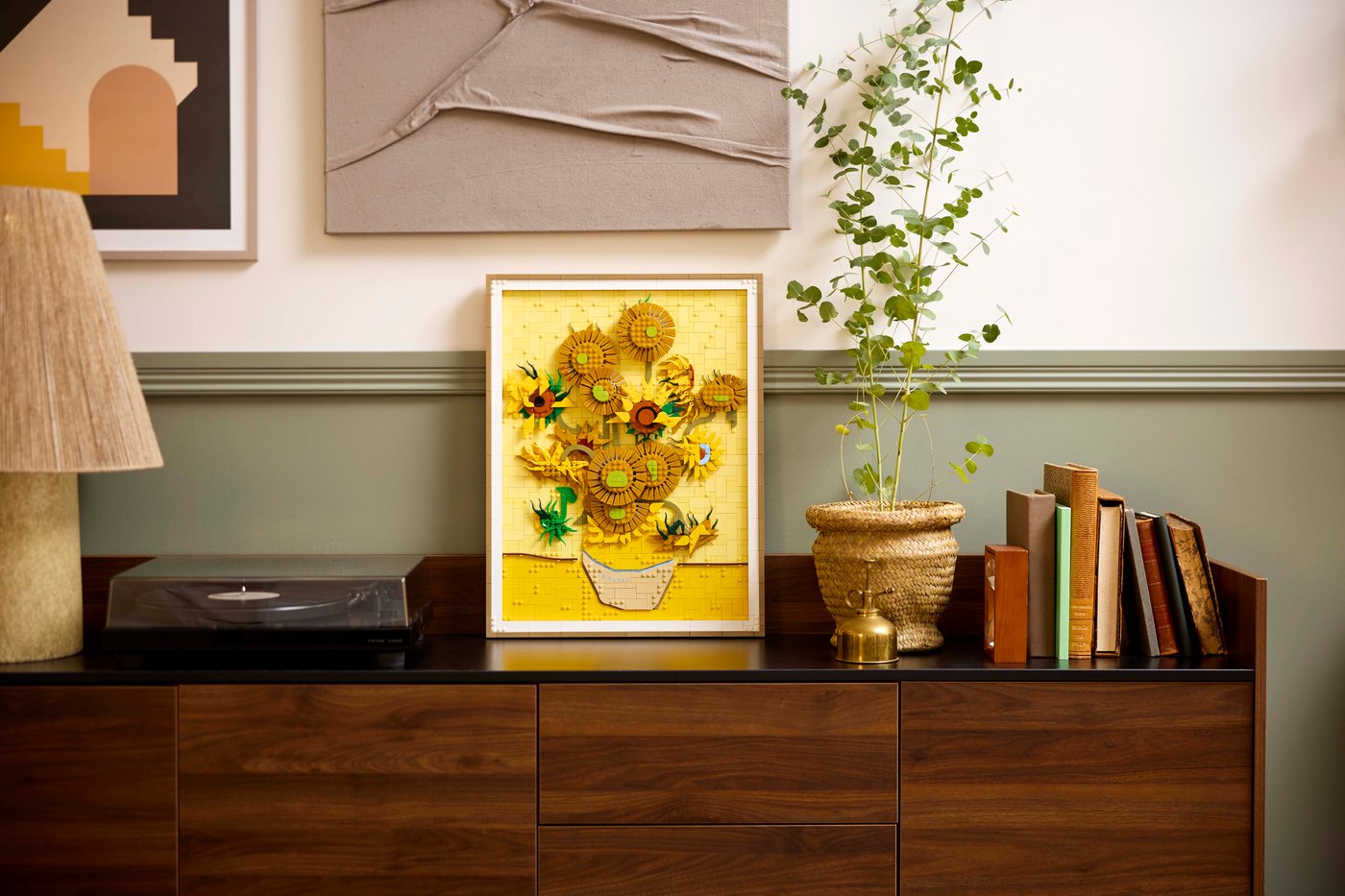
Bricks offered a different way to separate adjacent colors. A raised edge throws a real shadow rather than requiring a darker mark on the surface. In LEGO’s photograph of the framed work, several petals appear to lift clear of the field behind them. Their outlines do some of the work a change of pigment might otherwise have to do.
The flowers remain adjustable
LEGO’s January 2025 announcement describes sixteen flowers with adjustable petals and a removable frame. One addition is easy to overlook: a tile carrying Van Gogh’s signature. Its flat surface is a useful counterpoint to all those lifting and turning petals. A mark that belongs on the painted surface stays there.
Even hung against a wall, the finished model has two kinds of light to reckon with. There is the light suggested by the arrangement of yellow, brown and green pieces, which stays fixed. Then there is the light in the room, which changes where the shadows of the petals fall. No change of bricks is necessary for the second bouquet to shift.
Reporting checked November 11, 2026. Plans and programs can change; follow the linked organizations for current information.