
LEGO Succulents turns nine separate pots into one changeable collection
The 2022 Botanical set gives each plant its own container, making the arrangement an ongoing part of the model.
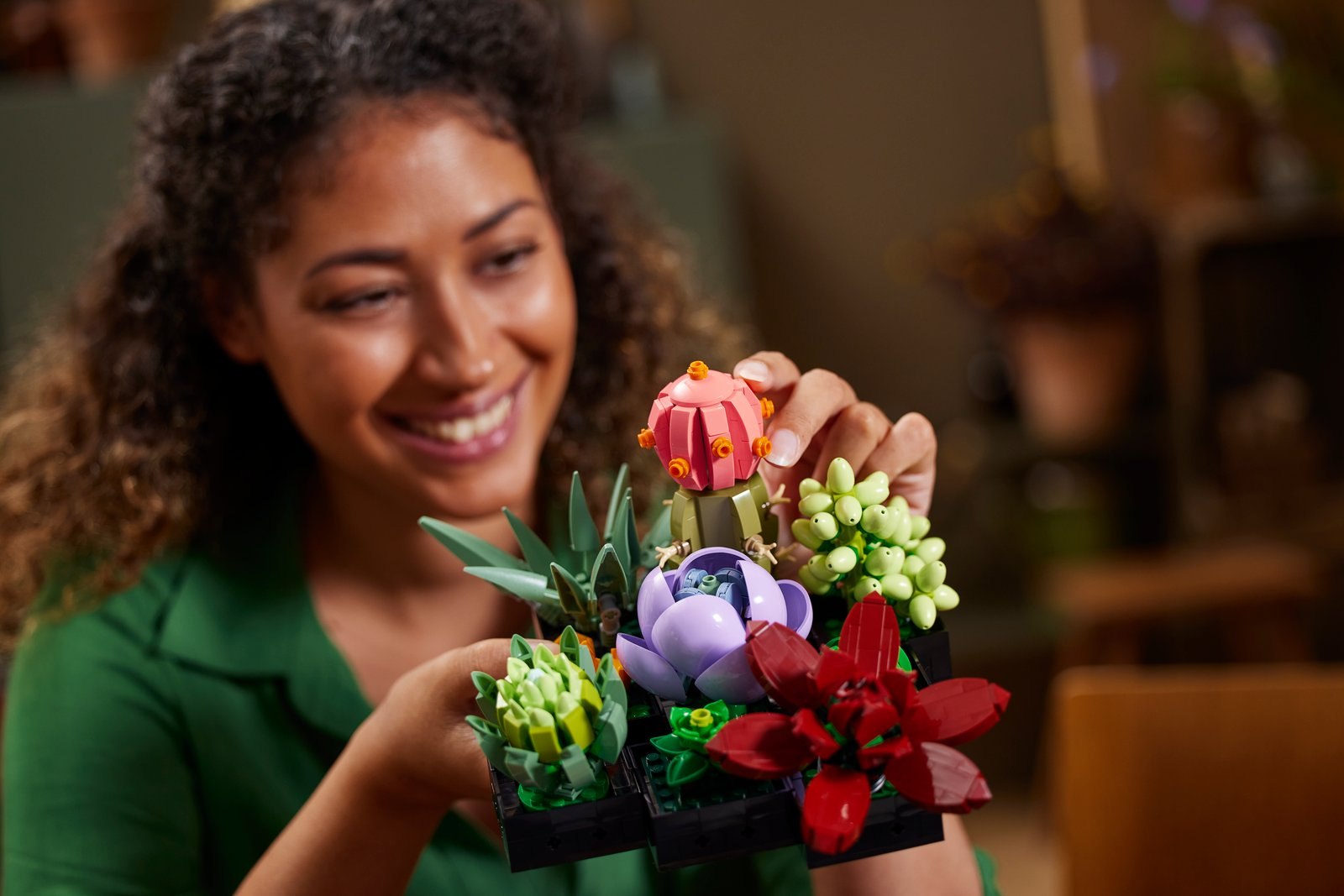
The containers carry the idea
LEGO Succulents, set 10309, is not a single plant with a fixed silhouette. The official product description identifies nine different plant models, each in its own small container. They can be combined, grouped or displayed separately. That gives the finished collection an unusual quality: the relationship between its parts remains open after the individual builds are complete.
The 771-piece set makes a display from contrasting heights, colors and forms. In LEGO’s published photograph, low rosettes sit beside taller shapes and bright flowers. The black pots supply a shared visual base, allowing very different brick-built plants to look like members of the same collection.
A shared build with separate results
LEGO announced Succulents alongside the Orchid in April 2022, with an official launch that May. The release highlights three separate sets of instructions, allowing more than one person to work on the collection. It also describes the option to connect the plants or rearrange them individually.
That structure is more consequential than simply dividing a long instruction book into sections. Separate plants create natural stopping points and distinct finished objects. One person’s contribution can remain identifiable after the group brings everything together. The model offers a common project without requiring every builder to work on the same central structure at the same moment.
A collection that does not insist on a centerpiece
Our interpretation is that the set’s strongest display decision is its refusal to make one plant indispensable to the whole arrangement. A tall specimen can establish a center, but a small cluster or several scattered pots can also look intentional. The containers make those alternatives possible without asking the plants themselves to change identity.
This is a different form of customization from a vehicle with alternate accessories or a building with a removable floor. The arrangement is the composition. Empty space between the plants becomes part of what the owner sees, and changing that space can make the same objects read as one garden or several small ornaments.
The review here is based on LEGO’s published materials and photography, rather than a hands-on account or a claim about wellbeing. The original marketing framed the set around relaxation; the tangible design feature we can assess is the separation of the plants and instructions. For collectors who enjoy reconsidering a display after construction, those nine containers leave a meaningful decision unfinished in a good way: how the collection should occupy its space.
Reporting checked November 1, 2026. Plans and programs can change; follow the linked organizations for current information.