
Steve Guinness’s Typewriter had a life beyond the LEGO Masters cameras
How a television build became a fan project and, eventually, LEGO Ideas Typewriter 21327—a retrospective on patient development and shared credit.
A television idea worth returning to
A LEGO Masters build does not have to end when the episode does. Steve Guinness’s Typewriter offers a particularly satisfying example: an idea developed for television continued to evolve until other builders could bring a version of it home.
In an April 2020 LEGO Ideas interview, Guinness described winning the original UK series with Nate in 2017. He also explained that the typewriter idea began as part of a build on the programme. This is a retrospective on that journey, drawing on his published account and LEGO’s launch records; it is not a new interview or a hands-on review.
The interesting work happened between versions
Guinness recalled an initial design taking about two weeks, followed by roughly seven versions. A real vintage typewriter helped him investigate the subject, while the keyboard layout and overall size demanded compromises.
For fans following a television builder, this is a useful part of the story to notice. A finished photograph makes a model look inevitable. A sequence of prototypes reveals decisions: which functions matter, how large the object can become, and what must change to make the next attempt better. Our reading is that returning to a promising model can be as creative as starting something completely new.
From fan proposal to an official set
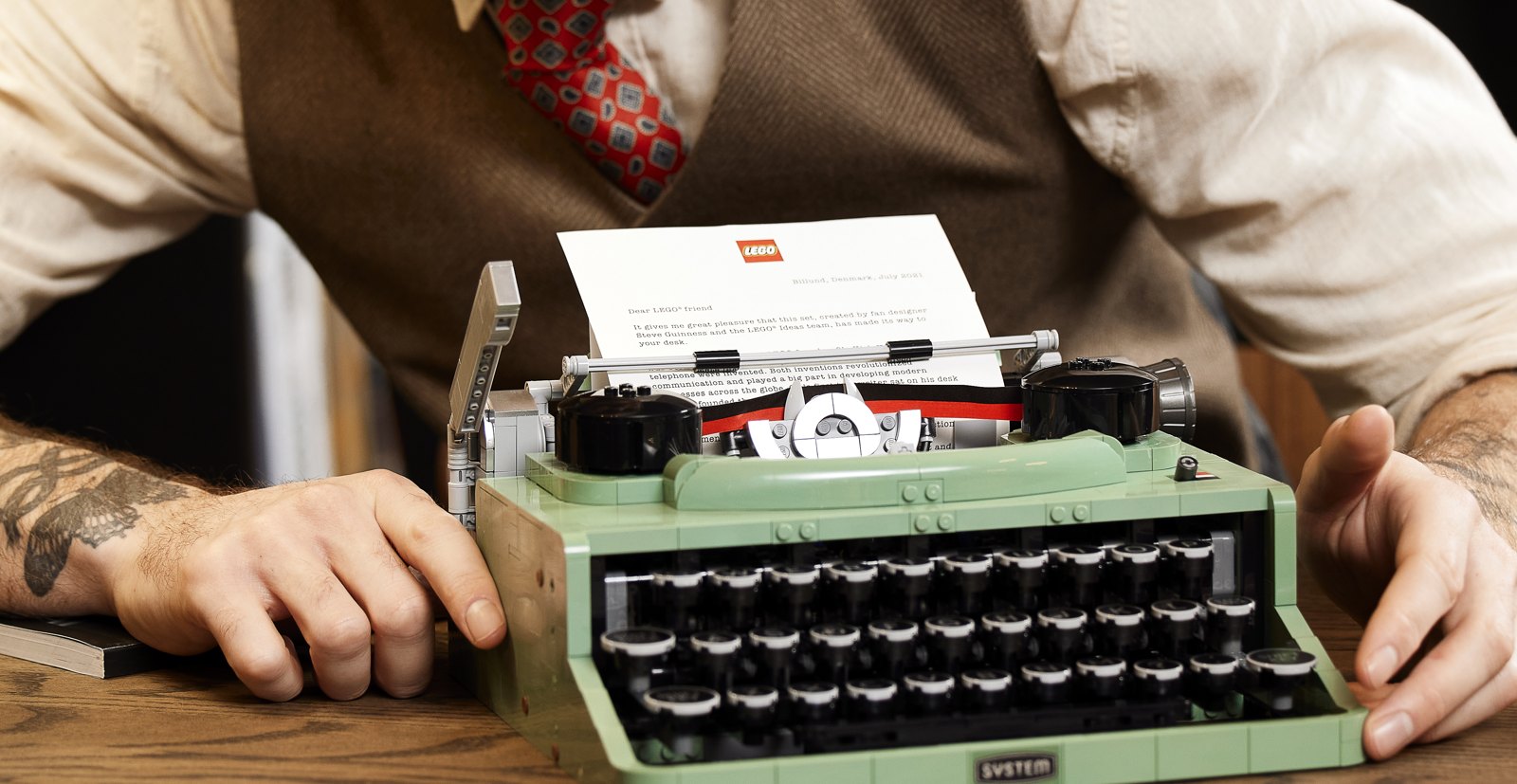
LEGO announced Typewriter 21327 in June 2021. The 2,079-piece model connects key presses to a rising central typebar and moving carriage, and its roller can hold real paper. Those mechanisms give the familiar desktop object something to demonstrate when a visitor looks closer.
The official Ideas reveal also credits LEGO model designers Wes Talbott and James May. That matters: celebrating the fan behind the proposal and recognizing the people who developed the commercial model are complementary parts of telling its history. The result belongs to a longer process than a single winning moment.
A small movement gives a display a story
The launch announcement makes the mechanical response central to the Typewriter’s appeal. In our view, that creates a different kind of display: the question becomes what happens when you touch a key, as well as how closely the outline resembles the original object.
For your own unfinished projects, try keeping a photograph and a short note after each revision. Record what became clearer and what still needs work. Guinness’s journey is an encouraging reminder that a model can keep growing after its first audience has gone home.
Reporting checked September 29, 2026. Plans and programs can change; follow the linked organizations for current information.