
Seattle Space Needle 21003: a landmark told with very few pieces
The early Architecture model offers a useful lesson in choosing which shapes to keep.
Small can still be specific
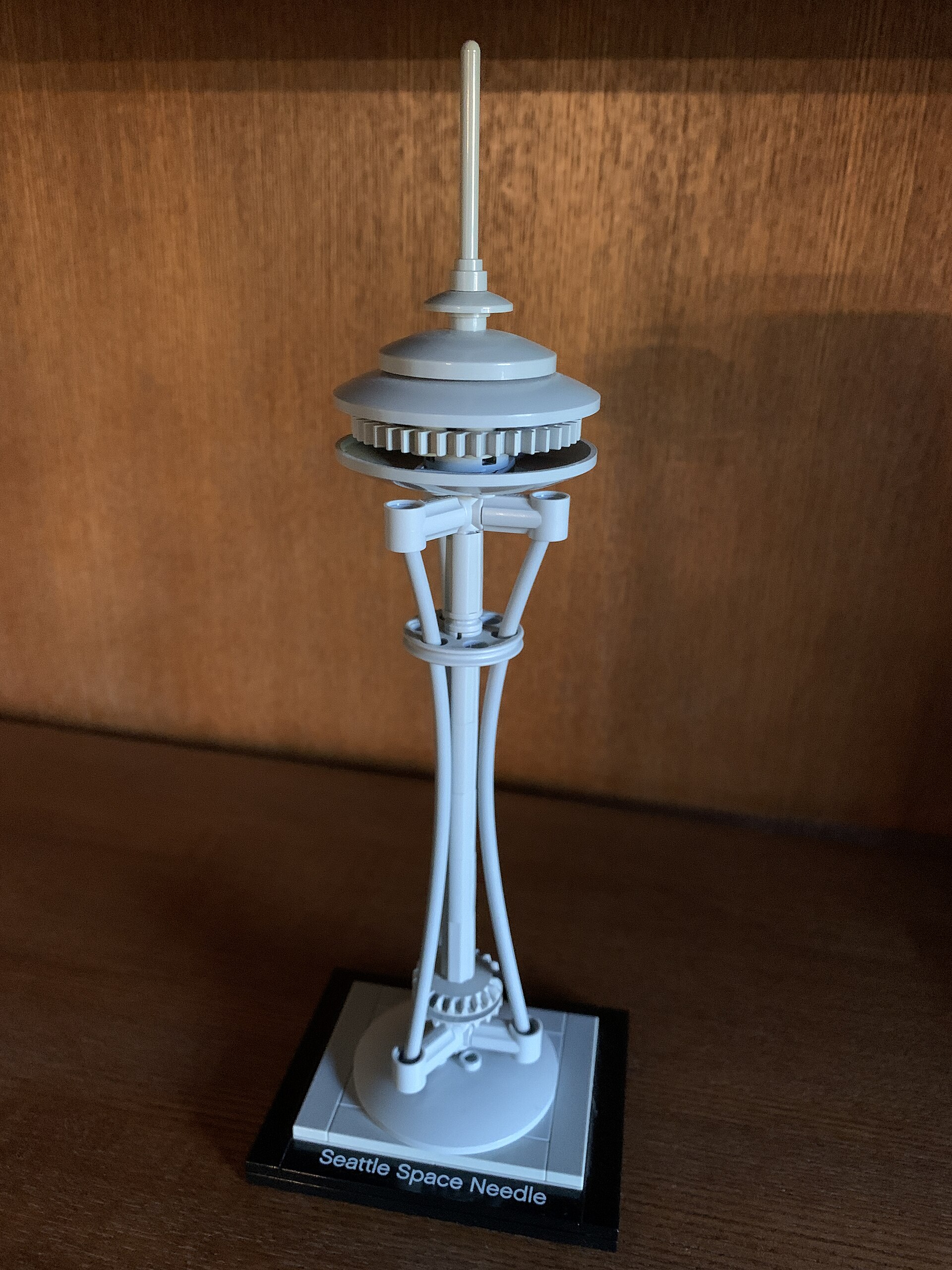
LEGO’s instruction archive identifies Seattle Space Needle, set 21003, as a 57-piece Architecture model from 2008. The real photograph above shows its compact interpretation of the landmark. That small inventory makes the model an interesting subject for a retrospective: with relatively few elements available, the recognizable outline has to do much of the work. We are looking at the published instructions and photographed form, not reporting a recent hands-on test.
Choose the feature that carries recognition
In this model, the narrow supporting structure and broad upper platform create a clear contrast. You do not need to count windows to understand the main idea. The eye finds the unusual relationship between a slim vertical support and a much wider top.
That suggests a useful approach to making any landmark in miniature. Begin by identifying the feature that would remain recognizable in a silhouette. It might be a roofline, an arch or an asymmetrical tower. Build that relationship first, using simple placeholders if necessary, before spending time on the smallest surface details.
Let the base support the subject
A small architectural model benefits from a calm base. Too much surrounding scenery can make its scale difficult to read or distract from the shape you worked to preserve. Start with a simple footprint, then add only the context that helps someone understand the building.
Try photographing a draft against a plain background and looking at the image at thumbnail size. If the landmark still reads clearly, the main proportions are probably doing useful work. If it becomes a blur, revisit the large shapes. This is an observation exercise, not a numerical test of architectural accuracy.
A satisfying constraint for your next build
You can borrow the set’s modest scale without copying its subject. Pick a familiar local building and give yourself a small piece budget. Decide in advance which detail you are willing to leave out. The exercise becomes a series of deliberate choices rather than a race to reproduce every surface.
Save a photograph of the first version, then change just one proportion and compare the results. A taller support or a wider roof can alter recognition dramatically. That is what makes a compact model worth revisiting: it exposes the decisions that a much larger build can hide beneath decoration. The result may be small enough for a desk while still saying something precise about a place.
Reporting checked September 24, 2026. Plans and programs can change; follow the linked organizations for current information.