
Snoopy’s Doghouse turns Robert Becker’s campfire idea into several small stories
A source-based look at the 2026 Peanuts set, its fan origin and the rebuilding behind Snoopy’s changing poses.
An idea that started with two familiar friends
LEGO Ideas Peanuts: Snoopy’s Doghouse 21368 grew from Atlanta-based fan Robert Becker’s enthusiasm for Snoopy. In the February 2026 announcement, he recalls working through the challenge of translating the recognizable characters into bricks, then submitting the idea after encouragement from his family. The announcement set a June 1, 2026 release.
The story is a reminder that a project can begin as something a builder simply wants to own. This desk review considers the official design and photographs; it does not claim personal assembly experience or a new conversation with Becker.
Changing the scene involves some rebuilding
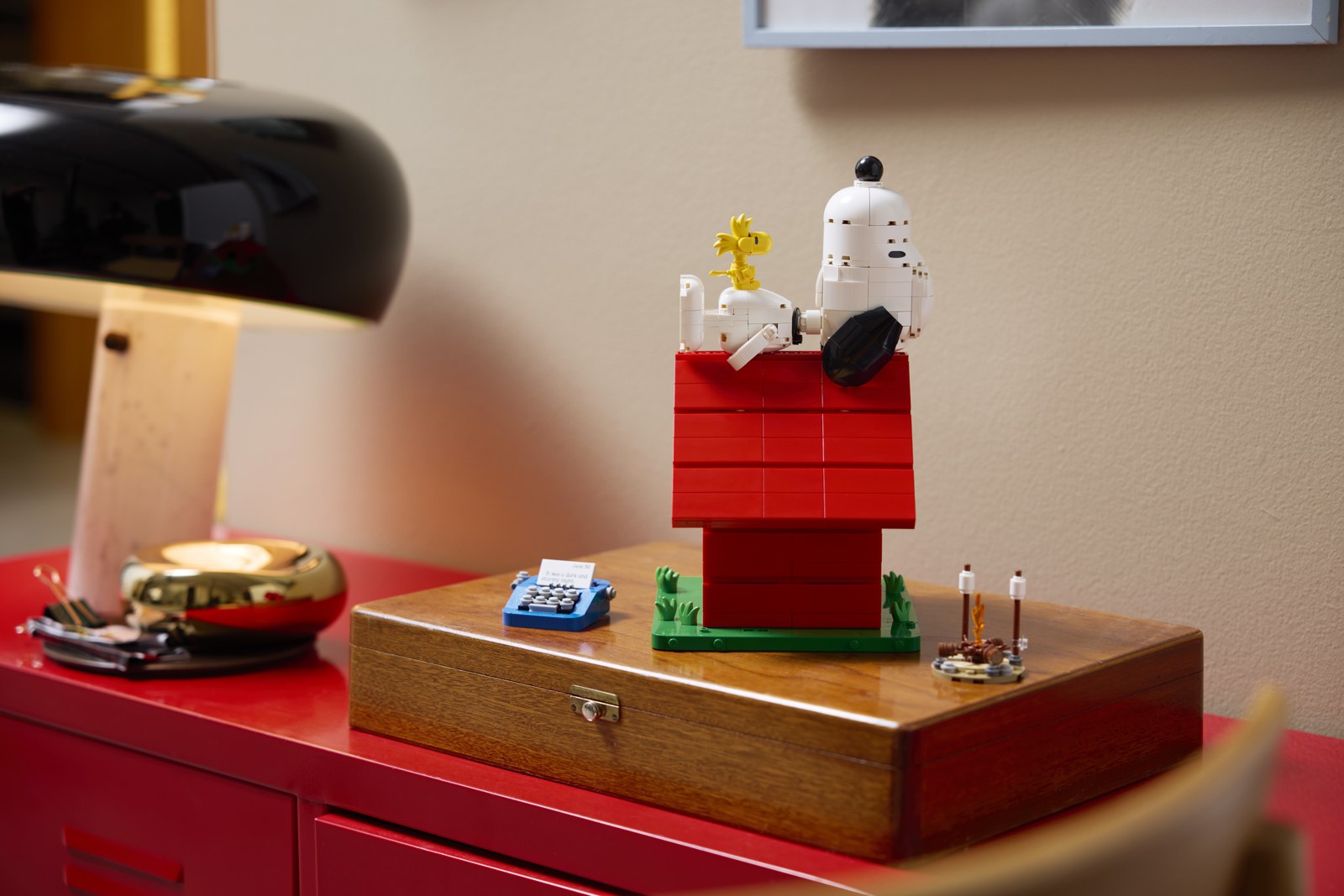
The 964-piece model includes Snoopy, Woodstock, the red doghouse, a typewriter and a campfire scene. The current product description is specific about the poses: Snoopy has two alternative leg builds for sitting and standing, plus two neck positions for lying down and standing.
That distinction matters. The different appearances are not simply a promise that every part bends continuously into any pose. Think of them as alternative arrangements to make and enjoy. Our interpretation is that rebuilding becomes a small editorial choice: the owner decides which version of Snoopy’s day the display will show.
The house also supplies the scenery
LEGO explains that the doghouse can be removed from its base and its interior walls opened to reveal a starry sky. That creates a background for Snoopy and Woodstock to toast marshmallows, while other arrangements put Snoopy on the roof or at his typewriter.
In the official photographs, these settings work like small scenes with a clear central action. For a shelf display, choose the action first and give it room. The campfire arrangement benefits from seeing both friends, while the rooftop version draws attention to the familiar relationship between the dog and his house.
A useful way to choose a first arrangement
Before assembling or rearranging a display, compare the official views and decide which one best suits the space where it will live. Keep the instructions available for changing the alternative builds, and store any unused pieces together so the next scene remains easy to create.
For us, the appeal is the modest scale of the storytelling. The model does not need a whole neighborhood to suggest a character’s life. A roof, a typewriter or a campfire provides just enough context to turn a recognizable figure into a moment worth returning to.
Reporting checked October 1, 2026. Plans and programs can change; follow the linked organizations for current information.