
Sandro Quattrini’s LEGO Lighthouse began with a family memory and a parts search
The story behind Motorized Lighthouse 21335 reveals how a coastal memory and an imperfect parts collection shaped a fan’s original model.
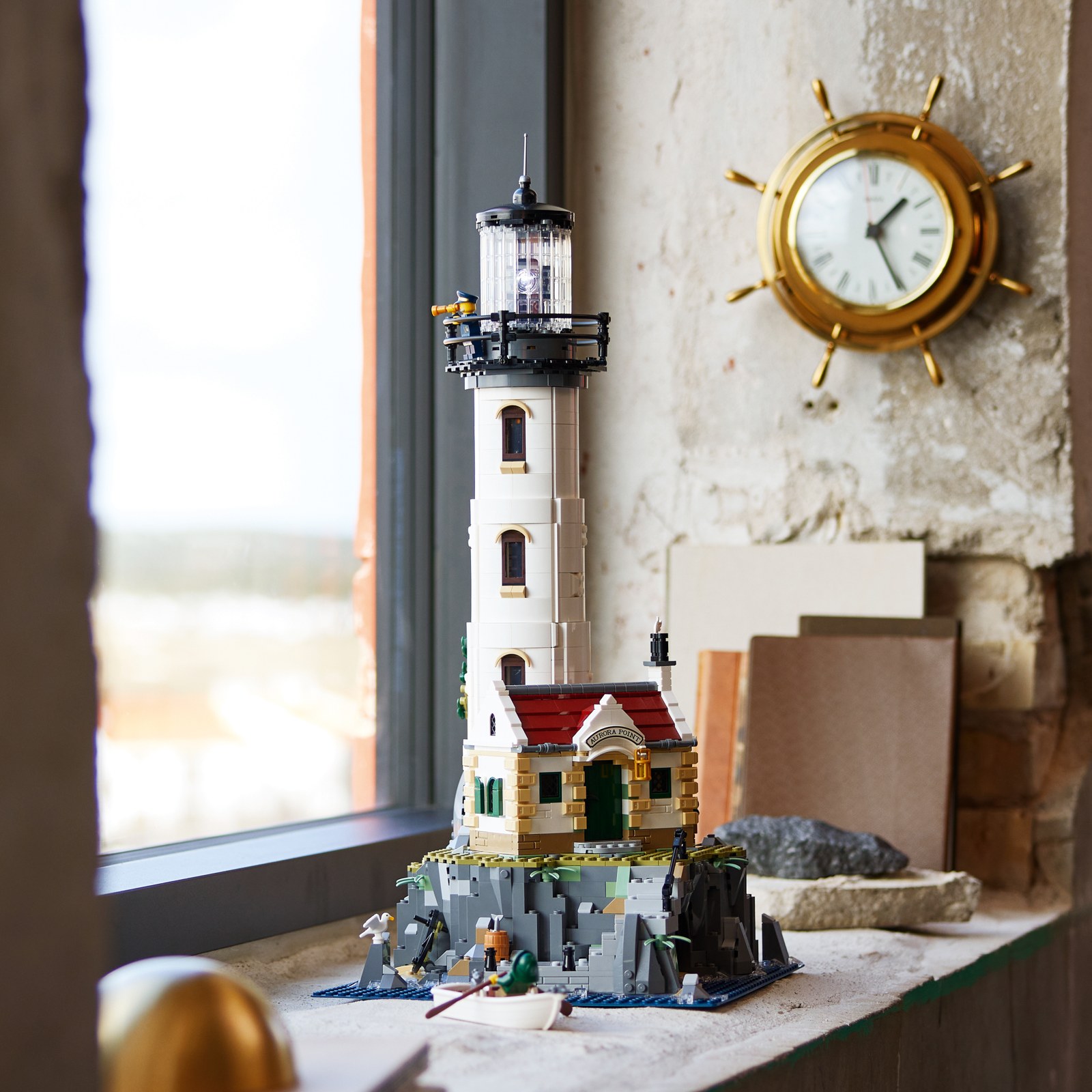
A coastline remembered in bricks
Before Motorized Lighthouse became LEGO Ideas set 21335, it was a Canadian fan’s attempt to capture the feeling of buildings he had visited with his family. Sandro Quattrini’s published account connects the idea to a trip around Quebec’s Gaspé Peninsula and to his mother’s enthusiasm for lighthouses.
That origin gives the model a more personal context than its set number suggests. This retrospective follows the original fan project and the later official release, keeping those stages distinct. The commercial set is not simply the first version photographed in a different room.
Missing pieces helped shape the tower
In the interview, Quattrini described searching older sets and his existing collection for curved white slopes. A shortage of one size led him toward additional windows and a mixture of curved elements. He also recalled the island taking more experimentation than expected: its rocky surface needed deliberate lines and changes of building direction.
Our interpretation is that these constraints became visible character rather than merely obstacles. The tower gained variation, and the landscape required its own design process. That makes the fan project an interesting example of an idea developing through the pieces available at the table.
The official model adds a working beacon
Released in September 2022, the official 2,065-piece Lighthouse stands about 50 cm high. Its powered rotating light and accessible cottage and tower give the display details to explore at different distances. LEGO’s Ideas reveal credits model designer Luka Kapeter and graphic designer Claus Madsen with developing the commercial set from Quattrini’s concept.
Those credits help tell the complete story. The fan supplies the originating vision; the official design process brings another group of skills to the version that reaches builders. Acknowledging both makes the collaboration easier to appreciate.
The island gives the light somewhere to belong
The product page describes a keeper and sailor, a rowboat, a glowing cottage fireplace and a cave with pirate treasure. These details turn the base into a place to imagine arriving, working and exploring, rather than simply a support for the tower.
In our view, that is the strongest connection to the project’s remembered coastline: the lighthouse has a setting. When looking at the official photographs, spend a moment following the route from the water toward the cottage. The model’s appeal comes from the relationship between that small journey and the beacon above it, not solely from the height of the finished build.
Reporting checked September 30, 2026. Plans and programs can change; follow the linked organizations for current information.