Roberto and Jody’s LEGO Wonka project found another way into the factory
The Italian fan-design duo returned to a much-loved film after an earlier submission reached supporters but missed production.
A second visit to the Chocolate Room
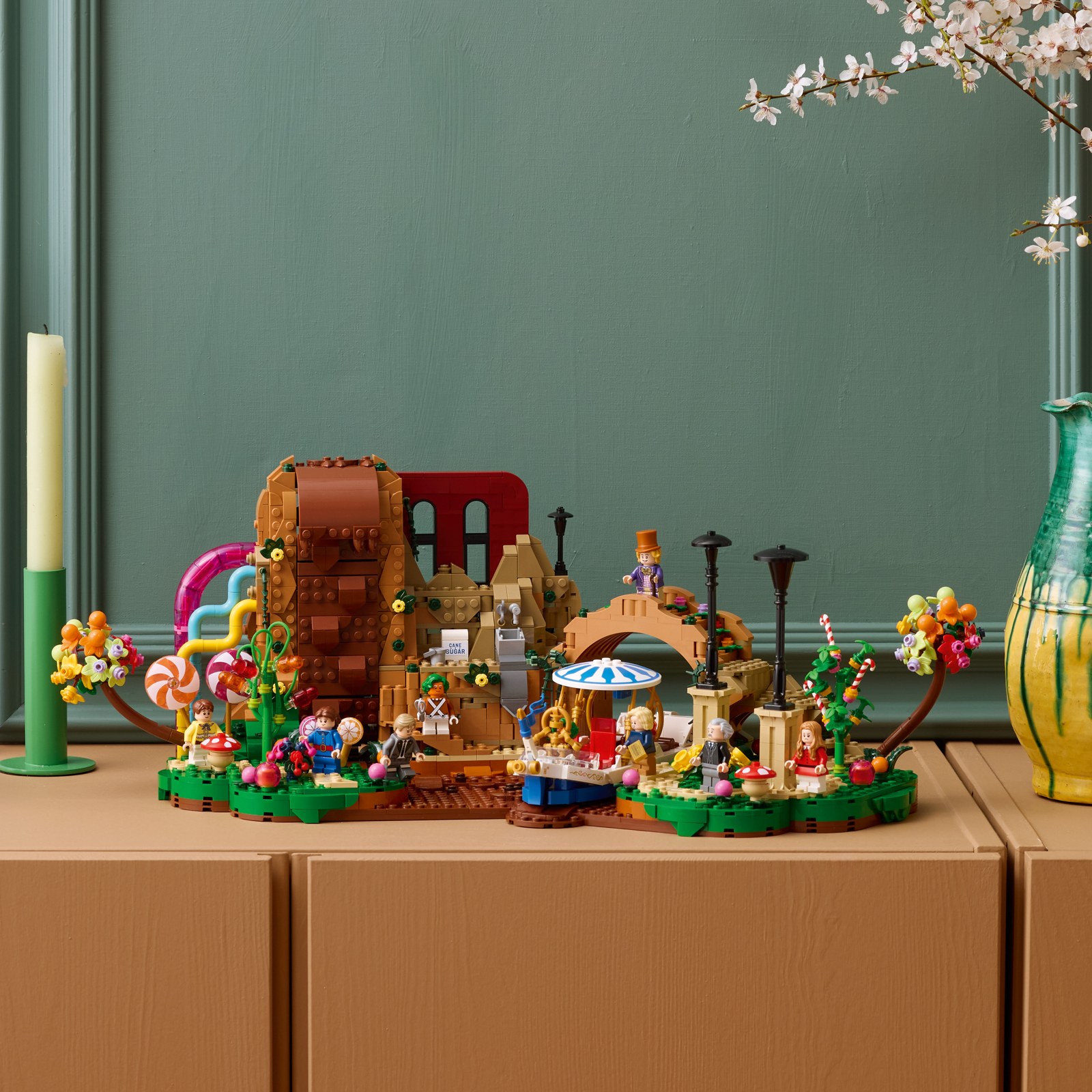
Roberto Ceruti and Jody Padulano, the Italian LEGO fan designers known together as 2PPL, had already found an audience for their chocolate factory before it became a set. LEGO’s account of the project says their 2021 submission reached 10,000 supporters but was not approved. An updated submission later succeeded.
The result, Willy Wonka & the Chocolate Factory 21360, draws on the 1971 film. This is a look back at the creators’ route to that model, rather than a new product announcement. The interesting part is what they chose to keep working on: a place whose impossible landscape invites a surprisingly practical building exercise.
Fantasy still needs a bridge that works
In LEGO’s August 2025 announcement, the duo described spending roughly four to five months on the build. The bridge and the appearance of the candy tree were among the challenges they identified, while newer elements helped them revise the design. They also described the motorized waterfall in their fan creation.
The commercial set’s mechanism should be distinguished from that description: LEGO specifies a turning dial that sets its chocolate waterfall in motion. The release lists 2,025 pieces and nine minifigures, along with the Wonkatania boat, an office reached through a secret door and a landscape of confectionery plants.
The office changes the mood
LEGO’s feature on the finished model describes the office’s furnishings cut in half and an Everlasting Gobstopper hidden within. Other rooms contain references to moments elsewhere in the film, including a television and a bottle recalling the Fizzy Lifting Drinks Room.
Those smaller references give a visitor something to discover after the bright Chocolate Room has made its first impression. The landscape attracts attention from a distance; the rooms reward getting closer. That difference is useful in a display because it gives the viewer more than one way into the same story.
Keeping an idea open without standing still
Our interpretation is that the project’s strongest community lesson lies in the relationship between enthusiasm and revision. Supporters had already responded to the subject, but that did not make the first submission a finished commercial proposition. Returning to it meant making another version, not merely preserving a vote total.
Ceruti and Padulano’s work also shows why a familiar fictional world can remain fertile material for fan builders. A candy tree has to communicate its identity through shape, and a waterfall has to suggest continuous motion using solid parts. Those are specific design problems inside a playful setting. The cheerful result has a history of decisions behind it.
Reporting checked October 27, 2026. Plans and programs can change; follow the linked organizations for current information.