
LEGO’s Police Station lets small printed details carry the story
The modular building combines a formal facade with tiny clues and everyday objects that make its interior worth exploring.
A building with something to read
Police Station 10278 offers more than a recognizable sign above a doorway. LEGO’s official description identifies a case board whose red lines connect clues, alongside printed details representing a telephone, typewriter and billboard. These small surfaces give the building information as well as texture.
This retrospective desk review is based on official information and images, not a hands-on inspection. Its focus is the way compact graphic details can make a LEGO room feel as though something is happening there.
The serious facade has playful neighbors
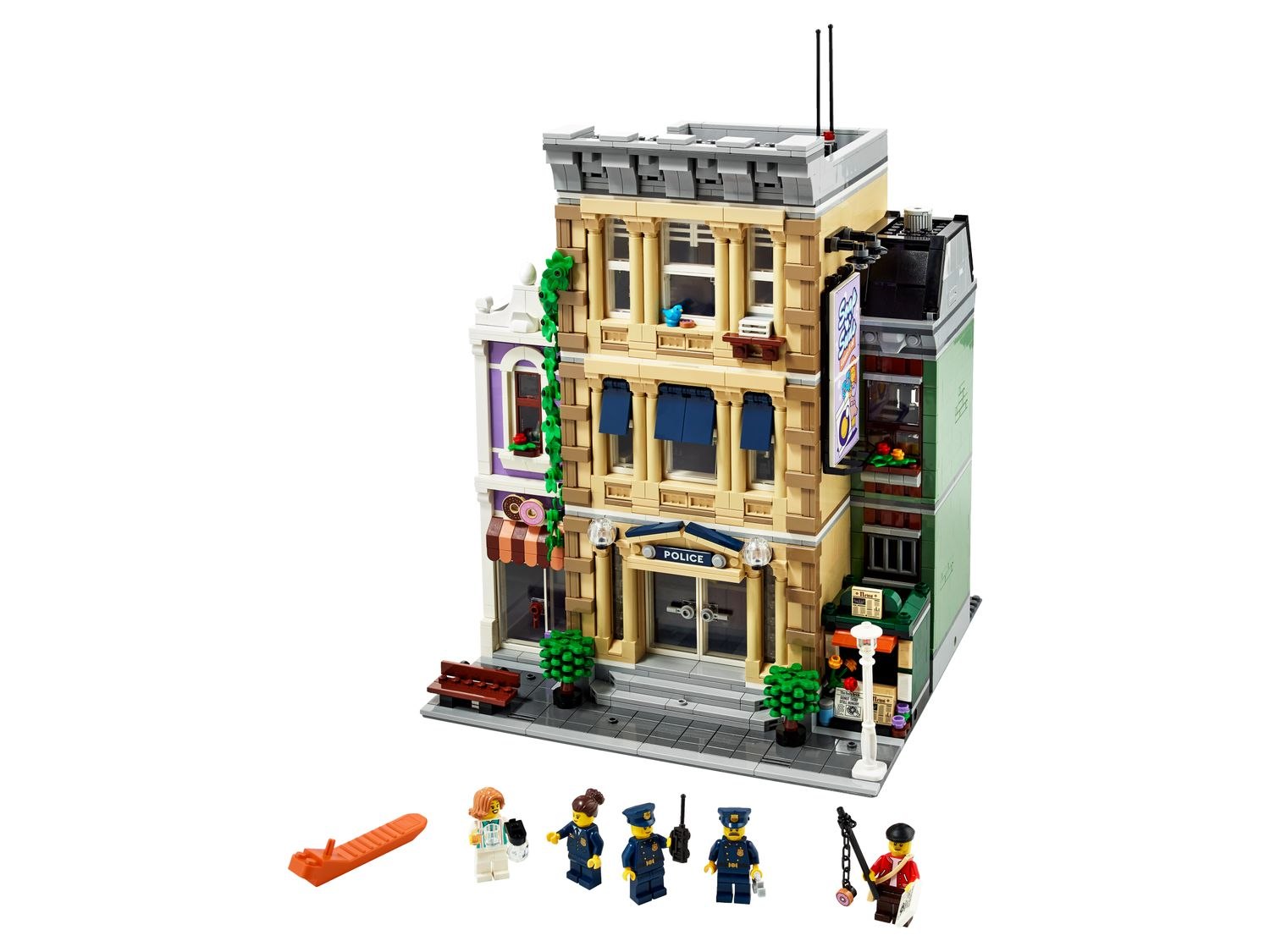
The three-floor station sits beside a donut shop and newspaper kiosk. LEGO lists an evidence locker, interrogation room and jail cell among the interiors, with removable floors providing access. The set contains 2,923 pieces and five minifigures.
In the official photograph, the broad tan station contrasts with the narrower neighboring storefronts. Our interpretation is that the combination gives the model a useful change of tone. The central building establishes the institution, while the smaller businesses make it feel part of a daily street. A person can stop for breakfast or a newspaper without taking part in the mystery inside.
Let a clue do a different job from decoration
For builders designing their own interior, the case-board idea suggests a useful distinction. A decorative tile can help establish an era or a color scheme. A clue asks the viewer to connect one detail to another. Those are different jobs, even if both occupy very little space.
A gentle, invented neighborhood story could begin with a lost invitation or a misplaced birthday cake. Put one relevant object where a visitor can see it, then give a second object a reason to relate to it. This is an original building suggestion, not a description of the official set’s plot.
Resist the urge to explain every connection with a sign. A minifigure looking toward the object, an empty space where something belongs or a repeated color may be enough to invite curiosity. The aim is to make someone want a closer look, while keeping the scene understandable when viewed without a spoken explanation.
Explore the rooms at their own pace
LEGO’s official instructions page is a useful companion for revisiting the model’s construction. For someone rebuilding an older copy, it provides a reference for returning the removable sections to the intended arrangement.
The building’s appeal, in this reading, lies in the difference between seeing it and exploring it. The facade identifies the place immediately. Smaller objects give the owner something else to notice later. That makes a little printed detail a meaningful part of the architecture, even when it occupies only a few studs.
Reporting checked October 28, 2026. Plans and programs can change; follow the linked organizations for current information.