
Two LEGO trains ask you to stand in different places
The Orient Express puts its staff and passengers behind removable roofs. The Crocodile locomotive leaves its most revealing movement down by the rails.
A seat the viewer cannot take
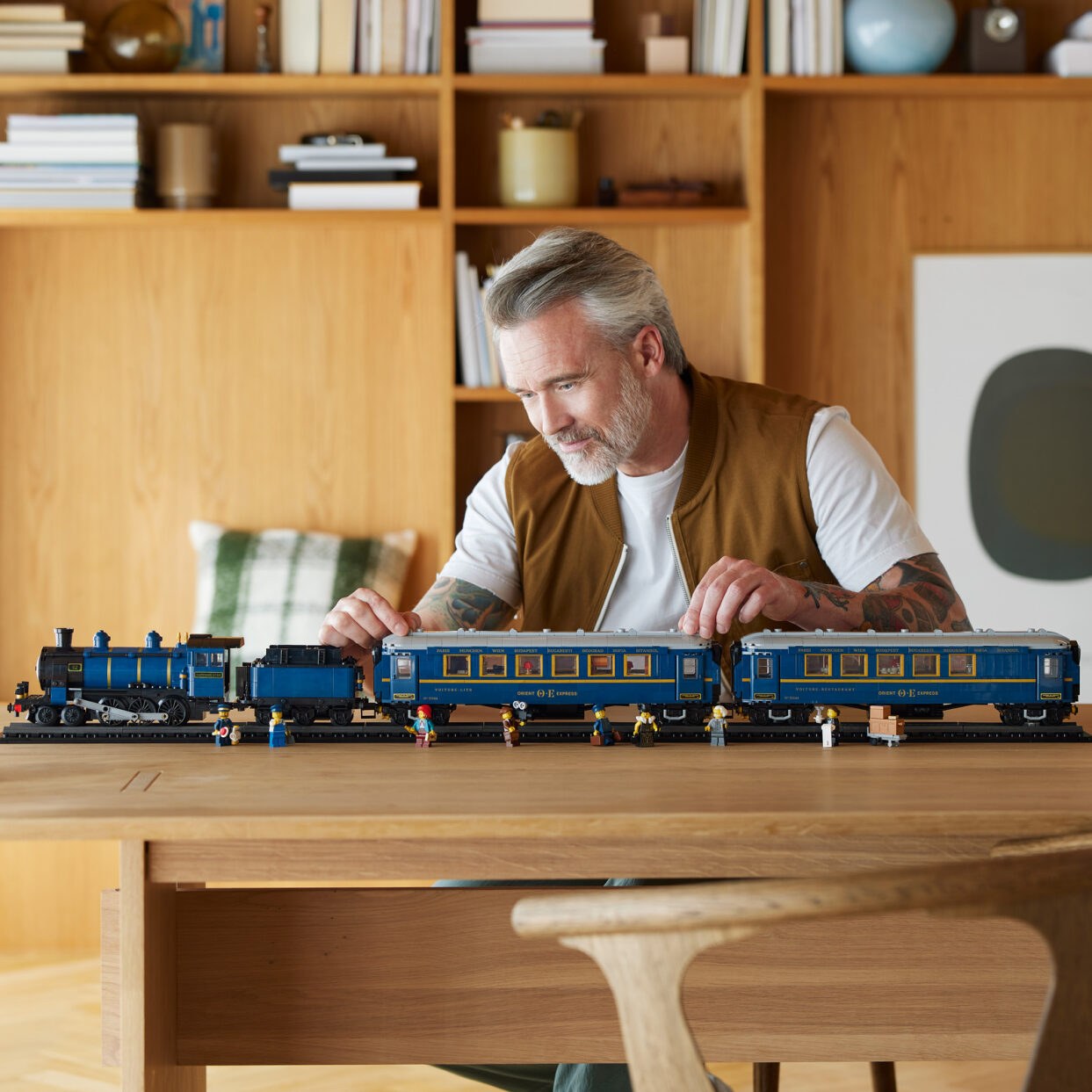
From the side, the LEGO Ideas Orient Express looks as though it ought to be admired at platform height. The blue coaches form a long, continuous band behind the engine. Yet the retail model offers a much less conventional vantage point. Lift the roofs and one carriage becomes a restaurant and the other a sleeping car. Looking straight down, a viewer can distinguish two parts of a journey that look much alike from the platform.
The chef is a particularly useful member of the cast. Without a passenger present, a passenger compartment can look like an empty room. A chef belongs to the work of running the train whether the tables are occupied or not. The conductor has a similar effect: these people turn a set of handsome rooms into a service.
Down at wheel level
The Crocodile Locomotive, set 10277, places its invitation to look somewhere else. Its long outline and articulated profile are legible from across a room, but it is the relationship between the wheels and the side rods that gives the locomotive a distinctive rhythm. A photograph from directly above would be an excellent way to present the Orient Express dinner service and a poor choice for explaining the Crocodile’s motion.
LEGO presents the Crocodile with a display track. A short piece of track can look almost arbitrary alongside a passenger train: where is it going? Under this engine it has a different function. It establishes a level line against which the outline of the machinery can be read.
A different kind of railway collection
Put these subjects together and the familiar division between a train for running and a train for display becomes less helpful. One can spend a long time with a stationary coach, moving between compartments and deciding where the people belong. One can also understand something about a locomotive by studying the exposed connection between two wheels before either turns. The relevant distinction is what each designer has made accessible. One train offers an imaginary ticket inside; the other reserves the best view for the person standing beside the track.
Reporting checked November 13, 2026. Plans and programs can change; follow the linked organizations for current information.