
LEGO Notre-Dame lets the building sequence tell centuries of history
Notre-Dame de Paris 21061 gives its construction order a historical purpose, with removable sections that keep the interior part of the story.
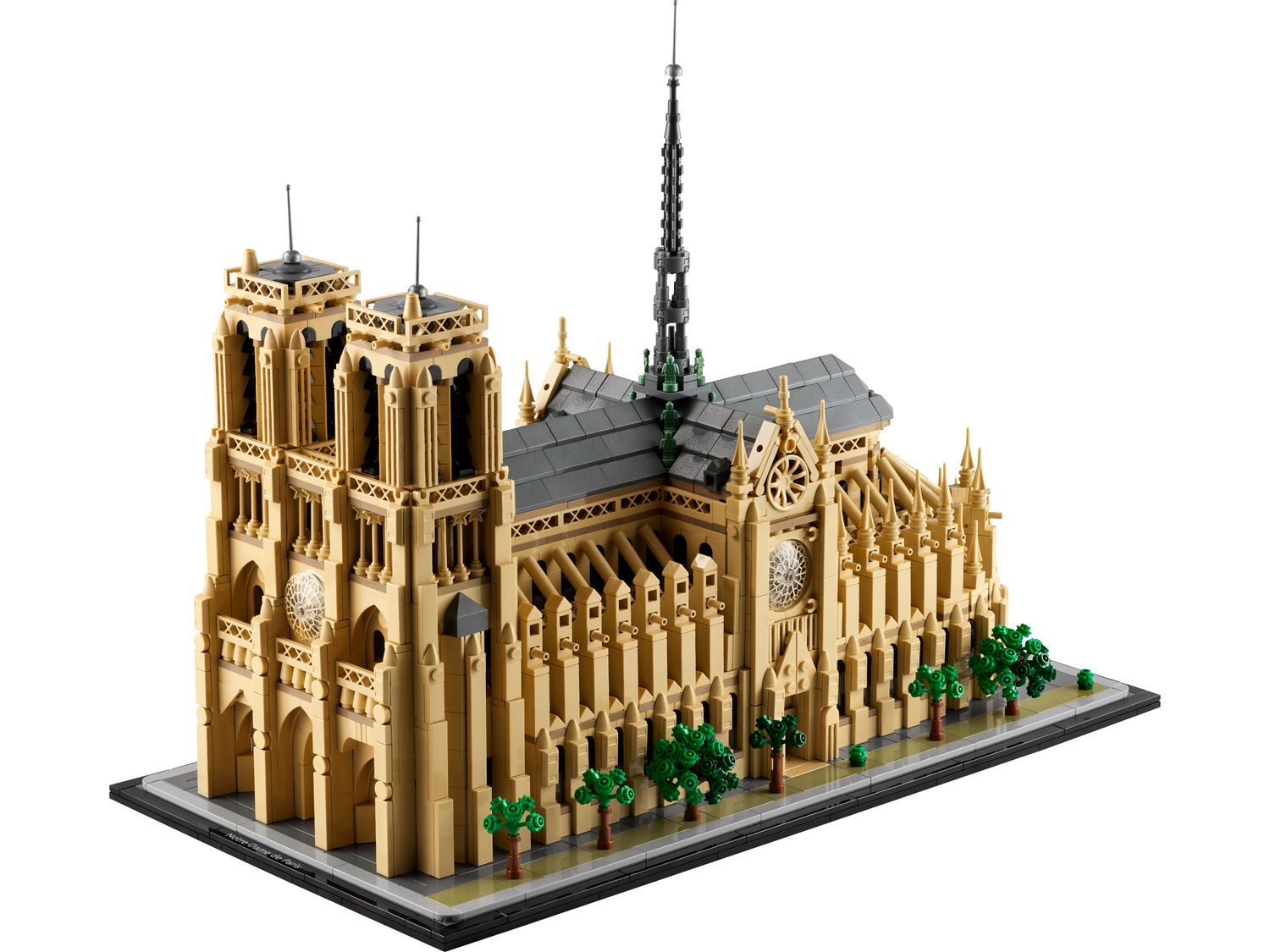
History in the order of the bricks
An architectural LEGO set can tell a story before its last piece is attached. Notre-Dame de Paris 21061 makes that idea unusually explicit: LEGO describes a construction sequence that begins at the cathedral’s curved rear and ends with its spire. The instruction order becomes part of the interpretation.
This retrospective desk review draws on official materials and the product image, rather than hands-on testing. The 4,383-piece model offers an interesting proposition for adults who enjoy understanding how a landmark developed, as well as recognizing its finished shape.
Which Notre-Dame does it represent?
LEGO’s May 2024 announcement describes a journey from the first stone in 1163, through Viollet-le-Duc’s nineteenth-century redesign, to the cathedral’s appearance before the 2019 fire. Designer Rok Žgalin Kobe explained that the stages of the building’s development informed the model alongside its outward appearance. The set launched in June 2024.
That historical endpoint is useful context. This is a model with a defined reference period, rather than a claim to document the cathedral at every moment in its history. For a collector, knowing the intended period gives the finished display a clearer identity.
The roof is an invitation to look again
The official product description identifies removable roofing that exposes columns and arches, plus towers that lift away for a closer look. Rose windows and the central spire provide recognizable exterior details. LEGO gives the completed model dimensions of more than 33 centimeters high, 22 centimeters wide and 41 centimeters deep.
Our visual reading is that the long side elevation deserves as much attention as the twin-tower front. In the product photograph, repeated supports and openings create a rhythm down the building. Seeing that side helps explain the cathedral as a substantial volume instead of a familiar postcard facade.
Make room for the second view
For display, we would favor an angle that reveals the front and one long side together. The spire also needs clear space behind it: a busy background can swallow the narrowest part of the silhouette. These are display suggestions drawn from the image, not conclusions from a physical build.
The most appealing idea here is that finishing the model need not finish the looking. Its historical sequence invites attention during assembly; its removable sections offer another reason to return afterward. That combination gives a large architectural model more to do than simply occupy a shelf. It can become the starting point for a conversation about the real building, with each visible detail offering another question to explore.
Reporting checked October 21, 2026. Plans and programs can change; follow the linked organizations for current information.