
Why the television is the star of LEGO’s Nintendo Entertainment System
LEGO Nintendo Entertainment System 71374 turns a familiar game screen into a hand-operated display. A retrospective look at the model’s mechanical storytelling.
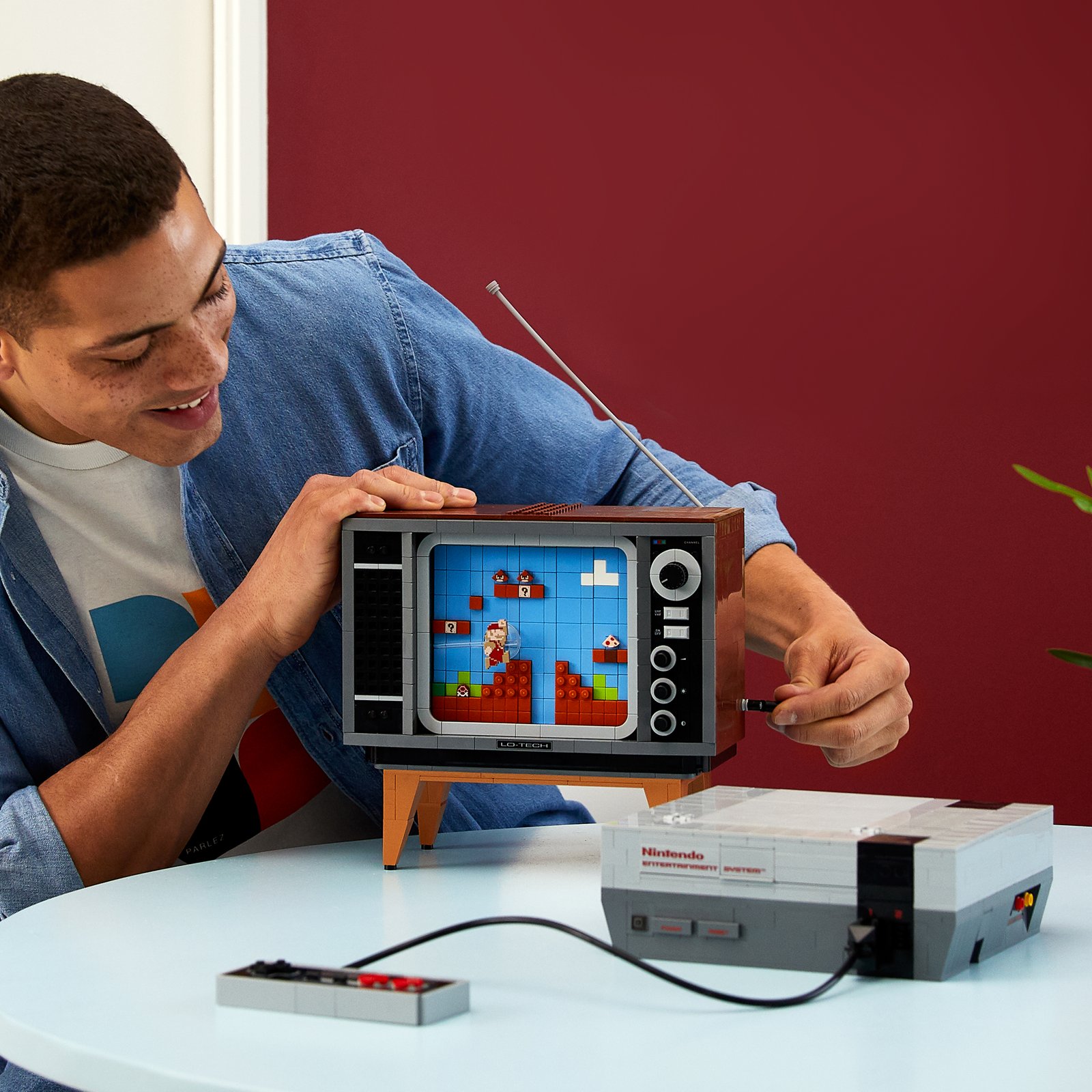
A screen you can move by hand
The most interesting part of LEGO Nintendo Entertainment System 71374 is the television. The console supplies recognition, but the TV gives the finished display something to do: a handle moves the scenery behind a flat Mario figure, turning a familiar image into a small mechanical performance.
Announced in July 2020 and launched that August, the set brought a brick-built console and retro television into LEGO’s Nintendo partnership. This is a retrospective desk review based on official materials and photography, without a claim of hands-on testing.
The movement has a clear job
LEGO’s product page specifies 2,646 pieces and describes the handle-operated scrolling screen. It also documents the console’s opening cartridge slot and locking function, alongside a controller with its connecting cable. These are physical model features, not a replacement for electronic gaming.
Our reading is that the television’s movement is especially effective because it has an immediately understandable purpose. Turn the handle and the scene changes. A visitor does not need to study a cutaway mechanism before understanding the result. For builders interested in moving displays, that is a useful design question: can the audience recognize what the motion contributes within a few seconds?
Two kinds of interaction
The original announcement also explains the optional connection with the separately supplied interactive LEGO Mario figure. Placed on the television after scanning the action brick, that figure reacts to the depicted enemies, obstacles and power-ups. It is an additional layer beyond turning the handle.
For display planning, our suggestion is to decide which experience matters most. Someone drawn to the mechanism may want visitors to concentrate on the scenery and crank. A family with the compatible figure may prefer demonstrating its reactions as well. The set provides a reason to discuss the relationship between a physical mechanism and electronic feedback without treating them as the same thing.
Leave space for the person operating it
In the official lifestyle photograph, the television sits behind the console while the demonstrator reaches its side handle. The composition shows why access matters: placing the model tightly between other objects could preserve the front view while making its central feature awkward to demonstrate.
Our practical recommendation is to leave room beside the TV and keep the controller cable clear of the operating area. For a used purchase, ask for a short video of the screen turning as well as photographs of the cartridge slot, controller and included parts. A still image can establish appearance, but it cannot demonstrate that an assembled moving feature operates.
This set is particularly appealing as a conversation piece because it invites the viewer to become an operator. The familiar game imagery supplies the introduction; a turn of the handle supplies the explanation.
Reporting checked October 18, 2026. Plans and programs can change; follow the linked organizations for current information.