
Natural History Museum 10326 lets the exhibits shape the building
A retrospective look at the museum’s tall dinosaur, removable floors and the practical pleasure of displaying a collection inside a collection.
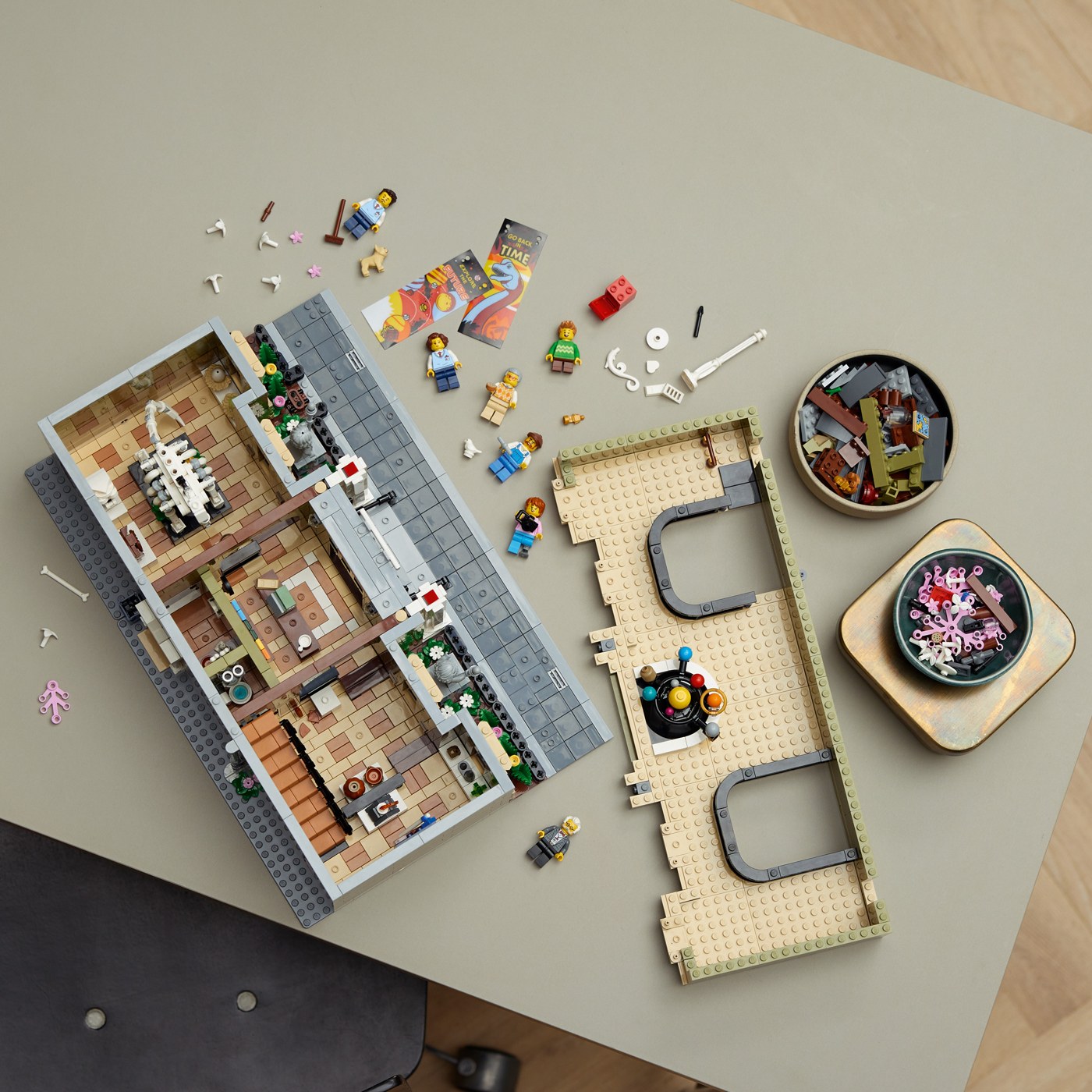
A dinosaur that needs two floors
A museum has a particularly enjoyable problem for a LEGO designer: the building needs to look convincing from the street, while the objects inside deserve attention of their own. Natural History Museum 10326 makes that relationship visible through its Brachiosaurus skeleton, whose neck extends into the upper story.
Released in December 2023, the 4,014-piece modular building includes removable middle-floor and roof sections. Its exhibits range from fossils and geology to a solar-system model and a future space-base diorama. This is a retrospective based on LEGO’s documentation and photographs; we have not built or tested the set.
Think about the view above the sidewalk
LEGO’s product page confirms seven minifigures and two skylights, with the curator’s office at roof level. Its listed dimensions are approximately 31 centimeters high, 39 wide and 25 deep. Those measurements are useful starting points for planning a place in an existing modular street.
Our display suggestion is to consider access from above as well as the front. A shelf that neatly accommodates the completed facade may leave little room to lift a floor and show a visitor the collection. Measure that working space before committing to a crowded arrangement.
The collection gives each room a purpose
The interesting design idea here is that an exhibit can determine the space around it. A tall skeleton asks for an opening; a small specimen needs a clear surface and room to be noticed. The architectural shell and its contents become one composition.
For someone designing an original museum, that suggests starting with a favorite object. Build a fossil, machine or imaginary artifact first, then work out how a minifigure visitor would approach it. A single memorable exhibit can provide a stronger starting point than filling an empty room with unrelated decorations.
Make a visit part of the display
A museum also offers an inviting way to share a LEGO collection with someone who does not collect sets. Ask which exhibit they would visit first, or invite them to propose a new gallery from spare pieces.
These are our suggestions for enjoying the idea beyond the instructions. The attraction is the opportunity to curate: choosing what deserves attention, giving it space and arranging the surrounding building so another person can discover it.
Reporting checked October 12, 2026. Plans and programs can change; follow the linked organizations for current information.