
LEGO’s Ministry of Magic turns a tall display into a stage
A desk look at set 76476, its layered rooms and the challenge of displaying many characters.
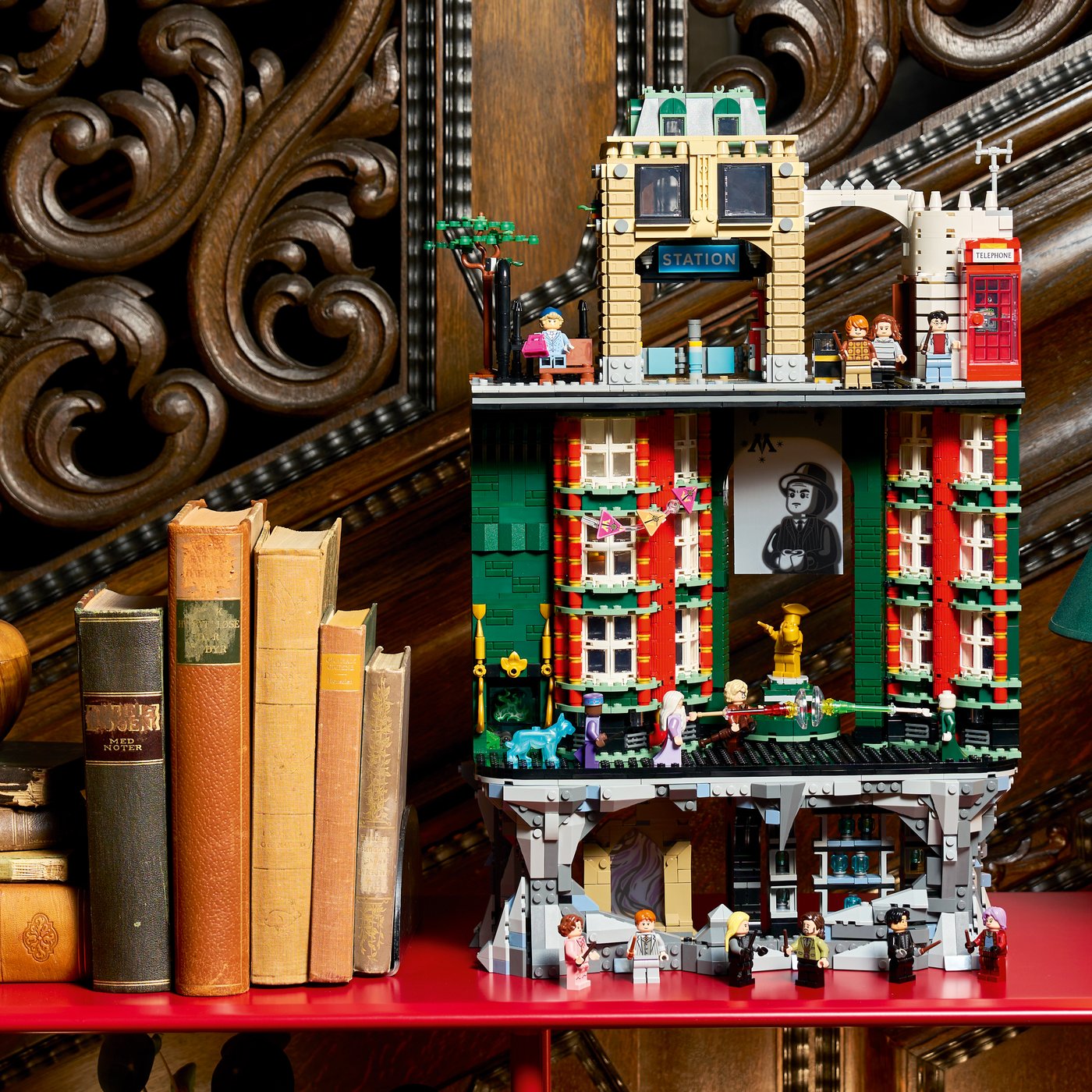
A world shown in cross-section
LEGO Harry Potter Ministry of Magic, set 76476, uses a vertical cross-section to connect a London street with the magical institution below. The 3,491-piece model includes 14 minifigures and scenes such as offices, a courtroom and the Hall of Prophecy. LEGO lists it at approximately 51 centimeters high, 35 wide and 15 deep. This is an assessment of the published design, not a report from a completed build.
Height can organize a story
A tall model gives viewers a natural route through a scene. They can begin at street level, follow the architecture downward and discover smaller moments along the way. That is especially useful when several characters need to share a display without becoming an indistinct crowd.
For your own cross-section build, sketch the major spaces before decorating individual rooms. Give each floor one visual priority. A courtroom might need a clear central position; an office might be recognizable from a desk and doorway. Repeating every detail on every level makes the whole building harder to read.
Choose the viewing height first
The relatively shallow depth makes the set sound shelf-friendly, but height changes the calculation. Placing the base too high could make upper rooms difficult to see. Placing it low might favor a seated viewer but hide details behind furniture.
Use a cardboard outline to compare possible locations. Think about who will look at it and whether they can see into the spaces that matter to them. A display built around favorite figures may need a different position from one chosen mainly for its architectural outline. Also leave practical access to any play features instead of packing the model tightly between books.
The questions for a later build review
The announcement describes collapsing shelves in the Hall of Prophecy and debuts for Arabella Figg and a Lynx Patronus. It gave a US price of $449.99 and a general release of September 1, 2026. Those details establish the package, but they do not answer how comfortable the finished model is to handle.
We would want to examine visibility, access and the balance between display and interaction. The design’s promising idea is its layered storytelling: one tall slice can connect otherwise separate scenes. Whether it deserves your shelf space will depend on which of those scenes you most want to revisit.
Reporting checked September 24, 2026. Plans and programs can change; follow the linked organizations for current information.