
Maia Weinstock’s Women of NASA keeps the people beside the spacecraft
The 2017 Ideas set uses four named minifigures and three small scenes to make the human side of space exploration visible.
A space set with people at its center
LEGO Ideas Women of NASA began with Maia Weinstock’s interest in space exploration and the history of women in science and engineering. LEGO’s October 18, 2017 announcement credits the science editor and writer as the fan designer, with Tara Wike and Gemma Anderson developing the final set and minifigures. It launched on November 1 that year.
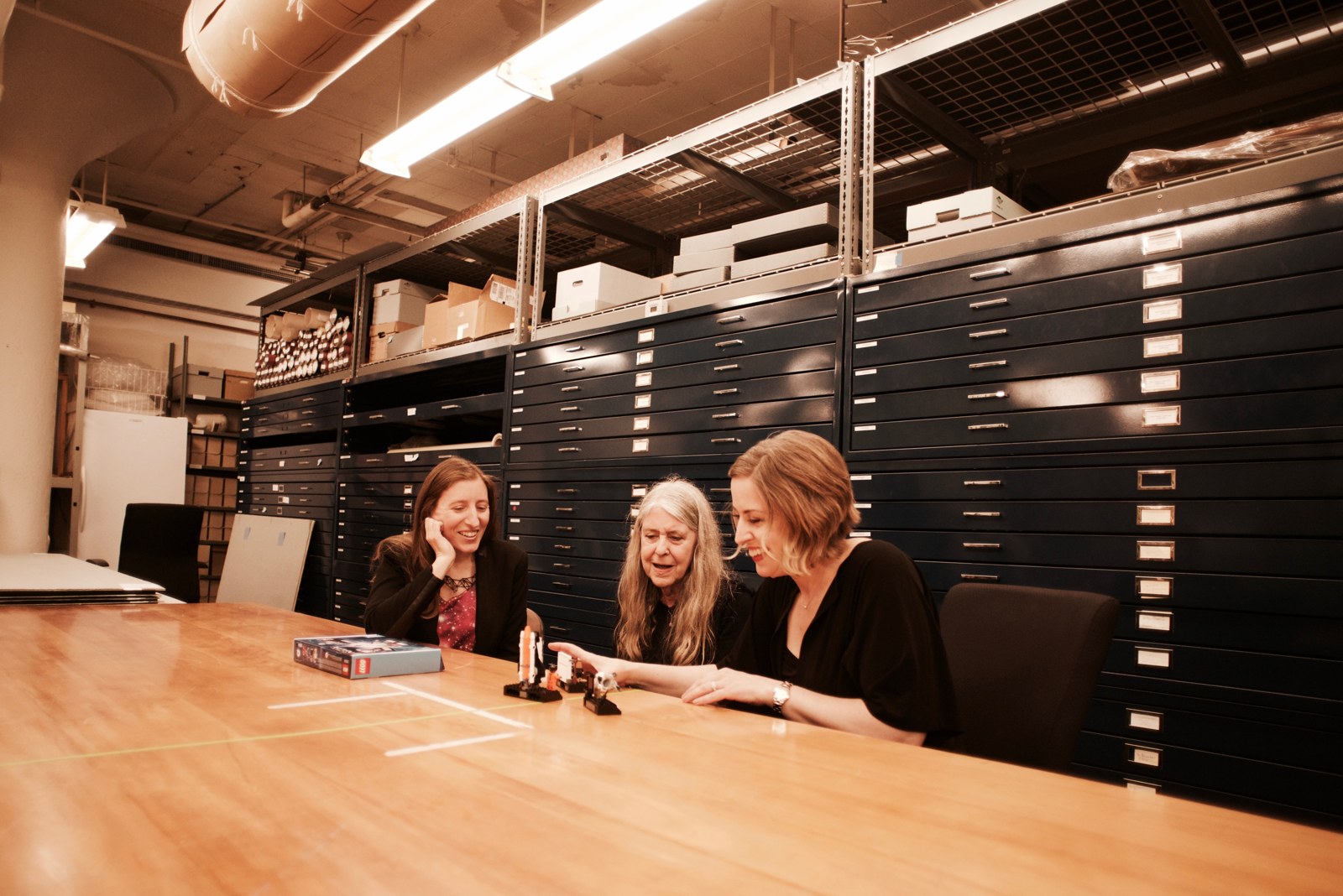
The accompanying photograph makes that collaboration tangible: Weinstock, Margaret Hamilton and Wike gathered around the finished figures. A subject of the set could see her work represented in bricks alongside the people helping bring that representation to life.
Four figures, three ways into the story
Set 21312 includes Nancy Grace Roman, Margaret Hamilton, Sally Ride and Mae Jemison. LEGO’s product page describes three scenes: a Hubble telescope display, Hamilton beside a stack representing software listings, and a shuttle launchpad shared by Ride and Jemison. Printed nameplates identify all four women.
The included booklet adds information about the featured people, the fan creator and the LEGO designers. That gives the display another useful layer. A visitor can notice a small object, learn whose work it represents, then turn to a longer explanation instead of relying on recognition alone.
Why the small objects matter
Our reading is that the book stack is especially effective as a display idea. Space models naturally attract attention through machines and vehicles. Giving software a physical presence asks the viewer to notice another kind of work. The object becomes a prompt for a question, which is a good job for a small museum-like scene.
For anyone arranging historical minifigures at home, that suggests a useful approach: pair a figure with an object that helps explain the person’s contribution. Choose something specific enough to invite curiosity, then make the name easy to read. A larger base is not automatically a more informative display.
Enjoy the set as a starting point
This is a retrospective appreciation, not a hands-on review or a current resale valuation. We would approach the three scenes as invitations to learn rather than complete biographies. No tiny build can contain a whole career, and the most interesting conversation may begin with what a visitor wants to know next.
If sharing the model with a younger builder, let them choose which scene to investigate first. Keep an accompanying note short enough to read beside the bricks, with a route to fuller information. The lasting appeal here is that the figures have names, the objects have reasons to be there, and the conversation can continue after the model is finished.
Reporting checked October 9, 2026. Plans and programs can change; follow the linked organizations for current information.