
Lucas Bolt’s LEGO Dungeons & Dragons set was built around choices
The fan idea behind Red Dragon’s Tale connects a fantasy display with the shared decisions of a tabletop adventure.
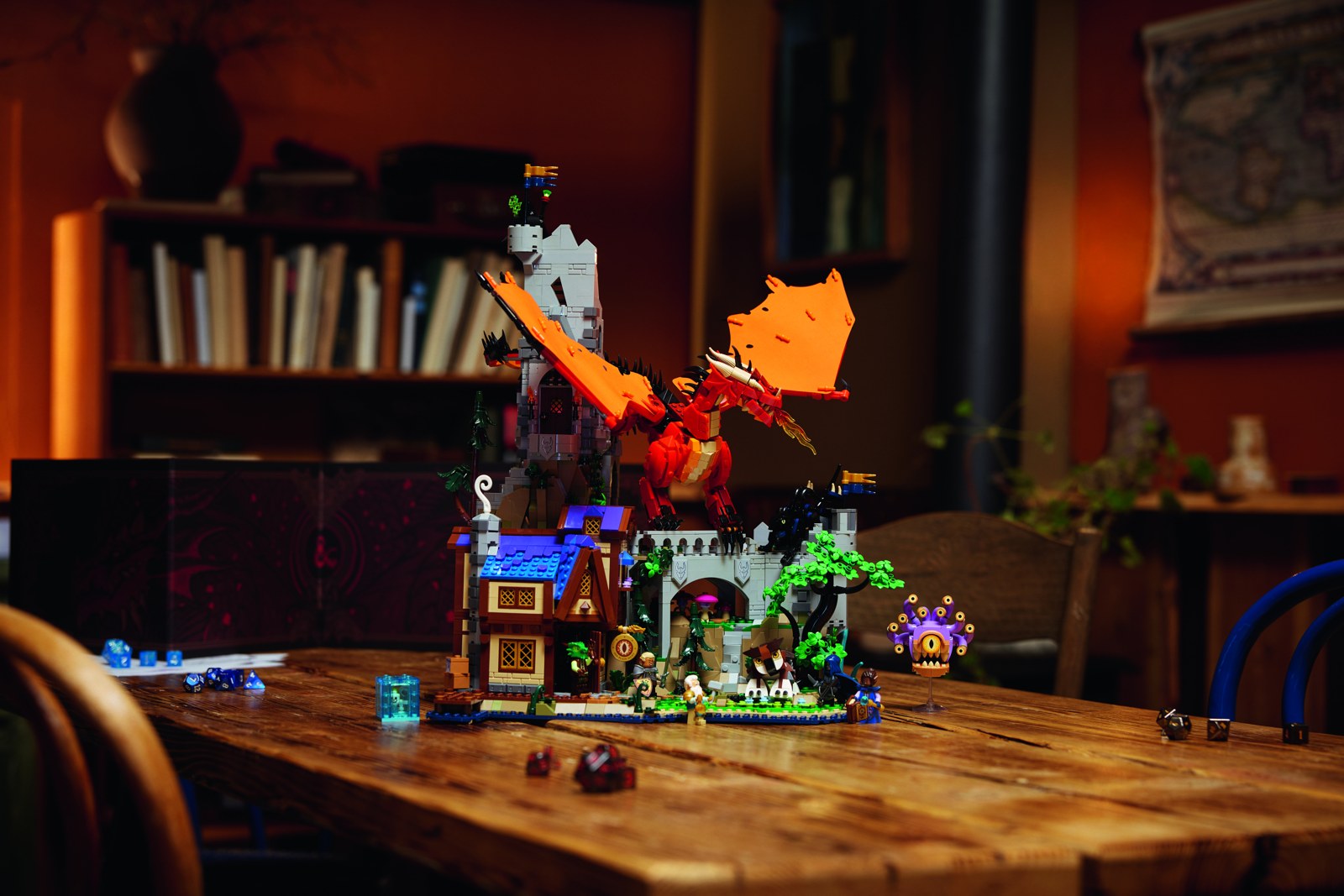
A fan challenge with a playable answer
Lucas Bolt’s winning idea for LEGO Dungeons & Dragons began with a question about play: where could an adventure go next? LEGO’s March 2024 announcement describes the Amsterdam fan designer, known as BoltBuilds, developing a layout with different routes and challenges. His submission won a LEGO Ideas competition that attracted more than 600 entries.
That origin helps explain why Red Dragon’s Tale, set 21348, rewards attention beyond its imposing dragon. Our reading of the design is that the locations matter as much as the skyline. A model becomes a setting for a group when players can imagine choices within it, rather than simply admire it from outside.
A place for the party to gather
The official set description identifies a tavern, dungeon and tower, with Cinderhowl able to curl around the tower. Six minifigures include four adventurers, an innkeeper and a dragonborn. Creatures include a beholder, an owlbear and a displacer beast. The tavern’s roof and upper level can be removed for access.
For a tabletop group, access is a practical consideration. A beautiful room is easier to use when everyone can see what is inside. Before placing any elaborate model in a game, it is worth checking sightlines from each seat and leaving room for the things players handle constantly: character sheets, dice and notes.
The community contributed more than the buildings
The collaboration extended to the supporting material. Wizards of the Coast developed an adventure for the set, while a separate fan competition supplied the instruction-cover artwork, created by Chris Yu. The resulting project brought together model design, illustration and tabletop storytelling.
Those are different creative jobs. The model gives a group a shared place to look; an adventure gives its choices consequences; an illustration establishes a mood before the first brick is placed. For fan collaborations, this is an appealing example of letting several people contribute in ways that suit their particular interests, without expecting one person to do everything.
From finished model to an evening together
This is a retrospective on the set introduced in 2024, based on official material rather than a hands-on playtest. LEGO’s product page links onward to its adventure resources and recorded game night; check those resources before planning a session around them.
The most useful lesson for a home game may be to decide what the model needs to communicate. A doorway, a change in height or an occupied room can give players something concrete to discuss. The build does not have to dictate their next move. Its job can be to make the possibilities easier to picture—and give everyone at the table a reason to join in.
Reporting checked October 5, 2026. Plans and programs can change; follow the linked organizations for current information.