
A better LEGO parts collection begins with finding what you already own
Build a storage system around your projects instead of sorting every element into a tiny drawer.
Storage should help the next build
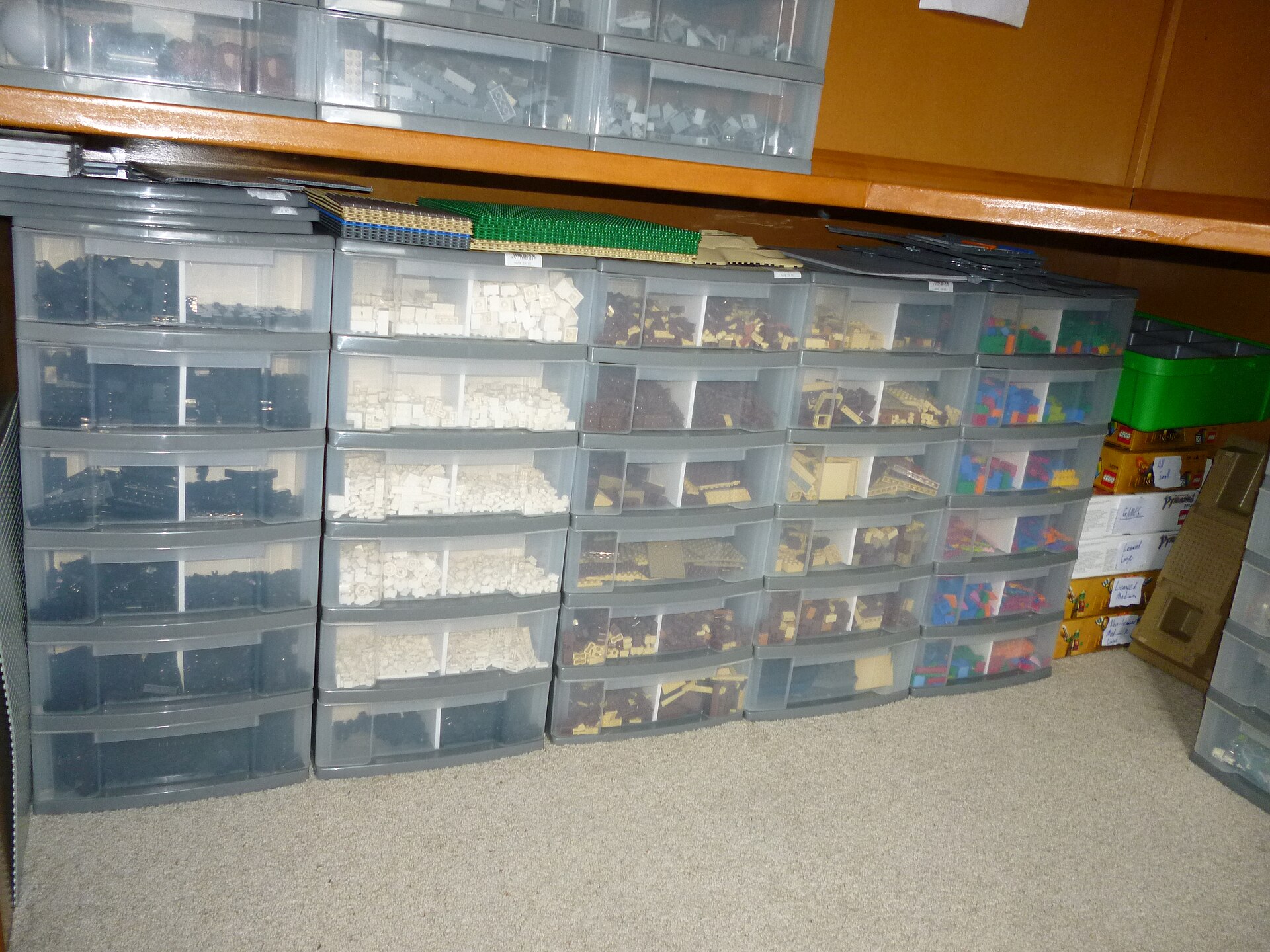
A wall of parts drawers can look wonderfully organized, but the useful test is whether you can find the piece you need. BrickLink’s catalog provides a reference vocabulary for identifying parts and distinguishing their shapes. You can use that kind of consistent naming in a personal collection without trying to reproduce an entire professional inventory system at home.
Separate the searches that cause frustration
Notice what interrupts you during a normal build. Perhaps small black plates disappear among larger black bricks, or several similar hinges keep ending up in the same tray. Those repeated searches identify where a new category would actually help.
Start with a few broad shape groups and subdivide only the ones that become difficult to use. Color can be useful within a large category, but sorting everything by color first may leave a tiny dark element hidden in a box of much larger dark pieces. The best arrangement is the one that makes your common searches shorter.
Give unfinished projects a home
Keep active projects separate from general stock. A shallow tray, a labeled container or a resealable bag can hold the pieces you have already selected, along with a short note about what is missing. That prevents repeated sorting every time the table needs to be cleared.
When a project ends, return unused pieces to their normal categories rather than letting the temporary container become permanent storage. If you deliberately keep a model’s parts together for rebuilding, label it with the set number or your own project name. Distinguish that choice from a miscellaneous bag whose purpose has been forgotten.
Make the system easy to maintain
Labels should be readable from the position where you usually work. Leave room for categories to grow, and avoid buying an elaborate cabinet before you know the size of the problem. A few reused containers can test the arrangement first.
Once a month, pick one troublesome container and improve it. You might split a crowded category, merge two nearly empty ones or photograph unusual pieces for a private reference note. The pictured collection of drawers is a real builder’s setup, not a prescription for how much furniture anyone needs. A successful system can be modest. Its purpose is to return your attention to the model, with fewer pauses to search for a part you already own.
Reporting checked September 24, 2026. Plans and programs can change; follow the linked organizations for current information.