
A minifigure goes first in the LEGO MRI room
In Denmark and England, builders working with hospitals found different ways to let children explore a scan before it was their turn.
A window between two rooms
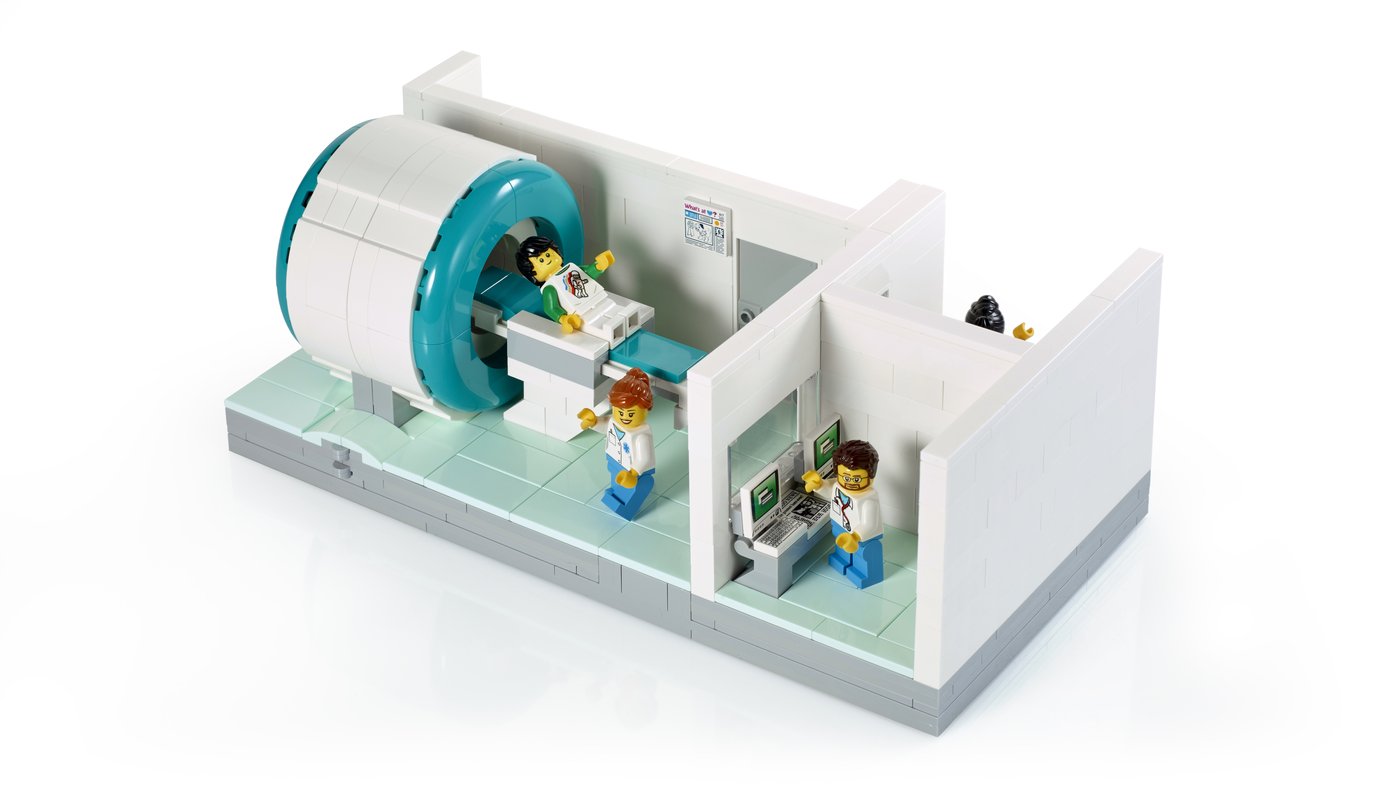
A minifigure lies on a narrow bed, head toward the teal ring of a scanner. A second figure stands beside the bed. Through a window in the dividing wall, a third sits at a computer. The official photograph of the LEGO Foundation’s MRI model shows a detail that a model of the machine alone would miss. When the operator goes next door, a child can still see where that person has gone.
The project began in 2015 with LEGO chemical technician Erik Ullerlund Staehr and Odense University Hospital in Denmark. By February 2022, the LEGO Foundation was announcing plans to donate 600 models for use in hospital radiology departments. LEGO volunteers would assemble them, and staff could use four accompanying training videos to plan conversations around the model. The original request form later closed, according to a 2025 note on the announcement.
The patient could look like you
At Ipswich Hospital in England, a family made a different version with local details. In 2018 the hospital described a scanner built by Chris Johnson with help from his family, including his nine-year-old son Livio. There were flowers in the waiting area, pictures of scans on the computer screens and an Ipswich Hospital sign. Putting the figure into the machine triggered a recording of the scanner’s sound, Livio’s favorite part.
Johnson included a bag of minifigure clothes, hair and faces so a child could choose who went in. A model maker might regard the patient as the last piece needed to finish a scene. In the Ipswich build, choosing that figure was something the maker deliberately left to the next person.
From the playroom to the scanner
Kingston and Richmond NHS Foundation Trust gives a glimpse of how bricks fit into the rest of a visit. Its illustrated MRI guide follows a fictional astronaut named Billy. On the ward, Billy meets the play team, hears the sounds to expect and explores a LEGO version of the room. Later, his mother holds his foot while the radiographer goes to the command room.
That small family detail gives the miniature rooms a purpose. Before a child has to lie still, there is time to move the figures around and ask a very practical question about the full-size room. Where will everybody be?
Reporting checked November 3, 2026. Plans and programs can change; follow the linked organizations for current information.