Why LEGO Education Science leaves room for more than one answer
A look at the classroom system introduced in 2025, where shared builds and open-ended challenges connect LEGO models with scientific questions.
The interesting part comes after the first build
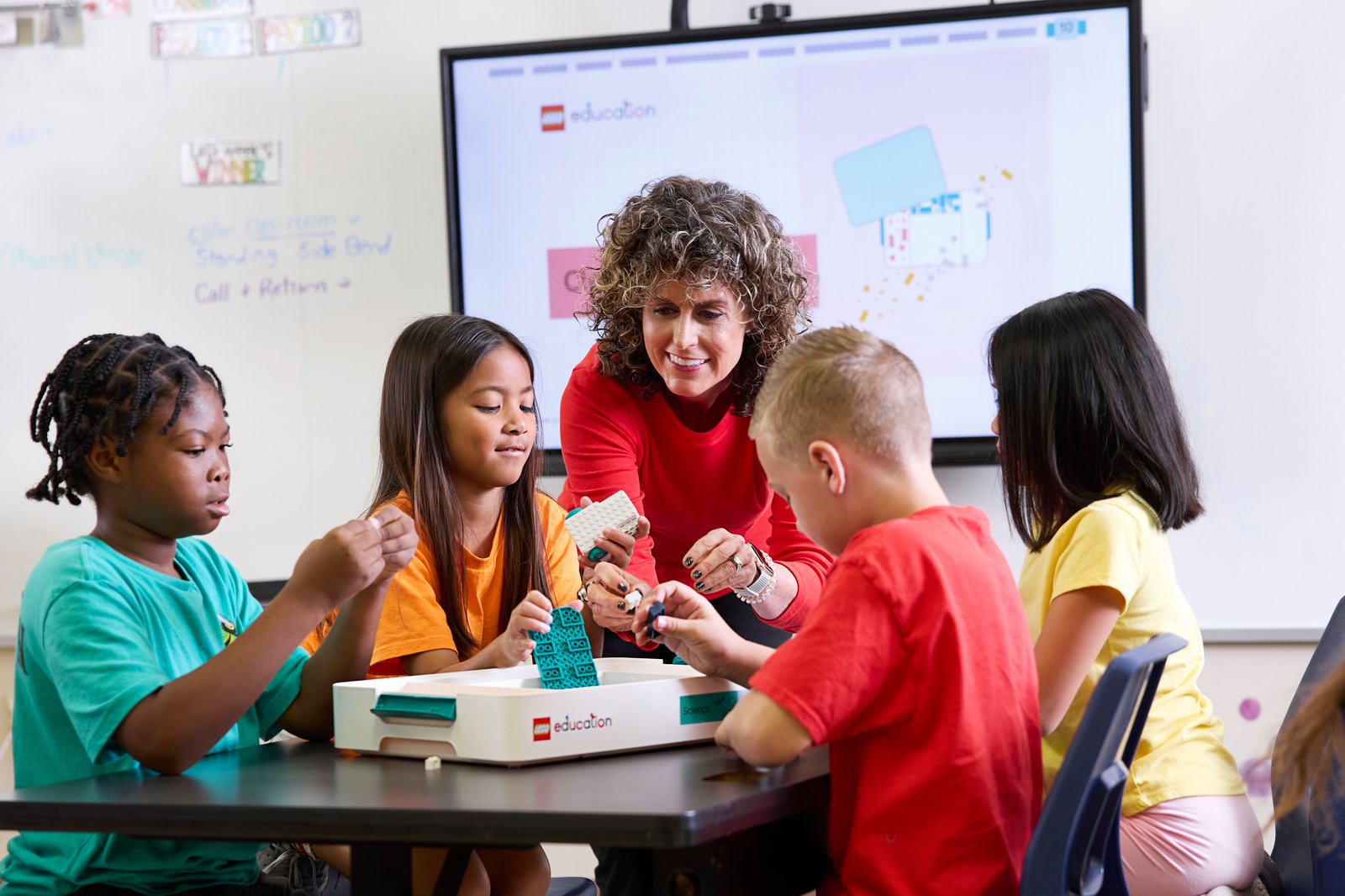
A finished LEGO model can be a useful beginning. In LEGO Education Science, introduced in January 2025, the structure on the table is meant to give students something to question, change and explain. That makes the system interesting beyond its collection of bricks and hardware.
LEGO’s launch materials described more than 120 lessons across three grade bands, with kits intended for groups of up to four students. This is a look at that educational design, not a new-product announcement or an independent classroom evaluation. The central question is how a shared model can make each participant’s thinking visible.
A lemonade stand becomes a question
In an official introduction, LEGO Education’s Andrew Sliwinski illustrated the approach with an earthquake simulator and a model lemonade stand. Students observe cups falling when it shakes, then look for changes that could keep them stable. The task gives different groups room to propose different solutions.
Our interpretation is that the useful shift happens when completing instructions stops being the goal. The initial model establishes a common situation; the subsequent changes reveal what each group thinks will happen. A builder who notices a problem, predicts an outcome or explains a result contributes something different from the person connecting pieces.
Sharing the kit is only the starting point
The company describes lessons that move from smaller tasks toward an open build, supported by teacher notes and classroom presentations in an online portal. Those resources matter because a box of parts does not, by itself, organize a productive conversation.
For a family or community building session inspired by this approach, our suggestion is to agree on a question before distributing bricks. Ask each participant for a prediction, change one feature, then compare what happened. Keep a quick sketch or photograph of each version. These are general activity suggestions, not official lesson instructions or a claim that the classroom curriculum can be reproduced without its materials.
Judge the explanation as well as the model
The launch announcement connects lessons with science standards and real-world phenomena. That is a different purpose from evaluating whether a display model resembles a reference image. Here, a useful model should also support a discussion about why something happens.
For educators considering the system, the practical next step is to examine the actual lessons against their curriculum, students and available class time. Our analysis is that the most compelling idea is permission to revise: a first attempt can become evidence for a better second attempt. Claims about learning gains require evidence beyond product photography and a manufacturer’s description; this article does not establish those outcomes.
Reporting checked October 16, 2026. Plans and programs can change; follow the linked organizations for current information.