
Leandro Tayag’s LEGO Voltron gave five lions one shared destination
The fan-designed Voltron 21311 combines a love of classic robots with a building format that can bring several people to the same table.
An old enthusiasm becomes a new challenge
Leandro “Lendy” Tayag’s Voltron project had to succeed at two scales. Each lion needed its own recognizable form, and all five needed to make sense together as one robot. For a fan of the character, the act of combining them was part of the story.
In LEGO’s original companion booklet, Tayag connected his interest to a Voltron toy his parents bought him as a child. He described repeatedly revising the lion heads and working to make the legs look right in lion form while folding appropriately for the combined model. This retrospective examines that design story through official sources; it is not a hands-on review.
A community idea with five starting points
The official LEGO Ideas launch article dates the general release to August 1, 2018. It credits LEGO designer Niek van Slagmaat with more than a year of development on the official version of Tayag’s submission. The article also highlights separate instruction booklets for the lions, allowing a team to work on them.
That format offers a lovely social possibility. A group can begin with different animals, compare progress and then bring the separate builds together. The final combination gives everyone a shared moment after the smaller individual tasks.
The colors explain the combination
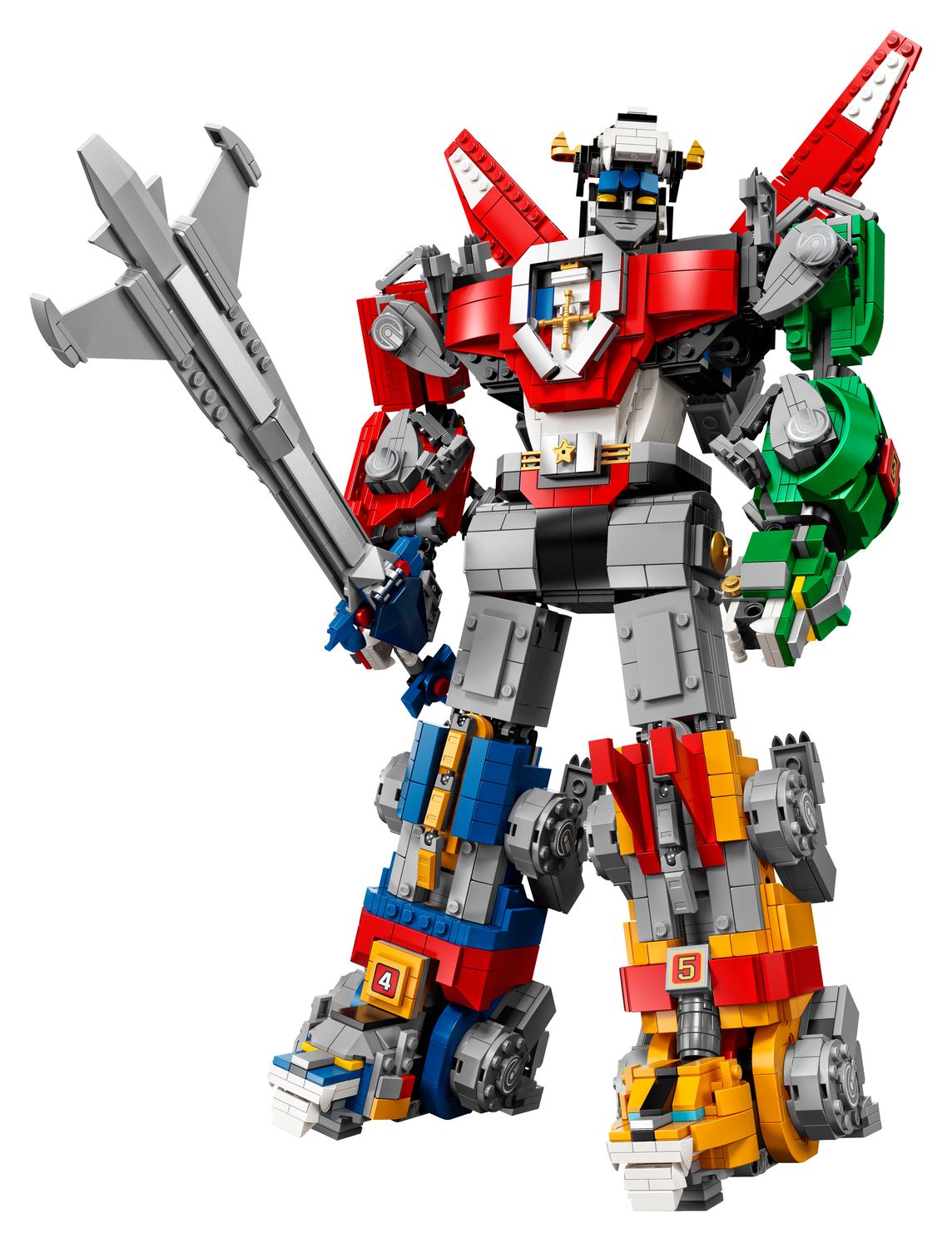
The official specifications identify the black lion as the torso and head, the red and green lions as arms, and the yellow and blue lions as legs. The completed model stands over 40 centimeters tall. LEGO lists movable head, shoulders, arms and wrists, while explicitly noting that the combined robot’s legs are not posable.
That distinction matters for anyone assessing what the model does. The individual animals and the assembled robot have different movement possibilities. The product page now lists the set as retired.
Keep the animals visible in the hero
Our reading of the official image starts at the feet, where the lion faces remain easy to identify. Moving upward reveals the differently colored arms and the broad central chest. The robot’s individual contributors remain legible inside the larger figure.
For an original collaborative build, that suggests an inviting design goal: give each participant something distinct to make, then choose a final arrangement that still lets people recognize their contribution. A shared model can feel more personal when its separate parts retain their identity.
Voltron makes that idea unusually literal. Five creatures become one character, and a fan’s affection for a childhood toy becomes a project other builders can enjoy together.
Reporting checked October 23, 2026. Plans and programs can change; follow the linked organizations for current information.