
La Catrina brings a fan’s cultural tribute to the LEGO shelf
For the season of Día de Muertos, the story behind José Miguel Medina Pérez’s design matters as much as its flowers and butterflies.
A model with a place behind it
The LEGO Ideas La Catrina figure began with a fan looking closely at an existing craft tradition. In its July 15 account of his LEGO Ideas interview, Brick Fanatics reported that José Miguel Medina Pérez, known as yop1172, found inspiration during a family trip to Capula, Michoacán. The clay Catrina sculptures there prompted a question about how their detail could be expressed in LEGO bricks.
The account describes a project that developed from a skeleton into a dressed figure, with small ball joints helping the original design suggest folds of fabric. Medina Pérez welcomed the changes made for the production set, including its smaller size, while valuing the retained butterfly details. That origin gives the model a more specific identity than an ornamental skeleton: it carries a builder’s response to an art form he encountered with his family.
The finished figure
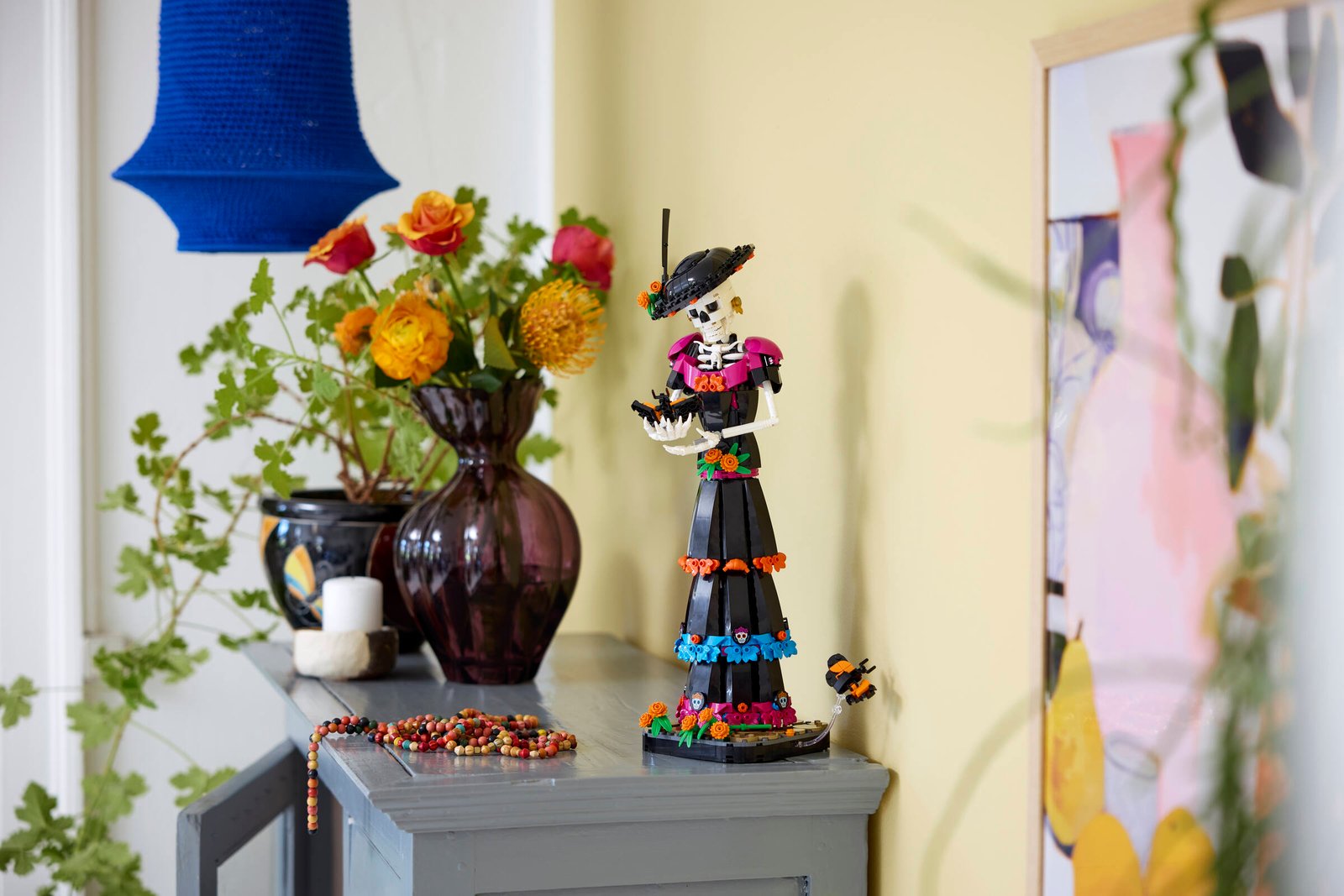
LEGO’s official description identifies set 21372 as a 1,212-piece model standing over 43 centimetres tall. Brick-built marigolds and printed sugar skull decorations appear on the hat and clothing. The base includes another butterfly, and the head and arms can be posed.
Those details give the figure several points of attention. The flowers lead the eye down the dark dress, while the butterfly held in the hand creates a small encounter at its center. In the official photograph, the figure is surrounded by household objects and flowers; the image presents it as something to live alongside, rather than an isolated seasonal prop. This assessment is based on published materials and photography, not a hands-on test.
The celebration beyond the model
The timing of this feature is deliberate. UNESCO describes the indigenous Mexican festivities dedicated to the dead as taking place from late October into early November, commemorating the return of deceased relatives and loved ones. Its account emphasizes families preparing favorite foods, flowers and offerings, and the social importance of the encounter between the living and the dead. The tradition was inscribed on UNESCO’s Representative List in 2008.
That context matters when encountering the LEGO figure through a shop window or a photograph. A commercial model can introduce a visual symbol, but it cannot stand in for the varied family and community practices surrounding it. The object and the living tradition deserve different kinds of attention.
What the fan contribution adds
The useful connection here runs from a particular place, through one builder’s interpretation, to an object other people can construct. Remembering that sequence keeps the fan’s contribution visible after the design becomes a product number. It also gives collectors a reason to read beyond the specification: the most interesting part of this display may be the conversation about what brought it into being.
Reporting checked November 2, 2026. Plans and programs can change; follow the linked organizations for current information.