
LEGO Kingfisher Bird captures the moment after the splash
Kingfisher Bird 10331 turns its water base into part of the action. A retrospective look at a wildlife model whose pose carries the story.
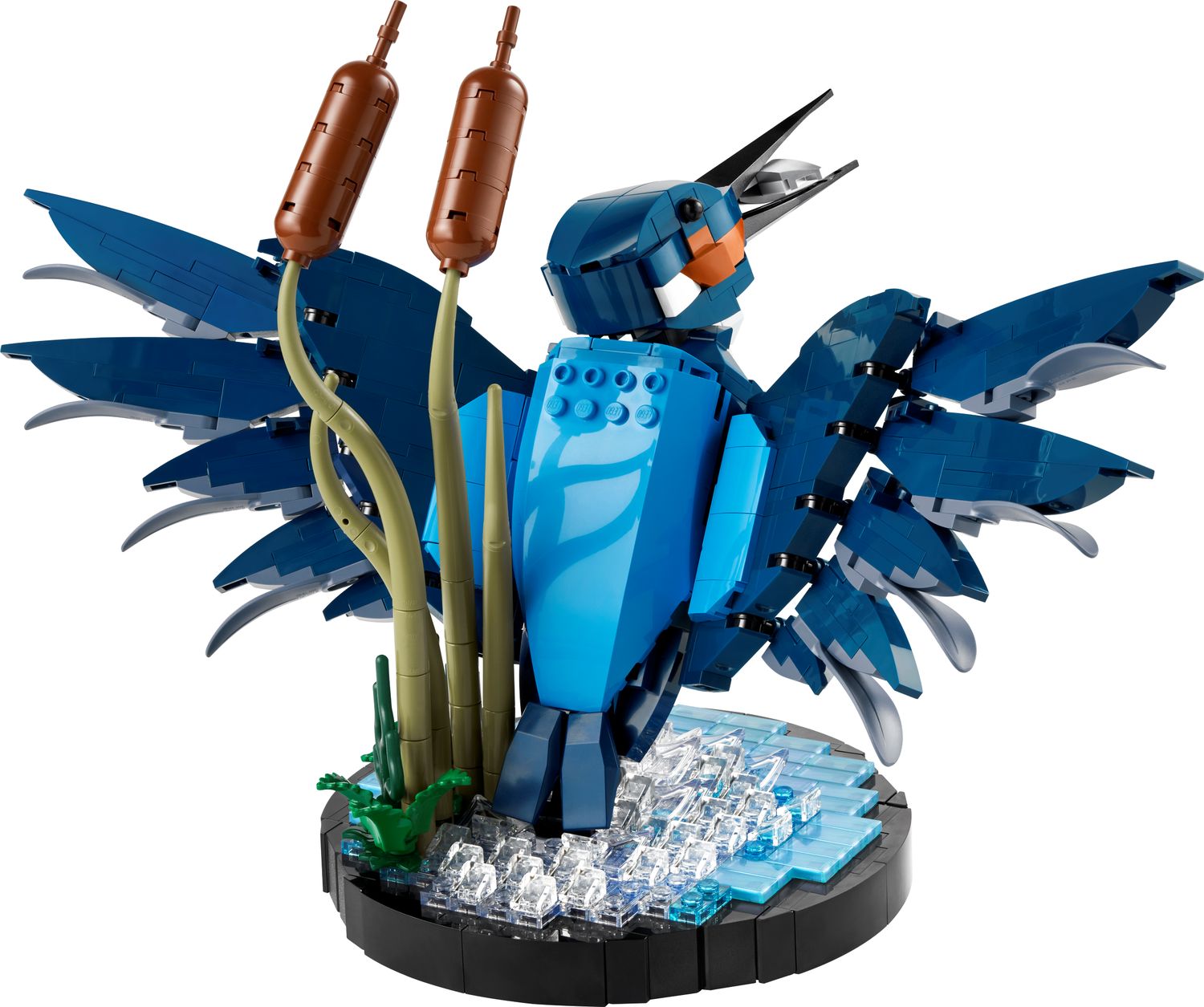
A wildlife scene in one instant
LEGO Icons Kingfisher Bird 10331 is easiest to understand as a moment rather than a specimen. Its wings spread, its beak points upward and a fish supplies the explanation for the commotion beneath it. The model invites the viewer to imagine what happened a second earlier.
LEGO describes the 834-piece set as a kingfisher emerging from water with its catch. This is a retrospective desk review of the documented design and official imagery, without a claim of hands-on testing.
Why this bird suited the brief
In a January 2024 fan-media interview reported by Brick Fanatics, designer Sven Franic explained that the team looked to the Botanical Collection when considering an adult animal display. He described color and size as factors in selecting the kingfisher, alongside its recognizability.
That background helps explain why the model can appeal beyond someone collecting animal sets. Our reading is that its bold shape does much of the introductory work. You can recognize an active bird before examining individual pieces or knowing the designer's reasoning. The contrast between blue plumage and orange around the head gives the eye a clear place to settle.
The base participates in the action
The official product description says the water setting, including its reeds, doubles as the display stand. It also identifies a posable head and claws. These are the documented adjustments; this analysis does not assume a flapping mechanism or claim that every part of the bird articulates.
In the official image, clear pieces interrupt the blue water surface while tall reeds rise alongside the bird. Our interpretation is that the base makes the pose feel specific. Replace that setting with an anonymous block and the model would still be a bird, but the connection between the fish, the open wings and the upward movement would be weaker.
The setting is therefore doing two jobs: it holds the composition together physically and supplies the evidence for its little narrative.
Read the silhouette before the details
For builders studying animal sculpture, our suggested exercise is to look at the official photograph from a distance, then move closer. At first, follow the direction of the wings and beak. Next, notice how layered pieces break up the wing edges. Finally, look at the small fish that turns a general flight pose into an event.
Those observations offer a useful order for planning an original wildlife build: choose the instant, establish the outline, then add details that make the action legible. Extra texture cannot rescue a pose that tells an unclear story.
Kingfisher Bird is an appealing example because its setting earns its place. The water is part of what the bird is doing, and the finished scene feels more lively for it.
Reporting checked October 19, 2026. Plans and programs can change; follow the linked organizations for current information.