
Kevin Feeser’s Tree House began with a problem hidden beneath the leaves
The fan designer’s account of rebuilding the trunk reveals how the 2019 Ideas model balances an inviting scene with a structural challenge.
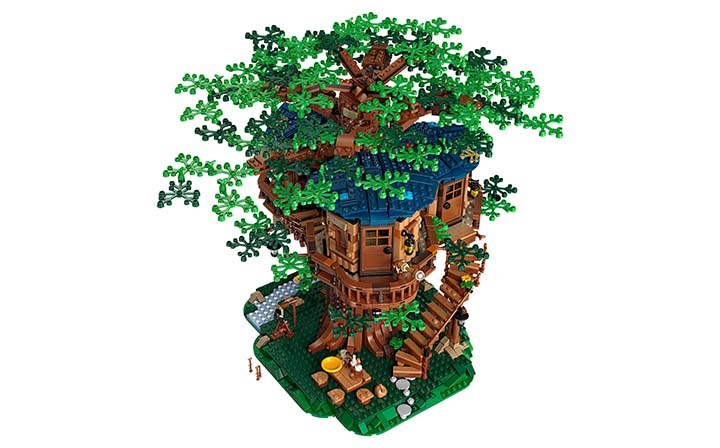
The trunk had a demanding job
The appeal of a tree house is easy to picture: cabins among leaves, reached by steps and bridges. Making that picture stand up in LEGO bricks is another matter. In LEGO’s Meet the Maker feature, Kevin Feeser explains that the trunk was the hardest part of his original Tree House design because it needed to support three cabins while keeping the element count down.
That is a useful place to begin appreciating set 21318. The branches and rooms catch the eye, but the project depended on a central structure capable of carrying the idea.
Rebuilding was part of the idea
Feeser’s account traces his inspiration to a stay in tree houses with friends and his interest in nature and wooden construction. He reports around 300 hours across two months and six rounds of remodeling. These are his figures for developing the original submission, not a recommended building time for the retail set.
Our takeaway is that revising a model can be evidence of commitment to an idea. The first version may establish the atmosphere while later versions solve the less visible questions: support, connections and how much space one feature needs. A convincing scene can emerge through those changes rather than before them.
The official model changes with the season
LEGO’s August 2019 announcement records 3,036 pieces for the released set. Its removable treetop reveals three cabins, and the included leaf selections allow a green summer canopy or an autumn arrangement. The announcement also identifies 185 botanical elements made from plant-based polyethylene using sugarcane. That statement concerns those elements, not every piece in the box.
For display, the seasonal choice provides a reason to revisit the same model. Our suggestion is to photograph it from the same angle before and after changing the canopy. Comparing the two views makes it easier to notice how leaf color changes the visual weight of the cabins and trunk.
Look below the canopy
This retrospective draws on the creator’s published account and LEGO’s release rather than our own build. To study the design, begin at the base and follow the trunk upward before looking at the rooms. Then reverse the process and consider how each cabin relates to that central support.
It is an enjoyable way to read a complex model without reducing it to its piece count. Feeser’s story gives the finished tree a second layer of interest: the inviting place in the branches grew out of repeated decisions about what had to hold it all together.
Reporting checked October 8, 2026. Plans and programs can change; follow the linked organizations for current information.