
LEGO Himeji Castle lets the rooflines explain the landmark
Himeji Castle 21060 uses a restrained palette and a selective view of the grounds to make a complex landmark readable in miniature.
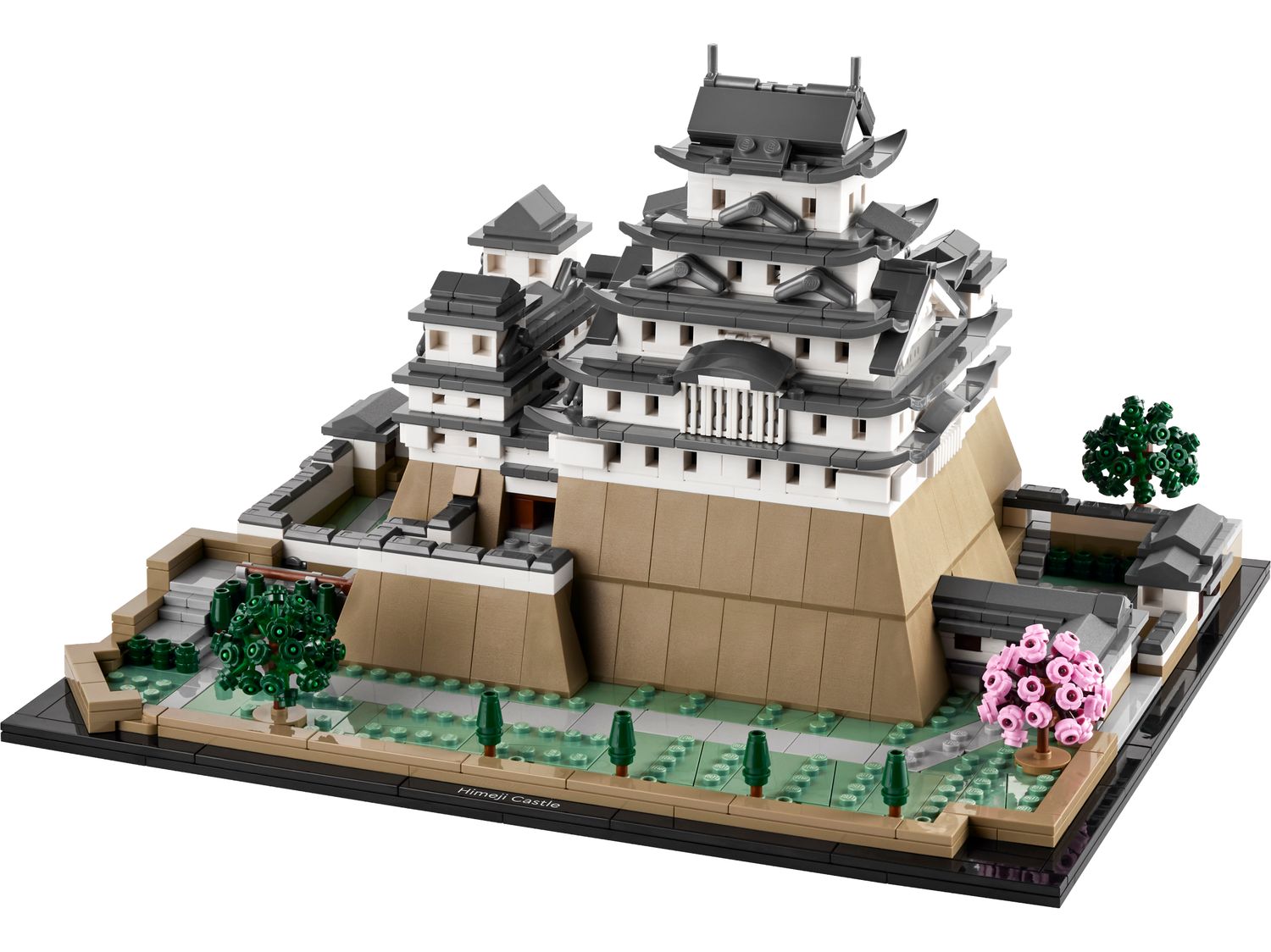
An architectural portrait with a clear focus
A miniature landmark needs to choose what the viewer should understand first. In LEGO Architecture Himeji Castle 21060, the official image makes the answer especially clear: a sequence of dark roof edges rises above white walls, with the tallest building gathering the composition around it.
This is a retrospective desk review based on official materials, heritage information and visual analysis, rather than a hands-on assessment. LEGO lists 2,125 pieces and describes a model focused on the upper part of the castle grounds. That selective scope matters when considering what the set represents.
Why the roof layers matter
UNESCO’s account of Himeji-jo identifies the relationship between its building masses and multiple roof layers as part of the landmark’s architectural distinction. It also highlights white plastered walls and the combination of practical defensive design with visual beauty. The World Heritage property includes 83 buildings.
That context helps explain why a model does not need to reproduce an entire site to be informative. Our interpretation is that its clearest contribution is a readable relationship between the major shapes. The white-and-gray contrast lets the eye separate one level from the next, while the stepped outline makes the overall height understandable.
A useful look beneath the roof
LEGO says the top of the principal building lifts away to reveal a simplified interior layout. The model also includes three cherry trees and surrounding grounds. Its advertised dimensions are more than 19 centimeters high, 32 centimeters wide and 27 centimeters deep.
The word simplified is helpful here. A display model can prompt curiosity about a real place without functioning as a complete architectural survey. Treat the interior as an introduction, then use the heritage source to explore the building beyond what a small plastic model can convey.
Give the whole outline room
Our display suggestion is to leave clear space around the silhouette. A crowded shelf can make a miniature roofline disappear against objects behind it. A plain backdrop and a viewing angle that shows both the front and one side should make the relationships easier to read.
For builders studying their own architectural projects, the model suggests a useful order of questions. What is the dominant mass? Which adjoining shapes establish its scale? Which details are needed to distinguish this building from another one? Resolving those questions before adding decorative texture can keep a small model coherent.
Himeji Castle is especially inviting as an architectural conversation starter. It gives a visitor something immediate to recognize, then leaves plenty of real history to discover.
Reporting checked October 20, 2026. Plans and programs can change; follow the linked organizations for current information.