
LEGO Happy Plants gives the flowerpots a life of their own
A sitting blue pot and a standing yellow one changed the relationship between LEGO’s botanical models and the people building them.
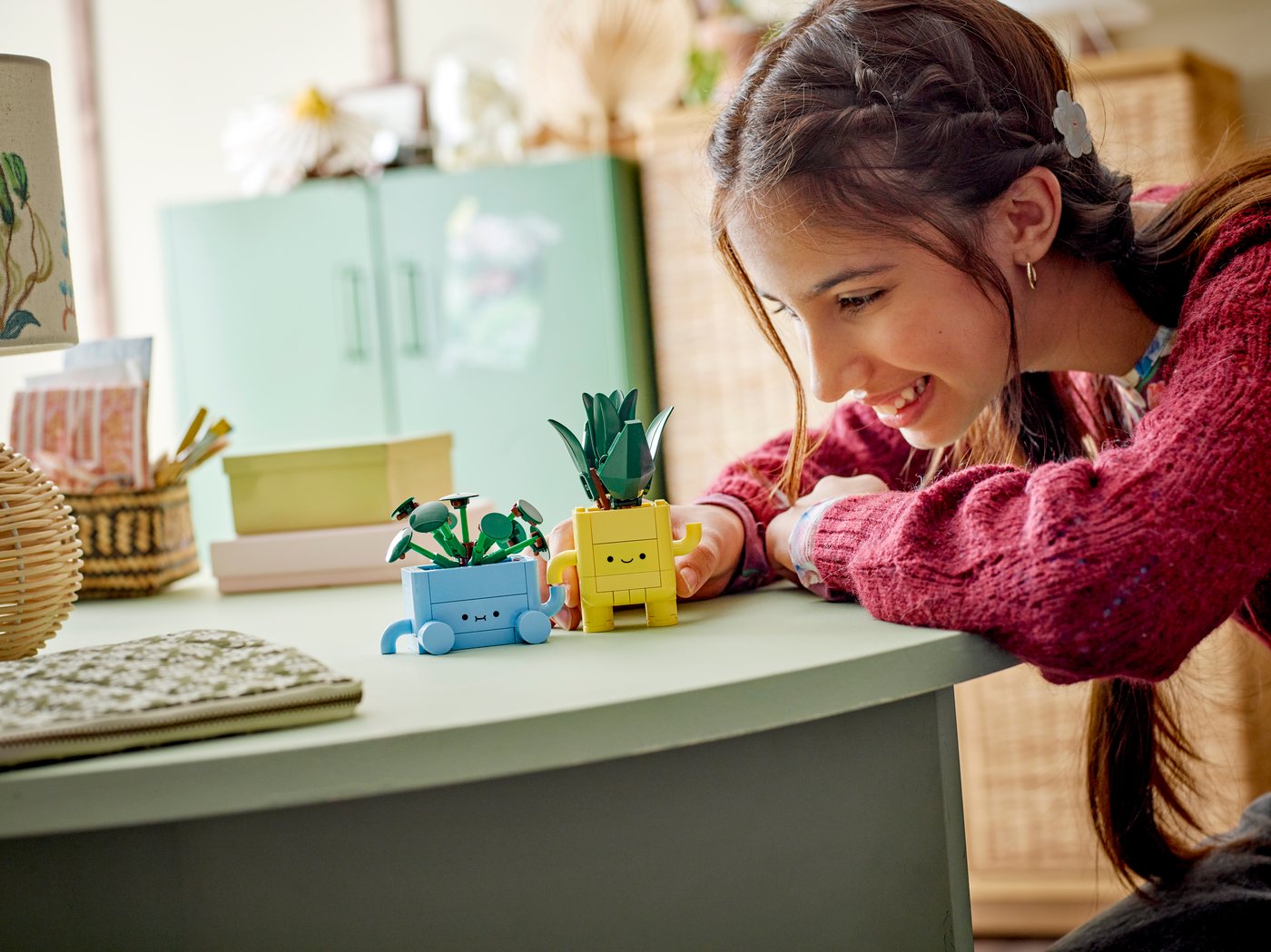
The pot is looking back
In LEGO’s official photograph of Happy Plants, a child leans across a desk toward two little pots. The yellow one stands upright, with pointed leaves rising above its face. The blue one sits lower, its round feet stretched out beside a trailing arm. Both plants are recognizable as plants, but the arrangement reads as a meeting between three characters.
That is the small shift at the center of set 10349. A botanical model usually asks someone to admire the subject growing above its container. Here, the container has an expression and a posture. The leaves can look like hair. Even before anyone moves a piece, the pair offers a story about who is standing and who has stopped for a rest. This is a reading of the published design and photography, rather than a report of hands-on building.
A younger place in the collection
LEGO announced Happy Plants on April 22, 2025, alongside the Petite Sunny Bouquet as part of an expansion of Botanicals to builders aged nine and up. Happy Plants launched that June. The 217-piece set depicts a baby dracaena and a baby pilea, with the two different pots giving each a ready-made stage.
The same announcement introduced a Japanese Red Maple Bonsai Tree for adults. Seen together, the models show two approaches to the collection: one concentrates on a tree’s branching shape and autumn color; the other gives small houseplants personalities. The children’s model does not need to pretend it is an adult display piece in miniature to belong beside it.
An identity that can change
The official product description confirms that the plants are interchangeable between the blue and yellow pots. That makes the character assignment temporary. The tall, pointed foliage can change companions with the rounder leaves, while the faces and body positions stay with their containers. LEGO also presents the two plants as a project that can be built alone or shared.
For a paired display, this is a useful distinction: the two objects belong together without becoming one inseparable sculpture. Each has its own silhouette, and neither relies on a large shared base. The botanical subject supplies the greenery, but it is the simple decision to give the pots different postures that makes the little group feel companionable.
Reporting checked November 4, 2026. Plans and programs can change; follow the linked organizations for current information.