
Great Pyramid of Giza 21058 gives the back of the model a purpose
A desk review of the Architecture set’s removable shell, cutaway view and choice between one model and a complete pyramid.
Plan to see more than the front
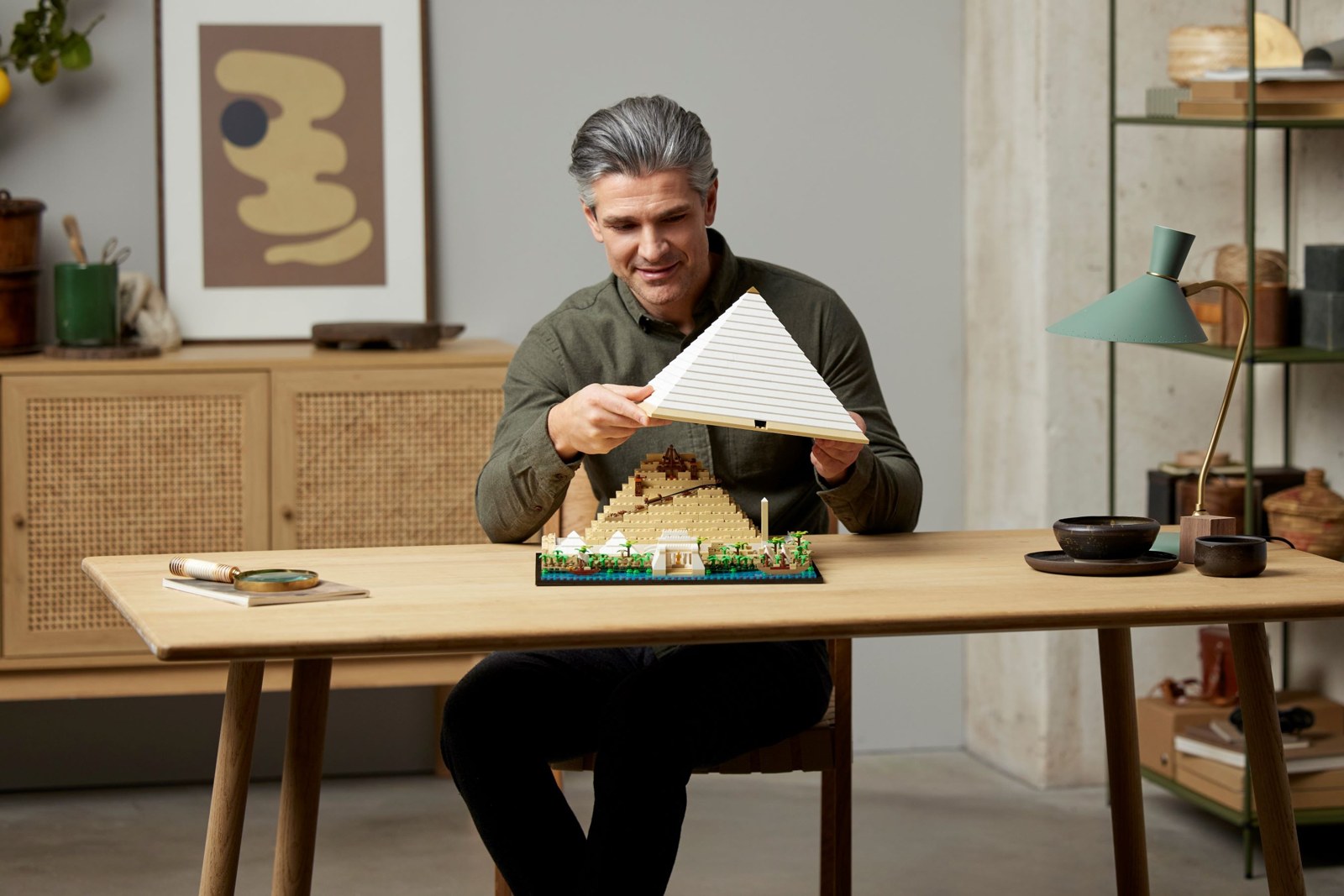
LEGO Architecture Great Pyramid of Giza, set 21058, is designed as a cross-section. Its white outer shell lifts away, and the back exposes modeled chambers and tunnels. A second set, sold separately, can connect to it to complete the pyramid shape. That distinction is worth understanding before imagining the finished display.
Our interest is in the choice the open side creates. A closed monument gives the viewer a silhouette to admire. A cutaway offers a reason to move around it and ask how the inside relates to the outside. The rear view is part of the subject, not simply an unfinished wall.
An interpretation of an ancient landscape
The official description places the scene in an imagined ancient setting, with a stretch of the Nile, boats and smaller buildings around the pyramid. It describes the internal stone-moving arrangement as a system that may have been used during construction. That qualification matters: a LEGO model is not archaeological proof of a particular method.
The listed model contains 1,476 pieces and measures over 20 centimeters high, 35 wide and 32 deep. Those dimensions describe one set. This desk review is based on LEGO’s documentation and photographs, not personal assembly or a claim to settle questions about the monument’s history.
Choose the view you want to return to
Our practical display suggestion is to leave access to the rear, especially if the explanatory side is what attracts you. A deep shelf against a wall may show the familiar shape well while making the cutaway awkward to enjoy. A surface that can be approached from more than one side offers a different experience.
Try a paper footprint before moving other objects. Then imagine lifting the shell and placing it safely beside the model. Space for that brief change of view matters just as much as space for the resting display. This is planning advice, not a tested handling recommendation.
A second set is a different display decision
We would decide between one set and a paired arrangement by asking what story the display should tell. Is the attraction the complete outline, or the ability to examine what the model shows within? Neither preference requires turning the choice into a measure of how serious a collector is.
The most engaging aspect of the documented design is its invitation to look behind a famous image. For a fan studying architecture through bricks, that is a worthwhile question to carry into other models too: what becomes easier to understand when a wall, roof or outer layer can temporarily move out of the way?
Reporting checked October 9, 2026. Plans and programs can change; follow the linked organizations for current information.