
LEGO Game Boy at one: why the buttons and cartridges matter
A year after release, set 72046 offers a compact lesson in recreating the physical memories of a handheld console.
A small object with familiar habits
LEGO Game Boy, set 72046, launched on October 1, 2025. One year later, its appeal offers an interesting contrast to the large scenes and elaborate vehicles that often attract adult builders. The 421-piece model recreates the handheld console at nearly its original scale, putting attention on an object that people once held in their hands.
Our reading is that the recognition comes from more than the gray case. It also depends on remembered actions: finding the buttons, changing a cartridge and looking at the screen. A convincing interpretation of a familiar object can draw on those habits as much as on its outward shape.
Controls provide the tactile details
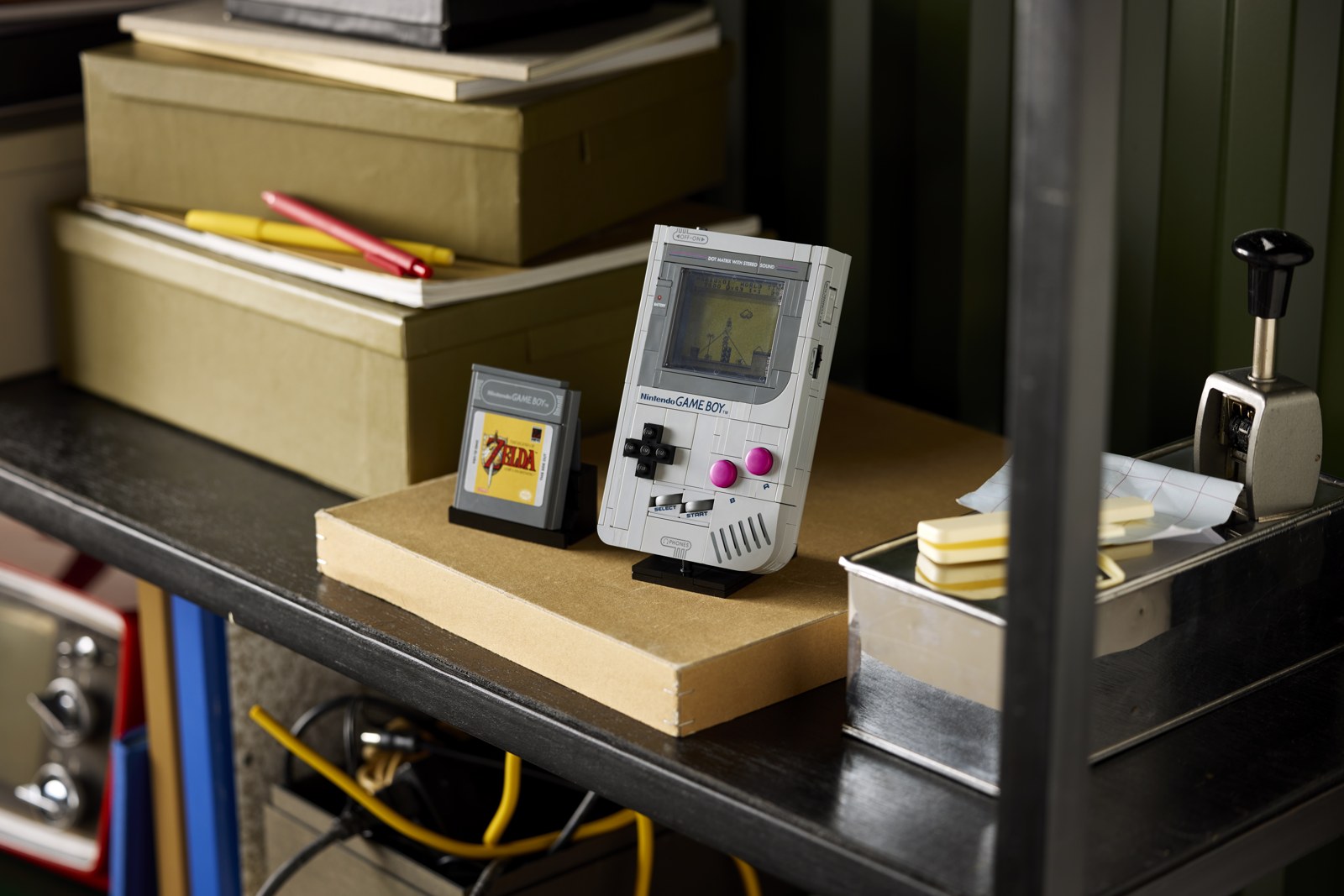
The official product description includes a control pad, A and B buttons, SELECT and START buttons, contrast and volume dials, and a slot for the Game Pak. The model measures approximately 14 centimeters high, 9 wide and 3 deep. A display stand is included.
Our design observation is that those small details help establish the relationship between the object and its user. They indicate where fingers would go and how the original console was operated. For builders interested in recreating everyday objects, this is a useful question to ask of a model: which details communicate the way something is handled, rather than simply decorating its surface?
Changing the display changes the memory
Brick-built Game Paks represent The Legend of Zelda: Link’s Awakening and Super Mario Land. The set also supplies interchangeable lenticular screens, including game imagery and a Nintendo start screen. These are physical display elements; LEGO’s announcement explicitly states that the model contains no electronics, light, sound or digital gameplay.
That boundary helps explain what the set offers. The choice of cartridge and screen lets the owner select a remembered moment without turning the model into a functioning console. Our suggestion is to choose the combination that means most to you, rather than trying to make every included accessory equally prominent in one arrangement.
A display that can stay personal
In the official photograph, the Game Boy sits on a shelf with a cartridge beside it. The arrangement gives each object room to be recognized. For a small display, our preference would be to keep that clarity: let the handheld remain the focus and use the surrounding space sparingly.
This is a source-based retrospective, not a hands-on review or a test of the controls. The model’s published features nevertheless suggest a satisfying design principle. Recreating an object need not mean reproducing every function. A carefully chosen group of physical details can preserve the gestures associated with it. In the Game Boy’s case, the cartridge slot and familiar controls help make a compact brick model feel connected to a much larger history of play.
Reporting checked October 6, 2026. Plans and programs can change; follow the linked organizations for current information.