
Under the covers of LEGO’s Fender amp and Atari console
One model opens onto tubes and wiring; the other opens onto a room. Each offers a different answer to what belongs inside a replica.
An amplifier earns its place
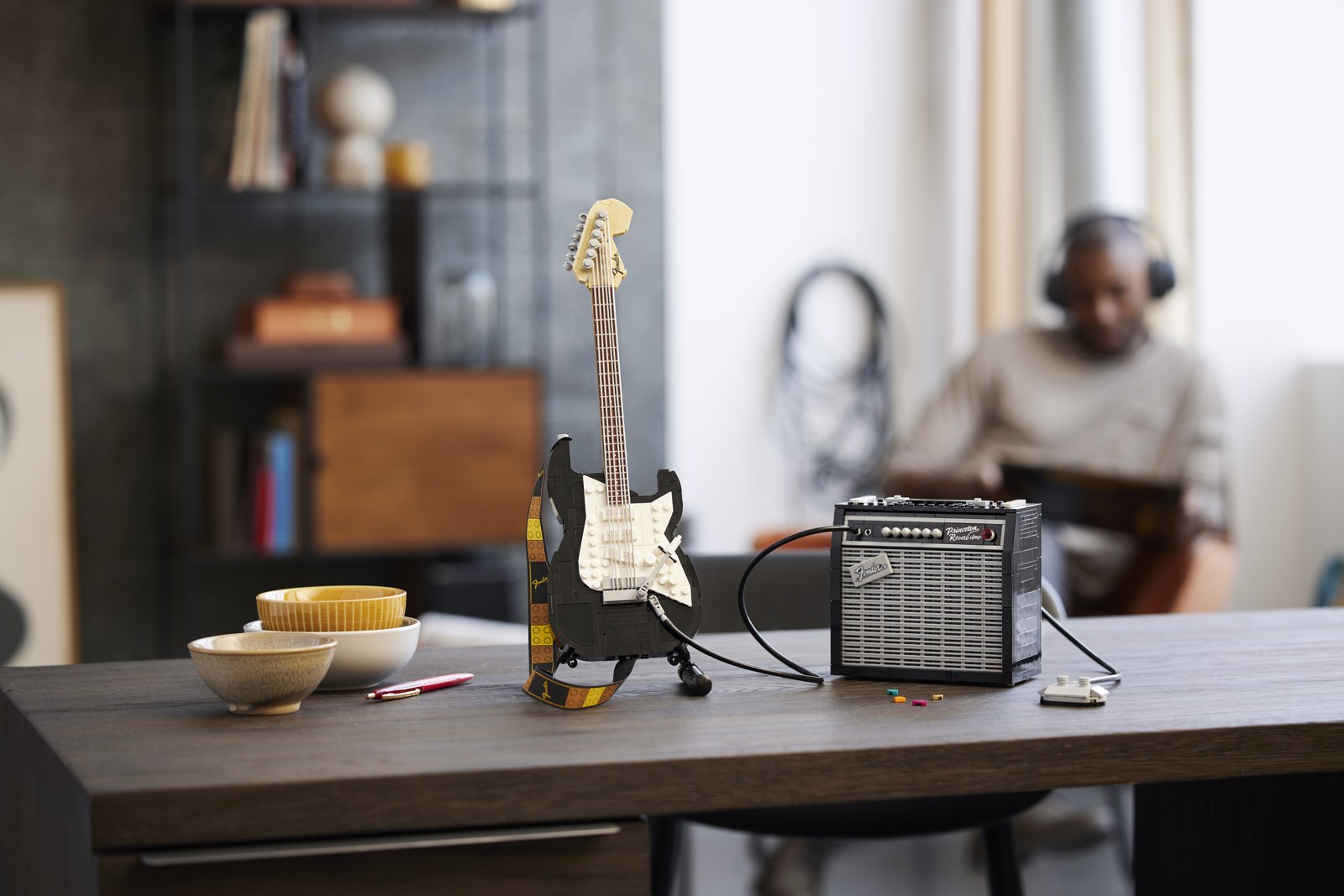
A guitar on a stand needs very little help to look complete. That makes the small amplifier beside LEGO Ideas Fender Stratocaster 21329 an interesting extravagance. From across a room it establishes scale and suggests a player might be back in a minute. Take away the top and back covers, though, and the amp becomes a model with its own subject: the components usually hidden from the audience.
LEGO’s launch description identifies tubes, a speaker and wiring among the interior details. The useful thing about that list is the distinction between a cabinet and an instrument’s sound system. A little black box can represent the former perfectly well. To represent the latter, the builder needs something to discover behind the grille. There is no need to pretend the brick-built equipment actually amplifies a note.
A room where circuits might be
Slide open the front of LEGO’s Atari 2600 and the surprise is not a more elaborate representation of the electronics. It is a miniature scene of someone playing video games in an eighties room. The scale changes at the moment the front opens: a console conceived as something the owner might reach out and touch contains a world small enough for a figure to inhabit.
The moving joystick and brick cartridges already account for much of the remembered experience of handling the machine. The hidden room addresses a question those components cannot answer. Where did this object live, and what did someone do when they sat down in front of it?
Two kinds of accuracy
Tomáš Letenay’s Fender project grew from his own interest in playing guitar. Look inside the amplifier and its components suggest the signal’s journey away from the strings. Look inside the Atari and the journey goes the other way, out of the machine and into a player’s surroundings. Neither interior is required to identify the object from the outside.
That is precisely what makes the comparison rewarding. A cutaway does not have to promise a literal cross section. It can offer an explanation, as the Fender does, or a memory, as the Atari does. Close the two covers and those very different ideas fit back inside two familiar boxes.
Reporting checked November 13, 2026. Plans and programs can change; follow the linked organizations for current information.