
The LEGO Endurance’s proportions began with its small lifeboats
Designer Hans Burkhard Schlömer’s account reveals how small details helped determine the size of a large historical ship model.
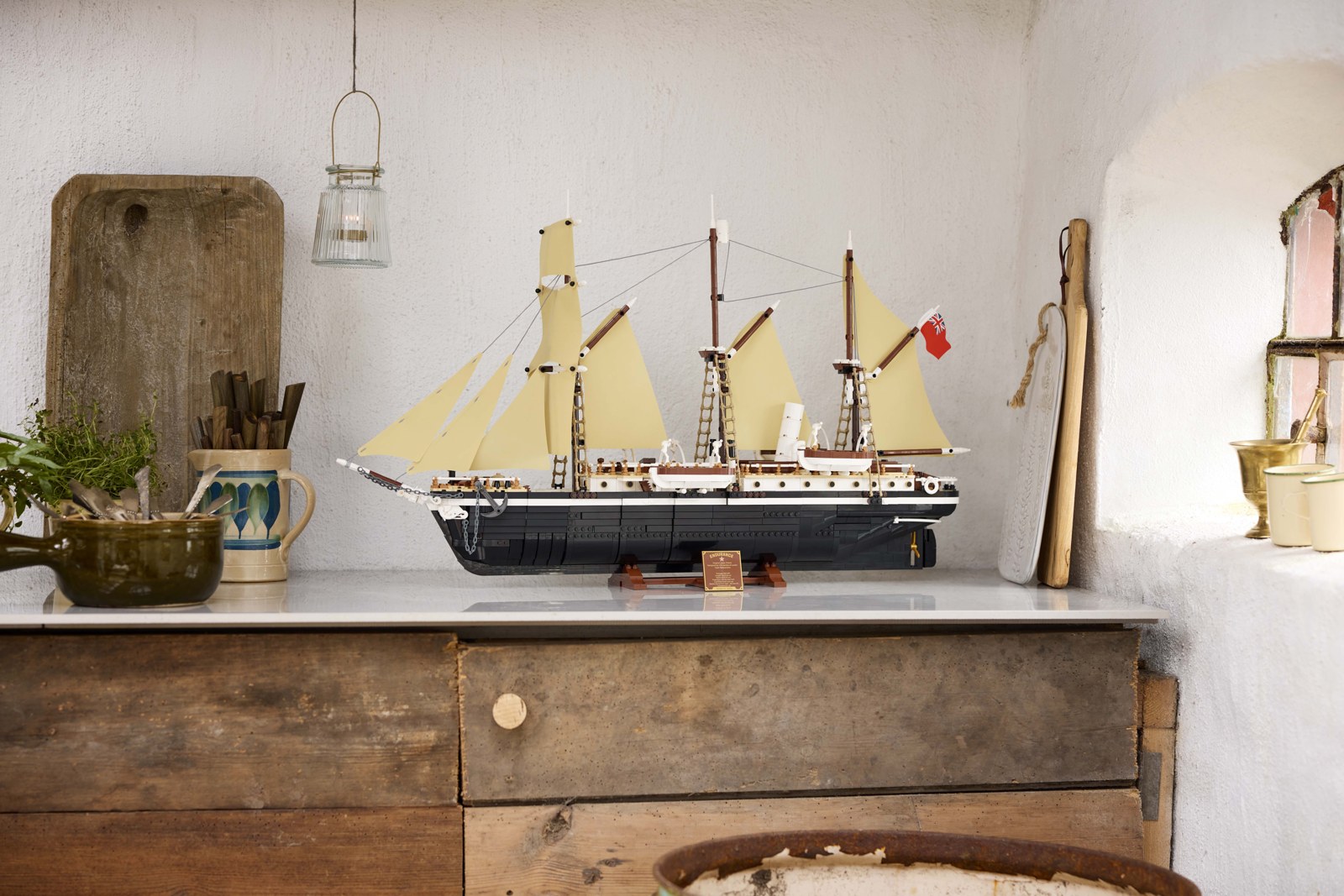
Start with the smallest essential detail
An 80-centimeter ship might seem like a project designed from the hull outward. In LEGO’s account of Endurance designer Hans Burkhard Schlömer’s work, the starting point was more specific: important details and how small they could be built. The ship’s lifeboats, in two sizes, helped establish the model’s scale.
That is a useful way to think about a large recreation. If an essential small object becomes unreadable, making the surrounding structure more accurate may not solve the problem. Starting with that object gives the rest of the design a constraint. In our reading, it is a practical compromise between the real vessel’s proportions and what individual LEGO elements can express.
A ship you can look into
Released in November 2024, Endurance 10335 contains 3,011 pieces. Its three masts and ten sails establish the outline, while removable deck sections provide access to cabins and the steam engine. Four lifeboats detach, and a wheel operates the rudder. A stand supports the finished display.
The appeal of those interior areas is that they give the model a second scale of attention. Across a room, the sails and hull do most of the work. Up close, a cabin or piece of machinery asks a different question: how was this vessel used? An accessible interior lets a display model reward that curiosity without requiring the whole ship to be taken apart.
A steering mechanism with little room to spare
Schlömer explained that fitting the steering gearbox into the outside cabin was a challenge because the stern was already crowded below deck. The design needed a route for an axle while preserving room for the surrounding details. His account also identifies historical photographs and surviving construction drawings as research material.
This is where a documented design story can add something that a finished photograph cannot show. A smooth exterior hides decisions about clearance, access and movement. When studying a model like this, it is worth tracing one function from the part a person touches to the part that moves. That path can reveal why apparently unrelated spaces have the shapes they do.
Give the rigging some breathing room
For anyone planning a display, the published 80-centimeter length is a starting measurement rather than a complete furniture plan. Leave room to place and lift the model comfortably, and consider what sits behind its rigging. Our display suggestion is to try a relatively quiet background so the fine lines remain visible.
This is a retrospective based on LEGO’s announcement and designer interview, not a claim that we assembled or tested the set. Its most interesting design lesson is nevertheless clear: a large model can depend on small decisions made early. The little lifeboats help explain the dimensions of the much bigger ship around them.
Reporting checked October 5, 2026. Plans and programs can change; follow the linked organizations for current information.