
Ellen Kooijman’s Research Institute makes science a place for minifigures to work
Three compact laboratories, three women scientists and a fan designer with a science career: revisiting the people-centered idea behind Research Institute 21110.
Start with a person doing something
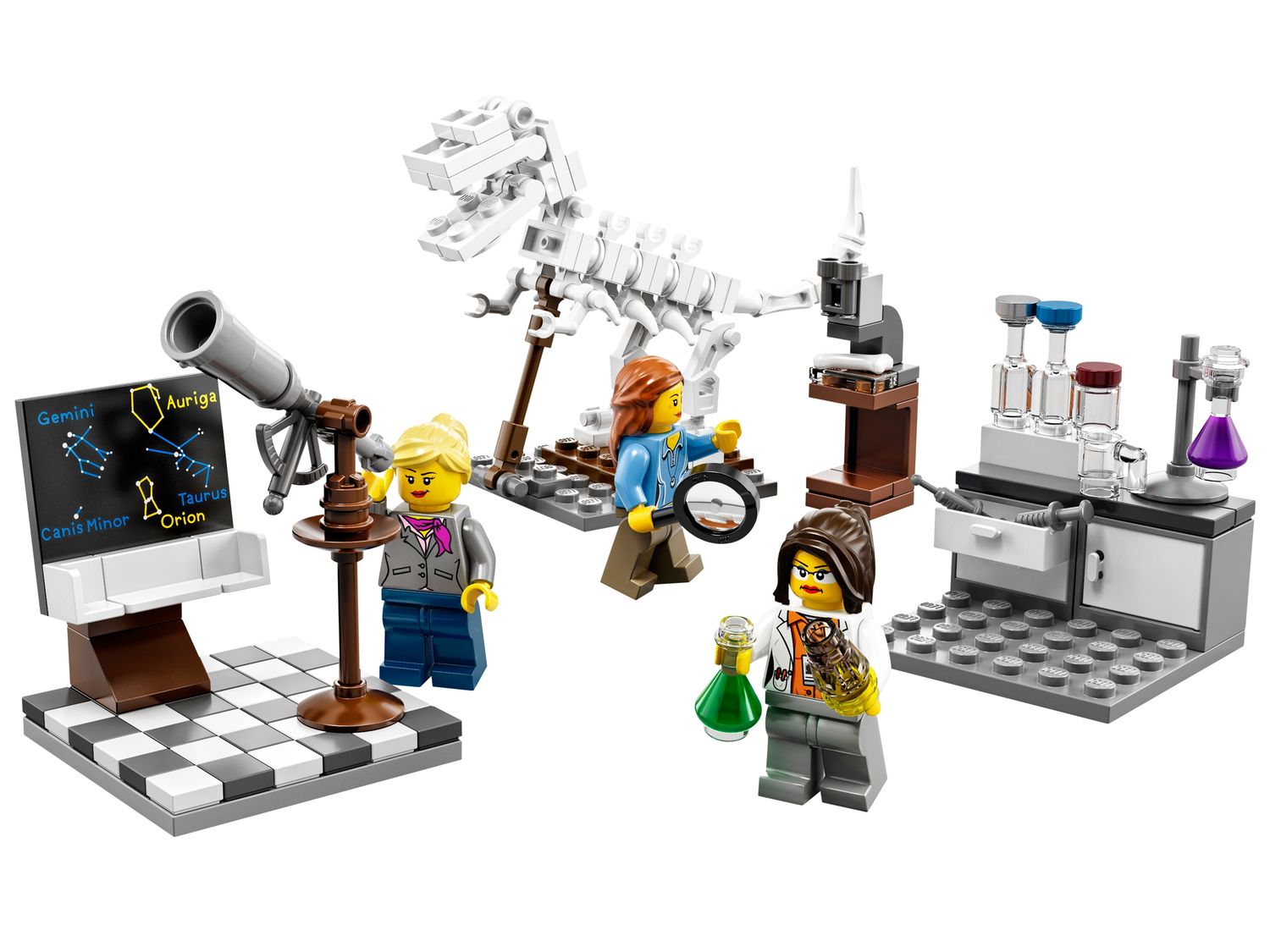
A telescope is interesting on its own. Put a minifigure beside it, with a chart to consult, and the object becomes part of somebody’s working day. That small shift is central to the appeal of Research Institute 21110, the LEGO Ideas set created by geoscientist and fan builder Ellen Kooijman.
LEGO’s history of Ideas identifies the model as a 2014 release. Looking back now, its modest size makes the concept especially clear: the scientists and their activities carry the display. This is a retrospective based on official sources and imagery, rather than a claim of firsthand testing.
Three disciplines, three different kinds of evidence
LEGO’s product listing describes a 165-piece set with paleontologist, astronomer and chemist minifigures. Separate scenes bring together a dinosaur skeleton, a telescope and sky chart, and laboratory bottles and equipment. The product is now listed as retired.
The arrangement offers an accessible way to begin a conversation about scientific work. Our reading of the model is that each scene presents something to investigate: remains, the sky or materials in a laboratory. No grand headquarters is necessary to establish the activity. The equipment gives each figure a purpose, while the three women occupy the same central role in their respective scenes.
The scientist was also a fan with wide interests
Kooijman’s building interests extended beyond the subject of her successful set. In a September 2018 LEGO Ideas interview, she discussed her enthusiasm for Castle and named Medieval Market Village as a favorite. She also described how a childhood challenge could involve making a pirate island with parts from a horse stable.
That same interview concerned a later Amelia Earhart project with author Brad Meltzer. Kooijman explained that designing an airplane pushed her beyond her familiar buildings, animals and vignettes. These are historical comments from that interview, not a statement about her present job or current projects.
Together they offer a fuller picture of a fan creator: professional knowledge can provide a subject, while curiosity about other subjects keeps the building possibilities open.
A useful prompt for a community display
Our suggestion for a small fan exhibition is to ask participants to build somebody at work on an investigation. Let each builder choose the person, the question and one object that helps answer it. The result can be understood without asking every contributor to construct an entire building.
Keep the explanation beside the model as specific as the scene. What is the figure trying to find out? What might they do next? A visitor can respond to those questions even without knowing the name of every instrument. Research Institute remains an appealing example of how a few purposeful objects can make a minifigure’s world feel larger than its base.
Reporting checked October 20, 2026. Plans and programs can change; follow the linked organizations for current information.