
Donny Chen’s LEGO piano began with a question from his students
Before Grand Piano became a LEGO Ideas display piece, its fan designer wanted a way to show young musicians what happens beneath the lid.
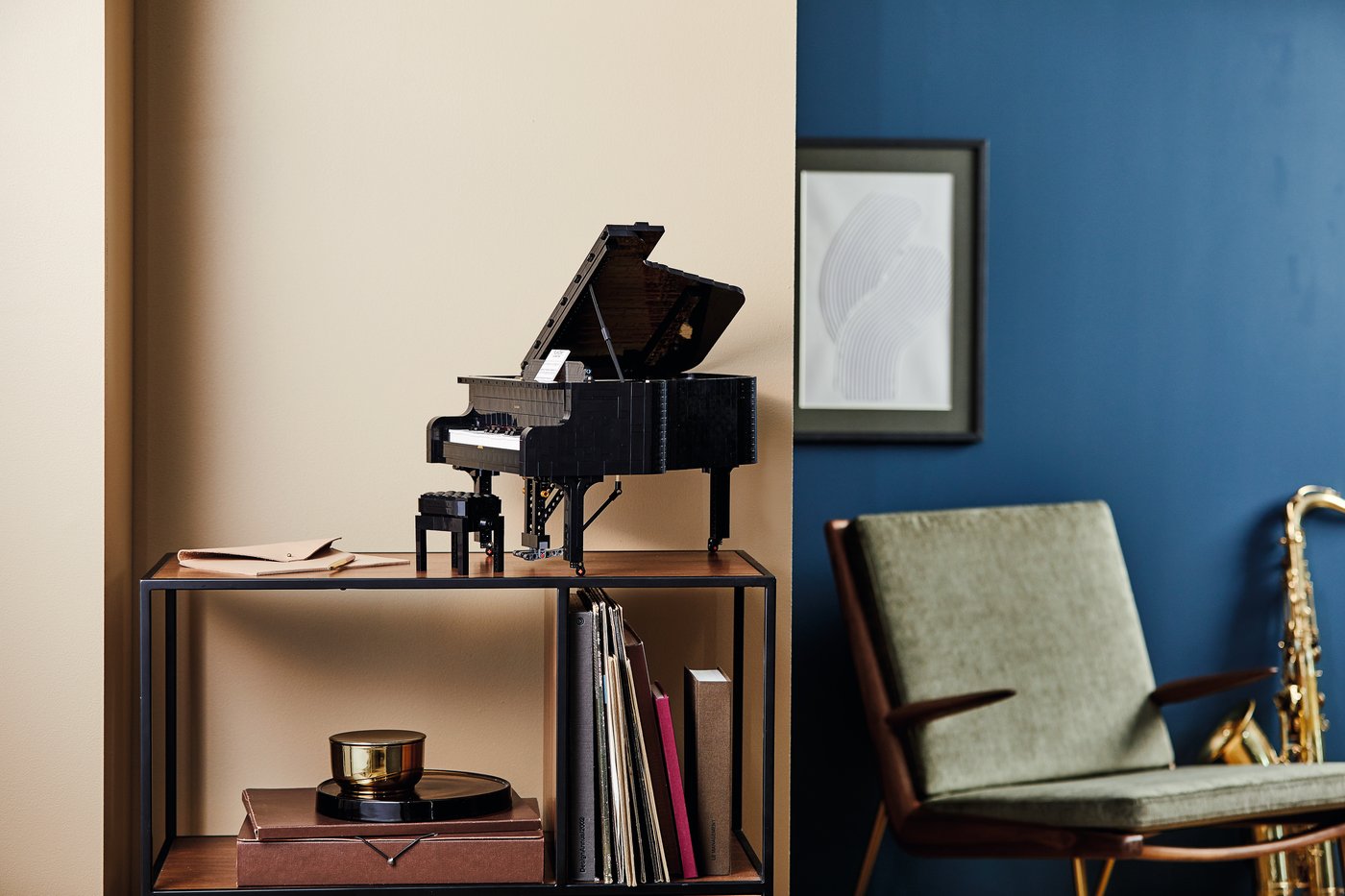
A teacher’s reason to build
Young piano students could hear the result of pressing a key, but wanted to know what was happening inside the instrument. For Melbourne piano teacher and tuner Donny Chen, that curiosity became the starting point for a LEGO model. LEGO’s account of his project describes a practical ambition: make the mechanism understandable without repeatedly taking apart his own piano.
Chen’s route into the hobby was an adult one. In the same profile, he recalls buying his first set, a Technic Off-Roader, after getting his first job. Its gears and movement caught his attention. His later piano connected that interest with knowledge he already used at work. This retrospective looks at that meeting of professions and play, rather than treating the model as a substitute musical instrument.
The cover was part of the problem
In an interview published by Piano League in July 2020, Chen described a surprisingly demanding component: the fallboard, the cover over the keys. It needed sufficient depth to cover the keyboard, yet had to sit neatly when open. Its hinge also had to clear the black keys. He wanted the assembly removable so that the keyboard action could come out.
Those requirements make the teaching ambition tangible. A miniature piano that opens is one thing; a model whose mechanism can be removed gives the viewer a different relationship with the object. The explanation is no longer trapped inside the case. Chen also told the interviewer that his original plastic mechanism did not produce musical pitches. Demonstrating an action and reproducing its sound were separate problems.
A personal contribution survived the handover
The official Grand Piano, set 21323, was announced on July 23, 2020, with 3,662 pieces. LEGO’s release describes a removable 25-key keyboard, hammer action and moving damper and pedal. The product added a Powered Up connection for music, while keeping the physical workings visible. It also included a music sheet with a composition by Chen.
That last detail makes the finished set more than a representation of his occupation. Alongside the mechanism that drew on his technical knowledge sits something he created as a musician. The project’s community value lies in that specificity: a fan brought an everyday question from his students into a building system, and the resulting set retained a trace of the person who asked how to answer it.
Reporting checked November 5, 2026. Plans and programs can change; follow the linked organizations for current information.