
Donát Fehérvári’s Table Football turned a contest idea into a shared game
The 2022 LEGO Ideas model offers a different kind of fan-design success: a build that gives people a reason to gather around it.
A contest opened the door
Donát Fehérvári’s Table Football took a distinctive route through LEGO Ideas. His entry won the We Love Sports contest’s grand prize, receiving 1,244 votes according to LEGO’s subsequent set announcement. The review board also selected the concept for development as an official product.
That sequence matters. This was a particular contest and review process, rather than a claim that any ordinary product submission could qualify with the same vote total. Looking back at the 2022 set, the exciting part is the subject itself: a fan proposed something people could keep playing after the building was finished.
A young creator’s idea reached the review board
When LEGO announced the selection in June 2021, it identified Fehérvári as a 16-year-old Hungarian fan designer using the name Constructions by Donat. That age belongs to the historical announcement. The company highlighted the concept’s potential to bring friends and families together for a game.
For community builders, this offers a different way to think about an entry. A model can be interesting because of the activity it makes possible, as well as the object it resembles. Here, the proposed experience was immediately understandable: two sides, a ball and a shared reason to watch the next move.
The team extends beyond the pitch
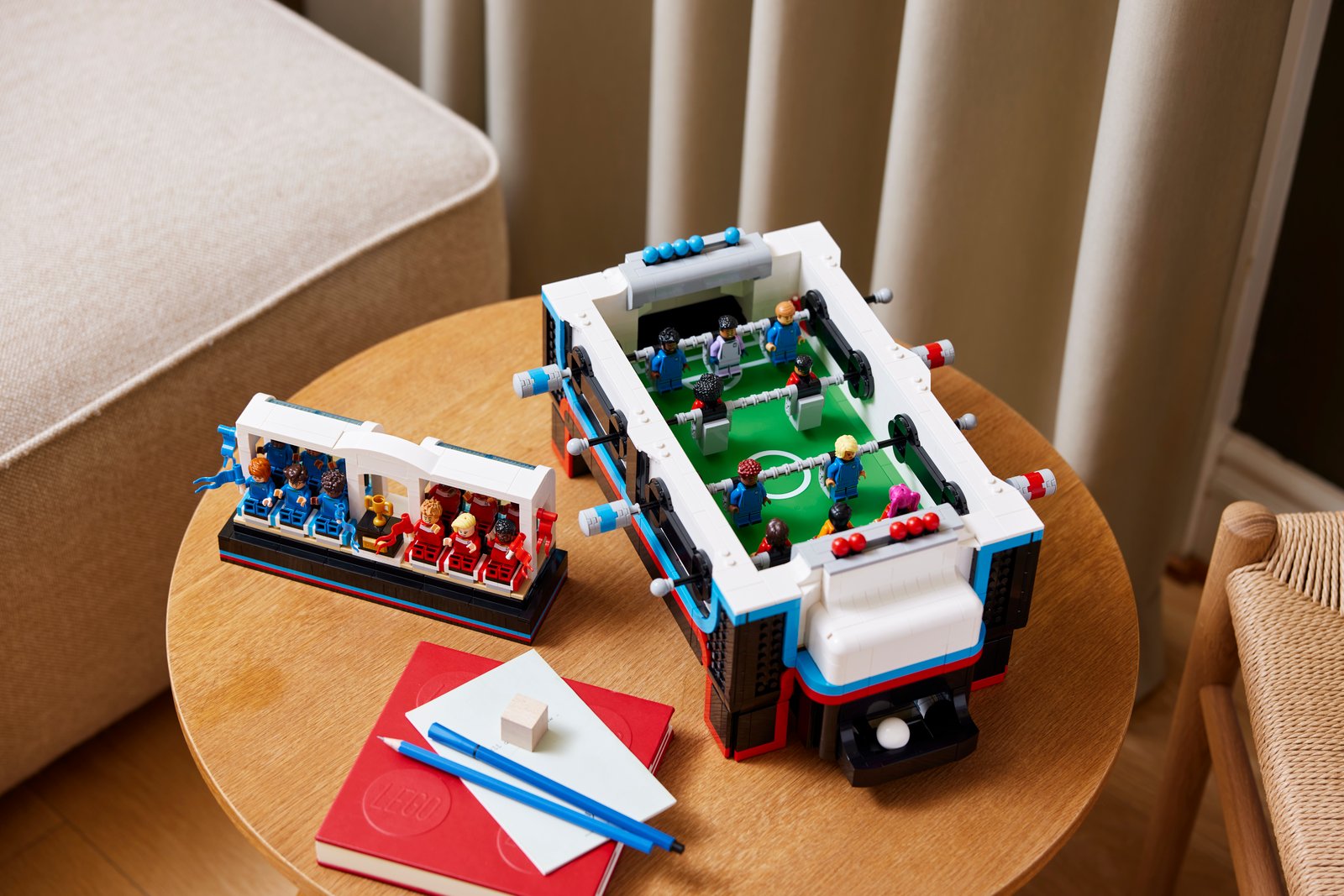
The finished 2,339-piece set has five minifigures on each side of the playing field, controlled through two rods per team. It includes 22 minifigures overall, with extra heads and hairstyles for customization. The non-playing figures can occupy a separate grandstand, while colored markers keep track of the score.
Those distinctions are useful when looking at photographs: 22 figures does not mean an eleven-a-side match on the table. Our interpretation is that the spectators help the model feel like an occasion. Choosing the characters and arranging the crowd can become part of the fun before the first goal.
Give the next game a simple finish line
LEGO’s playing guide suggests agreeing a winning goal total before starting and returning the ball to the halfway line after a score without giving either side an advantage. It also proposes building a family trophy. These are modest additions, but they give a casual match a clear beginning and ending.
This retrospective does not claim hands-on testing or judge the model against a full-size table. Its community appeal is easier to explain: the build provides an activity to share. Fehérvári’s concept is a reminder that a fan-designed LEGO model can invite conversation through play, with everyone watching the same small pitch.
Reporting checked October 16, 2026. Plans and programs can change; follow the linked organizations for current information.