
Damian Andres’s Tuxedo Cat began with a much closer look at a real pet
A creator retrospective on the observation behind LEGO Ideas 21349, and why a small change of pose can give a brick animal personality.
A familiar animal, studied carefully
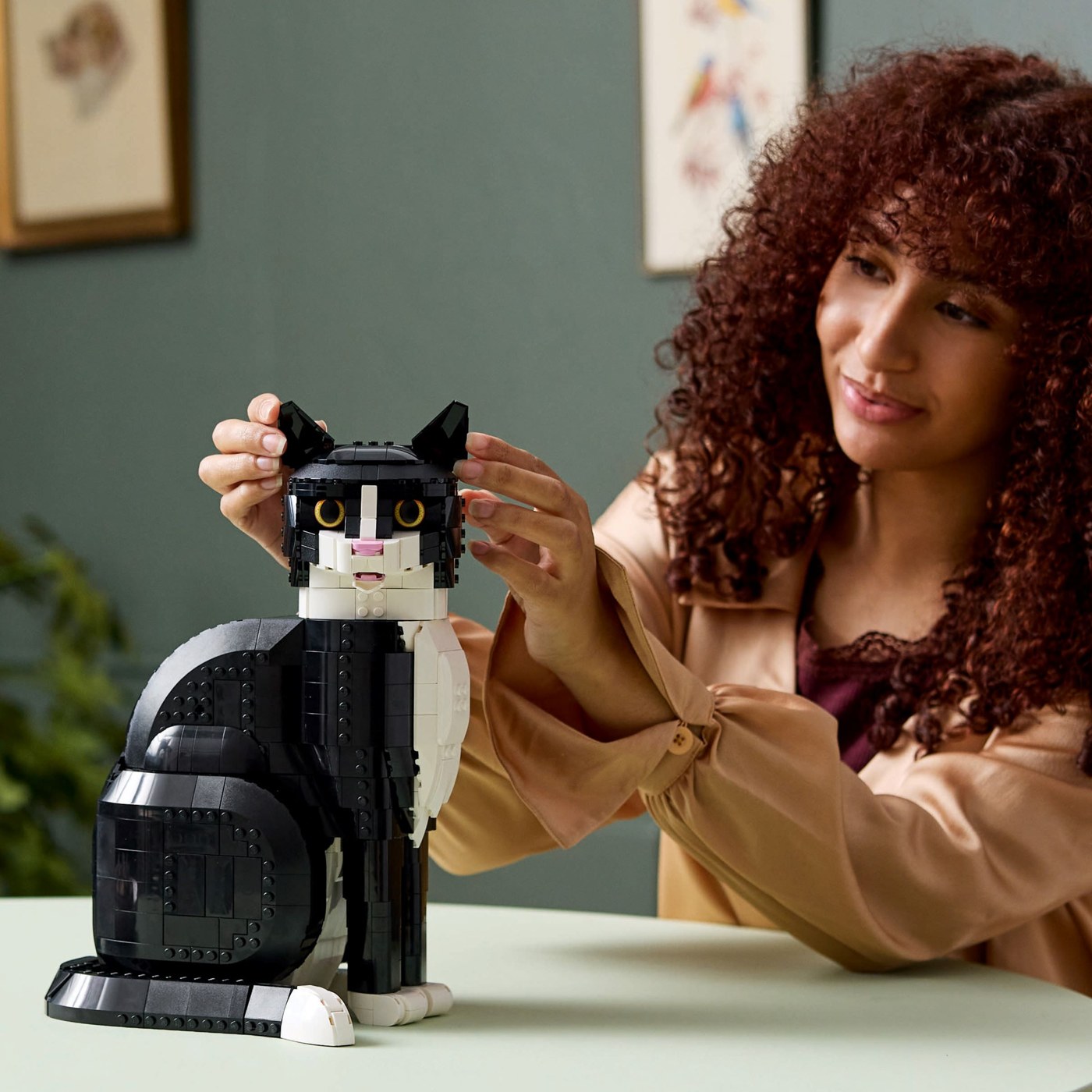
The story behind LEGO Ideas Tuxedo Cat 21349 begins with Damian Andres and his own cat, Miro. In LEGO’s official fan-designer booklet, Andres describes measuring his pet and studying reference images to understand its proportions. He was learning to build organic forms, and shaping a convincing head proved especially demanding.
That is an appealing starting point for a community project: paying closer attention to something already loved. Our reading of his account is that recognition came before decoration. The relationship between head and body mattered before the model could carry a particular expression. This retrospective draws on published sources; we have not interviewed Andres or tested the set.
From a personal project to a shared idea
LEGO’s launch announcement identifies Andres as The Yellow Brick and dates his original Cat submission to 2020. The finished Tuxedo Cat reached release on June 1, 2024. Those dates give the project a useful sense of scale: a successful fan idea can have a long life before it becomes a boxed model.
For aspiring creators, the interesting part is the clarity of the subject. A viewer can recognize a seated cat immediately, then look more closely at how bricks describe its shape. A familiar subject offers a common point of conversation between builders who might otherwise prefer very different themes.
Personality in small adjustments
The official product specification lists 1,710 pieces and a height above 32 centimeters. Builders can choose yellow or blue eyes, rebuild the mouth open or closed, rotate the head and adjust the ears, paws and tail.
Those choices matter to our reading of the design because they let the finished animal suggest different moments. A slight head turn can make it appear attentive; the mouth and ear positions offer other ways to change the impression. These are interpretations of the documented features, not claims about a motorized or autonomous model.
An observation habit worth sharing
For anyone sketching an animal build, try comparing the silhouette from the front and side before refining the surface. Photograph each version from the same position and ask another builder what feels characteristic of the animal. That creates a specific conversation about shape instead of a vague request for feedback.
Andres’s project makes an encouraging case for beginning with a subject you know well. The next interesting LEGO idea may be sitting quietly beside the building table.
Reporting checked October 12, 2026. Plans and programs can change; follow the linked organizations for current information.