
Crocodile Locomotive 10277 brings railway movement to the display shelf
A retrospective on the long brown locomotive, its moving rods and the difference between the included display and optional powered operation.
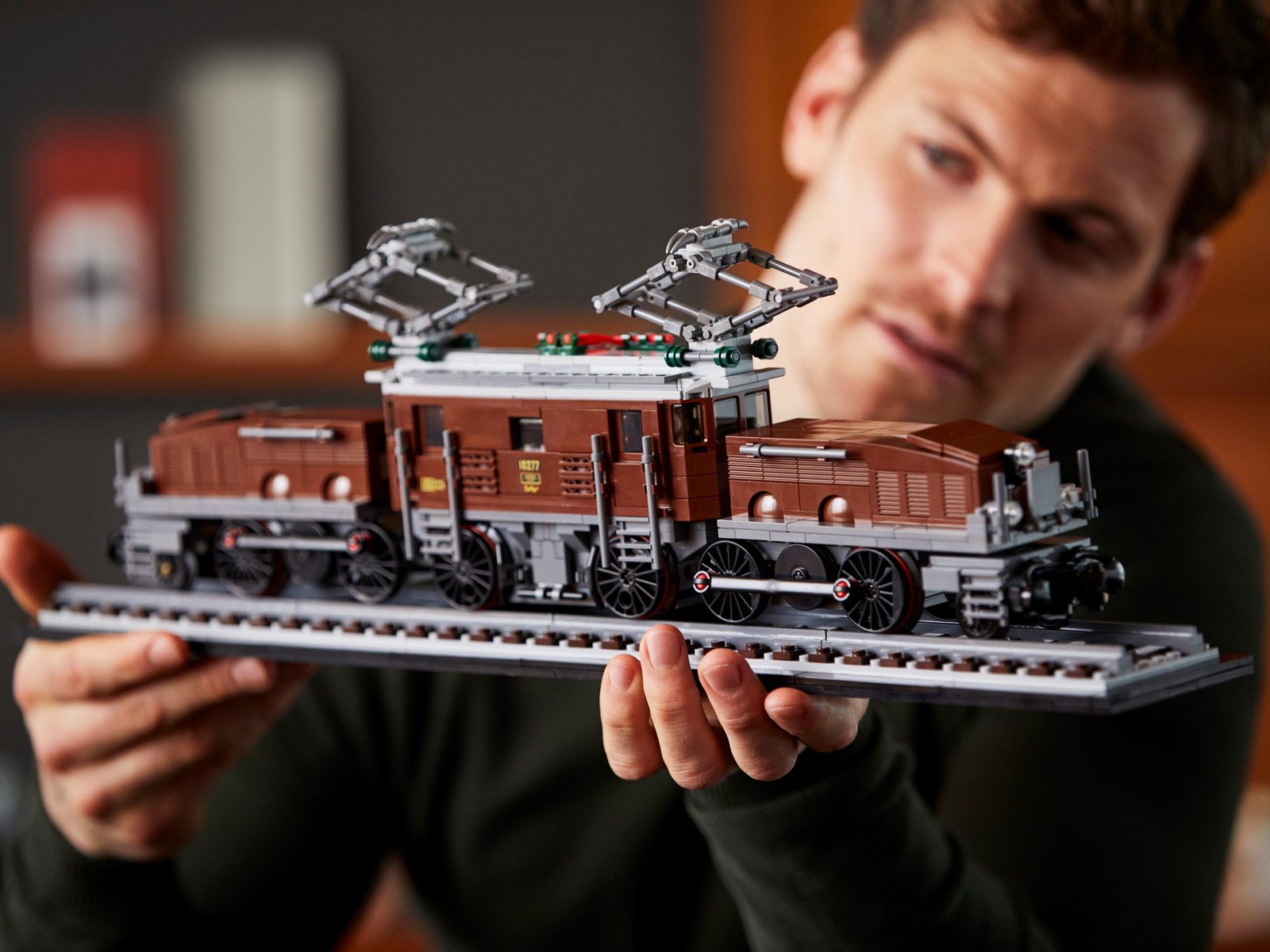
A train with room for a closer look
The Crocodile Locomotive’s long outline makes an immediate impression, but the smaller mechanical details are the reason to lean closer. LEGO set 10277 offers a way to appreciate the shape of a railway machine even when there is no layout running around the room.
The official building-instructions archive identifies the 1,271-piece model as a 2020 release. This retrospective uses that record and LEGO’s product description to examine the design. We have not conducted a running test, and the discussion should not be read as a review of motor performance or track handling.
Movement is part of the silhouette
LEGO identifies the inspiration as the Swiss Federal Railways Class Ce 6/8 II locomotives built between 1919 and 1927. The model includes side rods that move with the wheels, posable pantographs and a roof that lifts to reveal the crew compartment.
In our view, these details help a railway display explain its subject. The long body supplies the first recognition; the rods and roof equipment invite questions about how the machine works. That makes the model a promising conversation piece even for visitors who do not know the locomotive’s name or the history behind its unusual outline.
The supplied display and the powered project
The set includes display track, a plaque and two minifigures with tools. LEGO lists dimensions of approximately 52 cm long, 16 cm high and 8 cm wide. Its description names Powered Up components 88009 and 88013 as separately sold additions for motorization; they are not part of the standard set.
That distinction matters when looking at a secondhand listing. Our advice is to ask exactly which components are included, request photographs and compare the contents with the relevant instructions. Do not assume a pictured train runs under its own power, or that accessories mentioned in an old description remain available today.
Give the long shape some breathing room
Before choosing a shelf, mark out the stated length on a piece of paper and consider where someone will stand to view it. A display that hides either end behind another model loses much of the locomotive’s distinctive proportion. Leave room to reach the roof if you want to show the interior.
For train builders, the broader design lesson is to decide which movement deserves attention. A small visible mechanism can make a static model more understandable without turning every display into a powered layout. The Crocodile is an inviting example of a subject whose shape and motion both deserve time in the spotlight.
Reporting checked September 29, 2026. Plans and programs can change; follow the linked organizations for current information.