
LEGO Concorde 10318 deserves room for its outline—and its moving details
A retrospective on the long aircraft model, with practical display questions and a closer look at its documented functions.
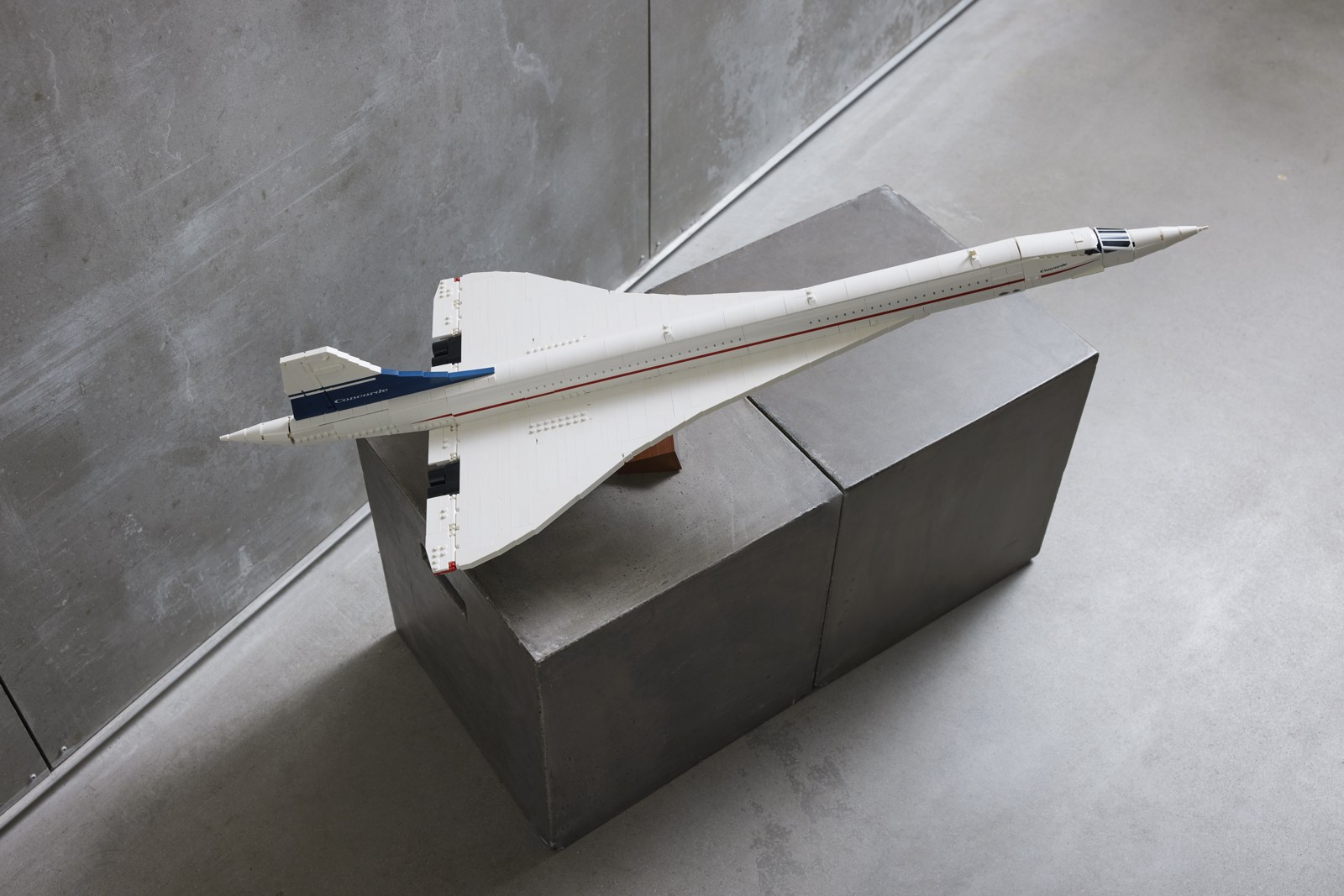
A model whose length changes the display question
LEGO Icons Concorde 10318 arrived in September 2023 with 2,083 pieces and an unusually long silhouette. The original announcement gives the model’s length as 105 cm and width as 43 cm. Those measurements are a useful starting point for anyone returning to this set or considering a place for it at home.
This retrospective draws on LEGO’s announcement and product documentation. We have not assembled or tested the model. Our focus is how the documented features affect the way an owner might display and explain it, rather than a rating of the building experience.
The outline is only the first thing to notice
The official product page lists a tilting nose, functioning landing gear, a retractable tail bumper wheel, movable elevons and hinged rudders. It also describes access to the seating area. These give the finished object several points of interest beyond a distant view of the wings.
Our reading is that a good demonstration should move between the overall shape and one small feature at a time. Start with the aircraft’s outline, then show what changes at the nose or underneath. That makes the mechanism easier for a visitor to follow without turning the explanation into a list of parts.
Choose a viewing position before filling the shelf
LEGO supplies a stand that allows flight, takeoff or landing display positions. The same product page explains the lowering nose and visor in relation to pilots’ runway visibility. That gives an owner a clear piece of context when choosing a pose.
Before committing to a location, mark out the published length and width with paper or removable markers. Consider the path people take past the display as well as the available surface. Our suggestion is to avoid letting the nose or wings project into a busy route, and to leave access for the functions you want to show.
A return visit can reveal a different model
If Concorde has been sitting in one pose for months, revisit its official instructions before changing the configuration. Choose a different viewing angle and notice which details become easier to see. A low side view and a higher view of the wings tell rather different visual stories.
The appeal of this model is not only that it is large. Its length makes the narrow body and broad wings a strong composition, while the smaller moving features invite a closer conversation. A display that allows both kinds of looking can make an existing build feel newly interesting without adding anything to it.
Reporting checked October 1, 2026. Plans and programs can change; follow the linked organizations for current information.