
Christoph Ruge’s LEGO space station carried years of research into a smaller build
A quick redesign rested on a much longer study of the International Space Station—and the community eventually helped bring it to shelves.
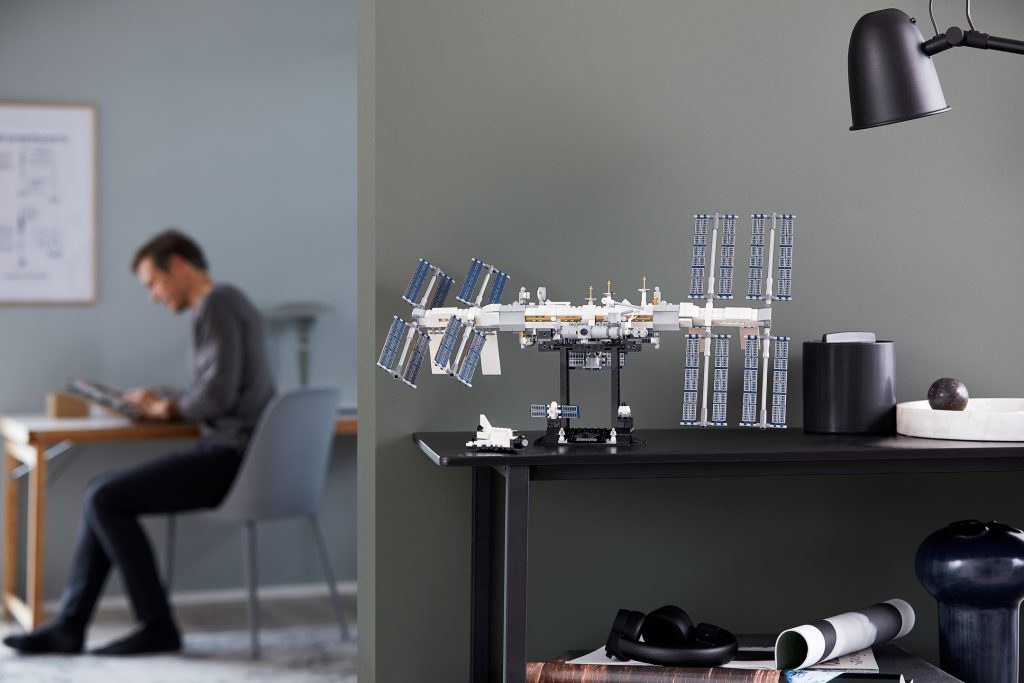
Four days, with years behind them
When Christoph Ruge discussed his smaller International Space Station model in a December 2018 LEGO Ideas interview, he said it took four days to complete. The revealing detail came immediately afterward: an earlier, larger version had occupied about three and a half years. The quick build could draw on research already done.
Ruge, a German fan known on Ideas as XCLD, described fitting recognizable details and play possibilities into a reduced scale. He also identified a problem that the real station’s environment largely avoids: keeping the long structure stable under Earth’s gravity. This retrospective follows that design story rather than presenting the retired set as a new release.
A community connection before the station
In the same interview, Ruge recalled returning to LEGO after a friend asked him to mentor the friend’s son on a school stop-motion project. Digital building offered a route back before he had a collection at home; physical bricks followed.
His account makes the familiar phrase “fan community” unusually concrete. A request to help another person created an opportunity to rediscover a medium. The later spacecraft projects grew from that renewed involvement.
An anniversary offered another route
LEGO’s January 2020 announcement explains that the station reached production through the special tenth-anniversary fan vote held in June 2019. It was a distinct route through the Ideas program, with the community choosing a project for the anniversary. The 864-piece commercial set launched on February 1, 2020.
The official product page describes adjustable solar panels, rotating joints and a posable Canadarm2, accompanied by smaller spacecraft and astronaut microfigures. LEGO lists set 21321 as retired as of October 26, 2026. These historical details should not be read as a current sales offer.
Scale changes the question
Our interpretation is that Ruge’s story captures something easy to miss when looking at a finished LEGO model: reducing size can be a new design task rather than a shorter version of the old one. A broad outline may survive while individual connections need to be reconsidered. Space for detail becomes a limited resource.
The station is especially suited to that discussion because its identity depends on relationships between parts. Its long span, grouped modules and repeated panels have to read together. Ruge’s earlier research gave him material to select from when those relationships were rebuilt at another size.
For readers interested in the result, the retired product page is a useful companion to the designer interview. One documents the eventual set; the other preserves the decisions and accumulated work that made a smaller model possible.
Reporting checked October 26, 2026. Plans and programs can change; follow the linked organizations for current information.