
Boutique Hotel makes an awkward corner the best part of the street
A retrospective desk review of LEGO 10297: its angled hotel, neighboring gallery and layered rooms offer a different way to think about a modular city.
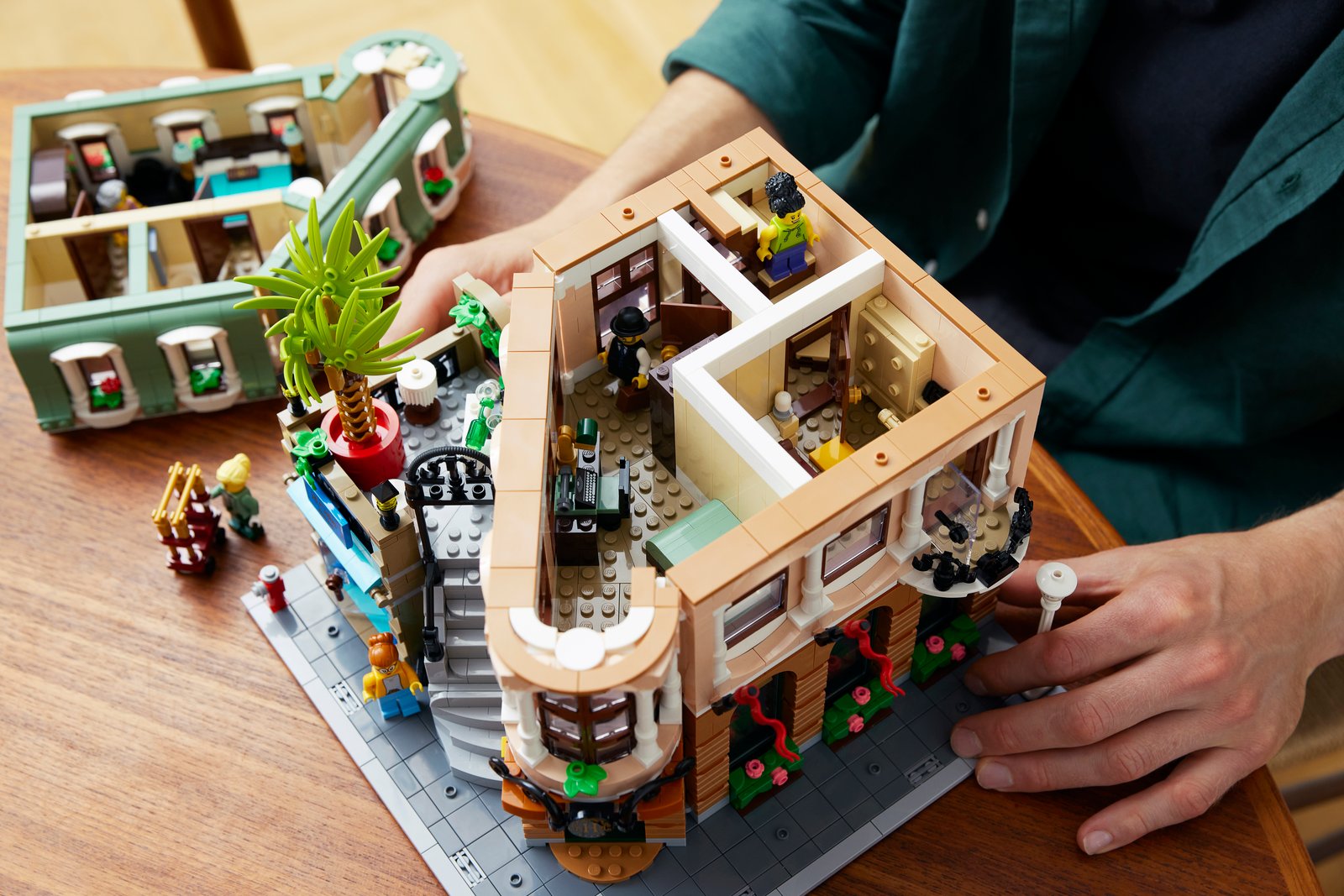
A corner that does more than turn
A city display can become a parade of flat fronts. Boutique Hotel, set 10297, suggests a livelier possibility: let a building change direction inside its plot. LEGO introduced the 3,066-piece model for January 2022, marking the modular collection’s fifteenth anniversary. Its angled footprint and neighboring art gallery remain the most interesting reasons to revisit it.
This is a retrospective desk review of official photography and published details. We have not assembled a review sample, so the assessment concerns the design’s visible choices and potential display use.
Space between buildings earns its place
The photograph shows why the wedge matters. The hotel does not occupy every part of the plot as a tall rectangular block. A lower neighboring structure, outdoor stairs and terrace create a second level of activity alongside it. Our reading is that this makes the corner feel like a small destination rather than simply the end of a row.
For a home city, that suggests an interesting planning exercise: place the model where viewers can see across the lower side toward the taller facade. Before fixing surrounding streets, use paper footprints to compare neighboring buildings. A tall wall immediately beside the terrace may change the view more than another decorative street accessory would.
The interior gives the architecture a purpose
LEGO describes five sections spanning the lobby and gallery, terrace, guest rooms, penthouse and roof. The launch account also explains that the rooms have different furniture styles and the gallery includes Cubist references. Those distinctions give the stacked spaces different identities; the model is not just the same room repeated higher up.
The product listing identifies seven minifigures, including hotel staff, a coffee vendor and a gallery owner. That is a useful mix for an urban scene: several people have a reason to remain on the street while visitors come and go. LEGO also specifies printed decorations rather than stickers.
How we would approach the display
Our preference would be to preserve the gap, stairs and changes in height instead of immediately filling every open space with extra rooms. Photographing the model from pavement level and then from above could help decide which interior section to reveal during a display.
The strongest collecting argument here is architectural variety. If your street already has several large, straight facades, an angled building offers a different rhythm. If you want to study furnished interiors, removable sections offer another reason to look closer. Neither point depends on an anniversary badge or a prediction about resale prices: the interest is in how a compact plot becomes several connected places.
Reporting checked October 15, 2026. Plans and programs can change; follow the linked organizations for current information.