
Ben Alder’s Winnie the Pooh brought a family’s bedtime stories into bricks
The fan idea behind set 21326 connects a childhood reading tradition with a little house full of familiar story details.
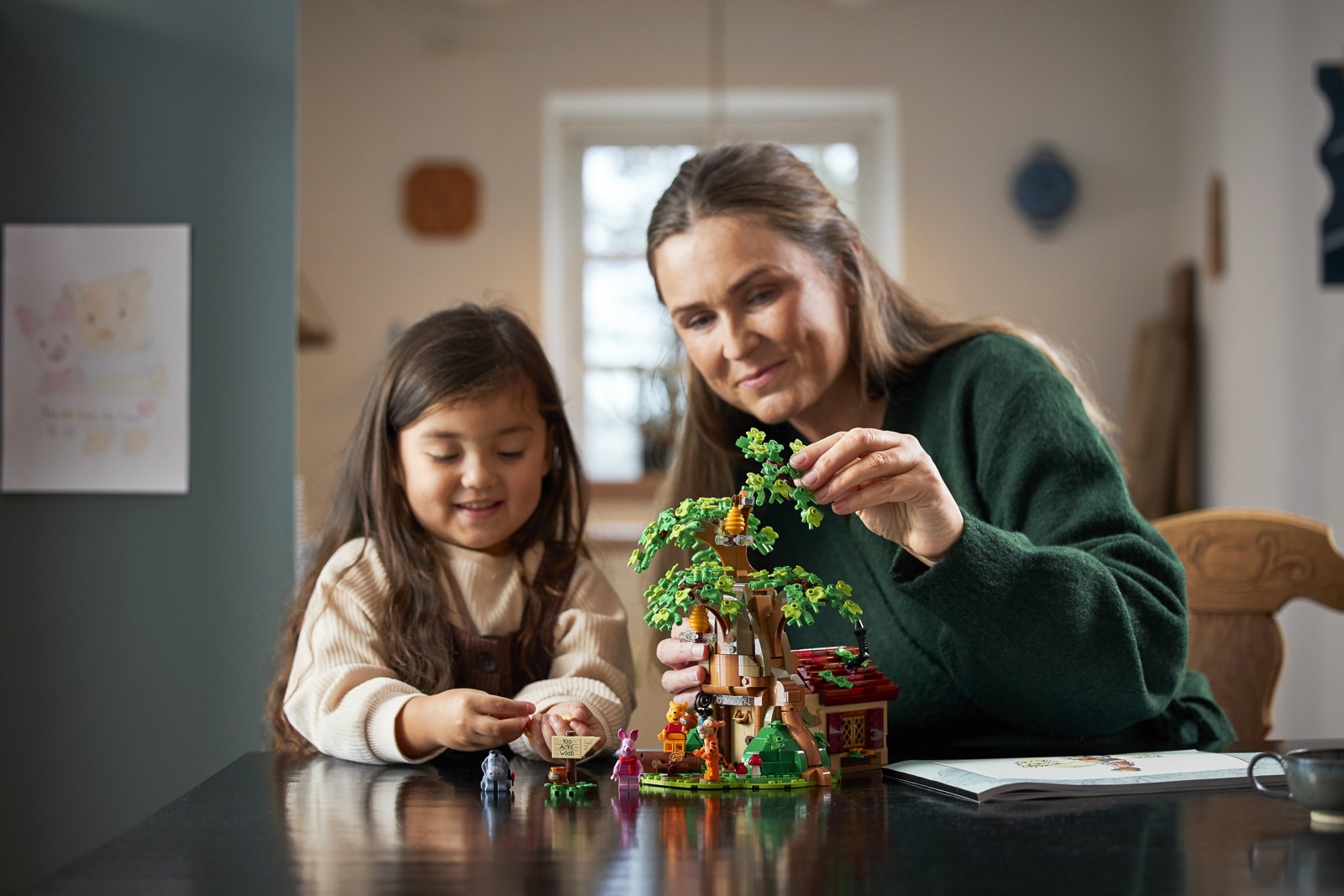
A story passed from one generation to another
Ben Alder’s inspiration for LEGO Ideas Winnie the Pooh began with something wonderfully ordinary: reading to his children. In LEGO’s March 2021 announcement, he recalled hearing the stories from his own parents and later sharing them with his family. His model was a way for the children to bring those bedtime adventures into the physical world.
That gives this fan project a particularly warm starting point. The question was what a family could do with a place they already knew through words and pictures. Bricks offered a way to return to that place together.
A small house with plenty to recognize
Set 21326 places Pooh’s home beneath an oak tree. LEGO’s product description lists an opening back, an armchair, a storybook, honey pots and a box of Poohsticks. The cast comprises four minifigures—Pooh, Piglet, Tigger and Rabbit—plus a separate Eeyore figure. That distinction is useful for collectors cataloging the characters.
The 1,265-piece set is marked retired on LEGO’s US page, checked October 10, 2026. This article is a retrospective, with no claim about current aftermarket value. Its included booklet provides information about the fan creator and LEGO designers as well as the model.
The accessories give a story somewhere to begin
Our reading of the design is that the little objects do much of the storytelling. A chair suggests someone settling in; a pot suggests a search for a snack; a visitor outside the door suggests an interruption. None requires a complicated plot before a conversation can begin.
That is an appealing lesson for a personal story build. A huge landscape can be impressive, but a few objects associated with a character may give another person more to respond to. Recognition can start with an action as easily as with a perfectly recreated building.
Try building from a remembered moment
For a family project of your own, choose a remembered scene and let each person name one object that belongs there. Build those objects first, then decide how much of the surrounding setting is needed. Leave space for someone else to add a detail you did not remember.
This is our suggested activity, not an account of testing the set or interviewing its creator. Alder’s published origin story makes the invitation feel natural: a model can preserve a shared memory while making room for a new one. The conversation around the bricks can become part of the tradition too.
Reporting checked October 10, 2026. Plans and programs can change; follow the linked organizations for current information.