
LEGO’s Back to the Future car lets the small details choose the destination
A retrospective look at Time Machine 10300, where interchangeable equipment turns one familiar car into three different moments from the films.
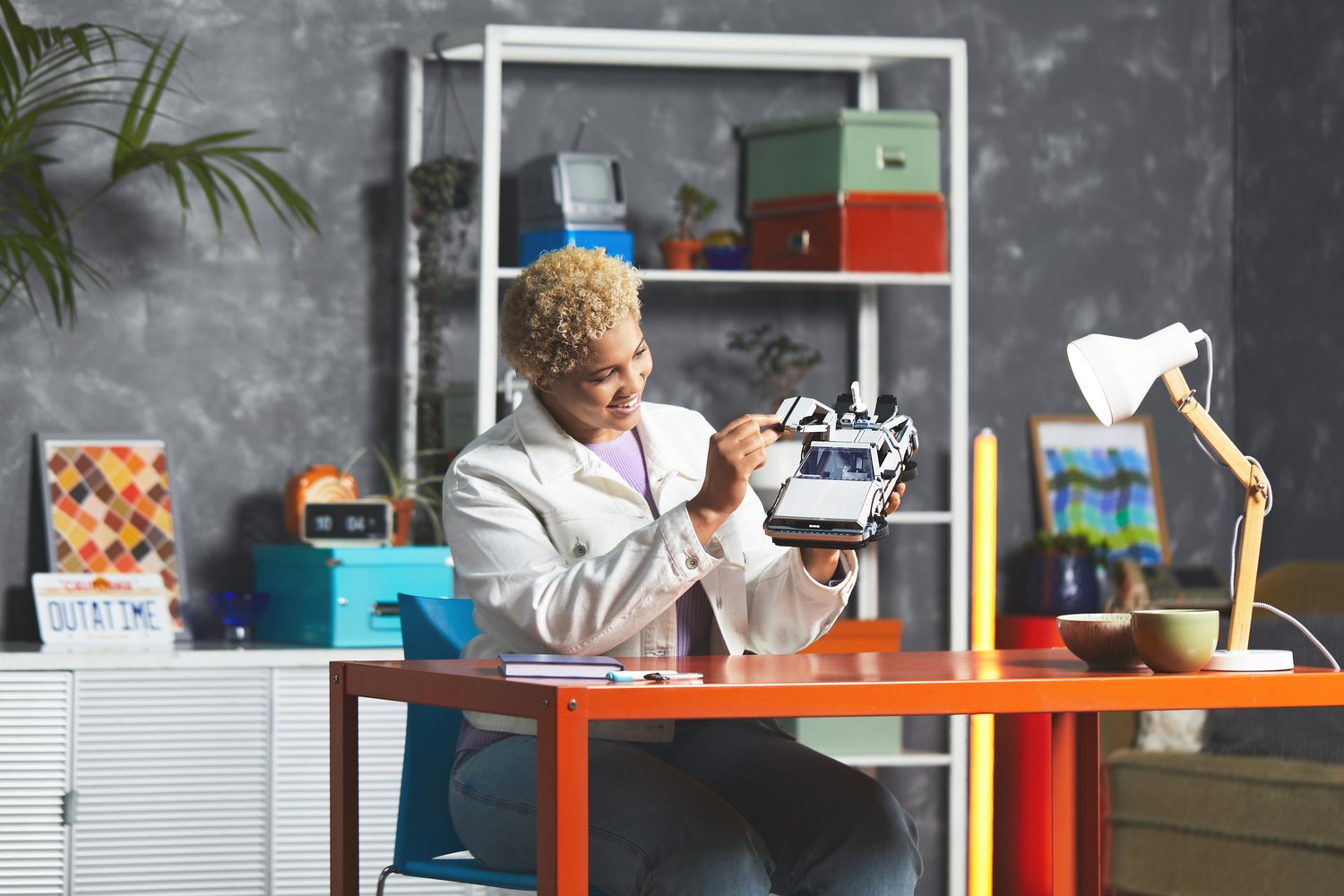
One car, three chapters
The outline tells you it is the time machine. The equipment tells you where in the story you have arrived. That is the appealing idea behind LEGO Back to the Future Time Machine 10300: a familiar vehicle can carry several different memories without losing its identity.
This retrospective desk review uses LEGO’s official materials and our design analysis. We have not built or tested the model. Its strongest proposition, on paper, is the chance to revisit a favorite film through a handful of very specific physical details.
Choose the version before the scene
Released on April 1, 2022, the 1,872-piece set includes Doc Brown and Marty McFly minifigures. LEGO explicitly says its three versions cannot be built simultaneously from a single box; each uses elements from the full set.
That distinction matters when planning a display. The model is a choice among versions, with rebuilding as part of the experience. Our suggestion is to pick a scene first, then use the corresponding arrangement, rather than expecting a shelf of three separate cars.
The equipment carries the story
The first-film option includes a lightning rod and plutonium chamber. The second adds Mr. Fusion and the hover conversion, while the third uses whitewall tires and a circuit board on the hood. Opening gull-wing doors, printed dashboard dates and a light-up flux capacitor add details to explore at closer range.
Those changes give the model an unusually useful conversation starter. Instead of simply asking whether someone recognizes the car, an owner can ask which version they remember most clearly. The answer becomes a reason to look at the build again.
Make room for a closer look
LEGO lists the car at over 35 centimeters long and 19 centimeters wide. Those dimensions suggest checking the shelf before deciding where it belongs, especially if neighboring objects would conceal its sides. We would favor a view that leaves both the front and the rear equipment visible.
A prop with a changing biography
The design’s attraction is that the extra machinery does more than decorate a vehicle. In our reading, it records the changing demands of the adventure. A new attachment means another problem, another plan and another destination.
We cannot judge door strength or the ease of changing versions without physical testing. What is clear from the official configuration choices is that this model rewards remembering the story in detail, then deciding which chapter gets the shelf today.
Reporting checked October 23, 2026. Plans and programs can change; follow the linked organizations for current information.