
LEGO’s Assembly Square finds architecture in unexpected pieces
The anniversary modular building offers a rewarding lesson in looking beyond the usual job of a LEGO element.
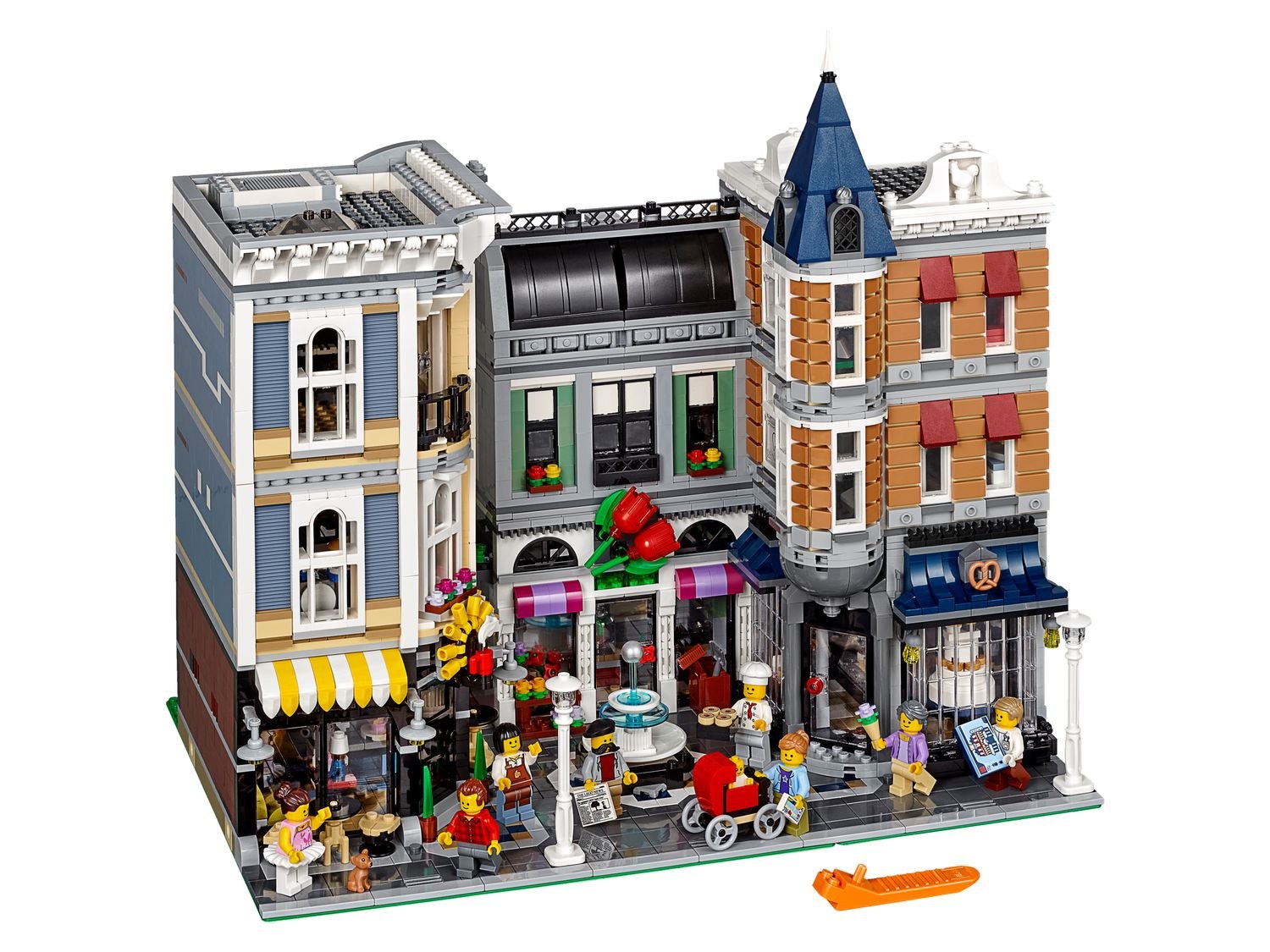
Look above the shop windows
Assembly Square 10255 rewards a particular kind of LEGO curiosity: asking what a familiar piece is doing in an unfamiliar place. LEGO’s official description points out garage doors used for windows and Technic excavator scoops incorporated into roofing. A part associated with one activity becomes a convincing piece of architecture.
This retrospective desk review considers the official set information and photography. It is not a hands-on build report. The attraction is the act of recognition that follows the first impression of a finished building.
An anniversary with room for ordinary life
LEGO developed Assembly Square to celebrate ten years of Modular Buildings. Its rooms include a bakery, florist, café, music shop, photography studio, dentist, dance studio and apartment. Eight minifigures and a baby figure populate the setting.
Those everyday activities provide a friendly context for the unusual construction choices. Our reading is that the parts work best when they first register as belonging to the building. The surprise arrives afterward, when a viewer realizes that a roof detail has another life in a very different kind of model. The technique supports the scene rather than interrupting it.
Try looking at a part without its name
For a builder planning an original facade, a useful exercise is to set aside the name attached to a favorite element. Turn it over, look at its outline and ask what repeated copies might suggest. A scoop can be considered as a curve; a panel can be considered as a surface with a rhythm.
This is a suggested design exercise, not a claim that every unusual connection will work. Make a small sample before incorporating the idea into a larger wall or roof. Check that the connection sits naturally, without bending parts or depending on pressure from neighboring pieces.
The goal need not be to hide the original object completely. Sometimes a recognizable part becomes a little joke for another builder to discover. A good place to begin is one architectural accent, rather than an entire building assembled around a clever piece that has nowhere comfortable to go.
A reference worth revisiting
LEGO’s set-specific instructions provide the route back to the original design when studying or rebuilding 10255. They are more useful than an exterior photograph for understanding how an unexpected element is supported.
For an owner returning to the set, that suggests a different way to enjoy it: choose one detail and follow its construction instead of trying to take in the whole square at once. Assembly Square can be admired as a neighborhood, but it can also be read as a collection of small answers to the question of what else a brick might become.
Reporting checked October 28, 2026. Plans and programs can change; follow the linked organizations for current information.