
LEGO’s Apollo 11 Lunar Lander makes the ground part of the mission
The small lunar scene in 10266 gives its spacecraft a setting, while the separating stages help explain why the lander has two distinct halves.
A spacecraft with somewhere to arrive
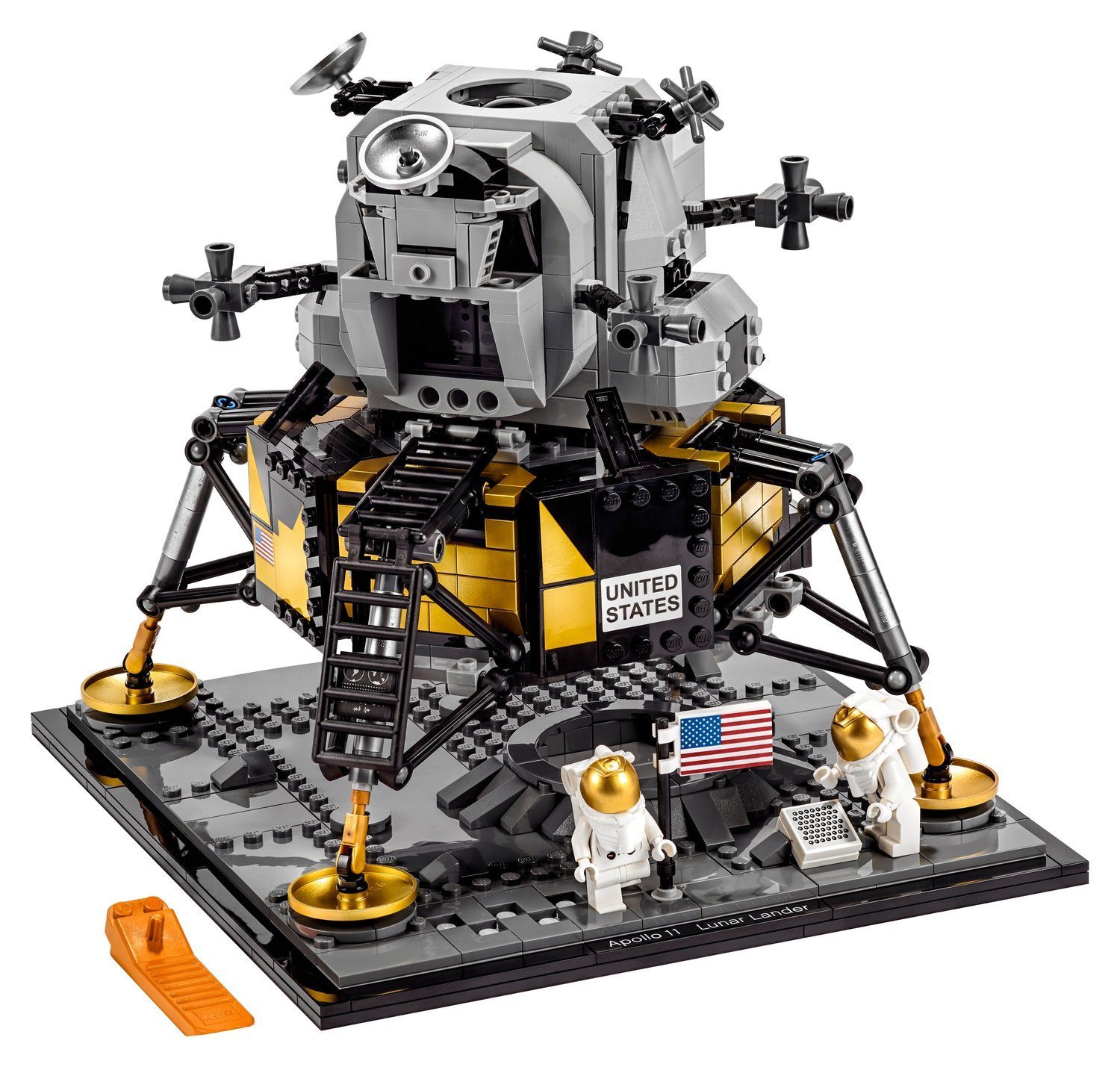
A patch of gray bricks changes the way LEGO’s Apollo 11 Lunar Lander is read. Set 10266 gives the spacecraft a lunar surface with a crater and footprints, placing its two astronaut minifigures within a recognizable scene. The base is more than a place to put the finished vehicle.
This is a retrospective desk review of LEGO’s official material and imagery, not a report from a personal build. Our assessment is that the ground provides the model’s strongest storytelling feature: it allows the viewer to look from the machine to the people and then to the marks they leave behind.
Two stages make the structure understandable
The model separates into ascent and descent stages. LEGO’s instruction booklet labels the corresponding areas of the lunar module, along with features including its docking tunnel, antennas, thruster assemblies and landing pads. That diagram gives a reader useful vocabulary before examining the finished construction.
A suggested way to share the model is to begin with its overall shape, then consult that diagram while identifying the two stages. Rather than treating every protruding piece as decoration, the viewer can start associating shapes with named components. It makes the instruction booklet a useful companion after the building sequence is finished.
This does not turn a LEGO model into an engineering simulator. It does make a complex subject approachable through a structure that can be inspected from several directions.
Look across the scene, not only upward
The official photograph shows a clear contrast between the gold-colored lower section and the largely gray upper structure. Below them, the quieter gray base gives the astronauts and flag space to stand out. Our visual reading is that the scene has three scales of attention: spacecraft, people and surface details.
For display, we would keep the front of the base unobstructed and position the model where someone can look slightly down onto it. A shelf viewed only from below would emphasize the lander while hiding much of the little landscape. The right position depends on the room, but the footprints deserve a chance to contribute.
That is also a useful idea for an original space build: decide what happened on the ground, then let a few carefully placed details tell that story.
An anniversary model worth revisiting
LEGO describes the 1,087-piece set as a collaboration with NASA marking the first Moon landing’s fiftieth anniversary. Its U.S. page lists it as retired as of October 24, 2026. This is a look back at an existing model, rather than a new release announcement.
For owners, revisiting the small surface scene could be as rewarding as examining the spacecraft itself. A large subject does not always need a large setting. Here, a compact base provides the point where a machine, two figures and a historical journey meet.
Reporting checked October 24, 2026. Plans and programs can change; follow the linked organizations for current information.