
Andrew Clark’s LEGO Flintstones kept the joke that tips the car
The fan designer’s 2019 account reveals how a familiar cartoon became a playable house—and why some details survived the redesign.
A joke with weight behind it
An oversized meal can be a more useful piece of storytelling than a town sign. In his February 2019 Brickset interview, fan designer Andrew Clark welcomed one surviving feature of his LEGO Flintstones proposal: ribs that tip the car. He had been less attached to the omitted Bedrock sign, which offered little play value.
The difference is visible in what the builder gets to do. A sign identifies a setting; a tipping car performs a scene. The meal has a role in the composition before it is attached, then changes the balance of the vehicle after it is added. A familiar cartoon joke becomes a small action with a beginning and a result. That is a particularly economical way to make a static display feel animated.
The house opens for its cast
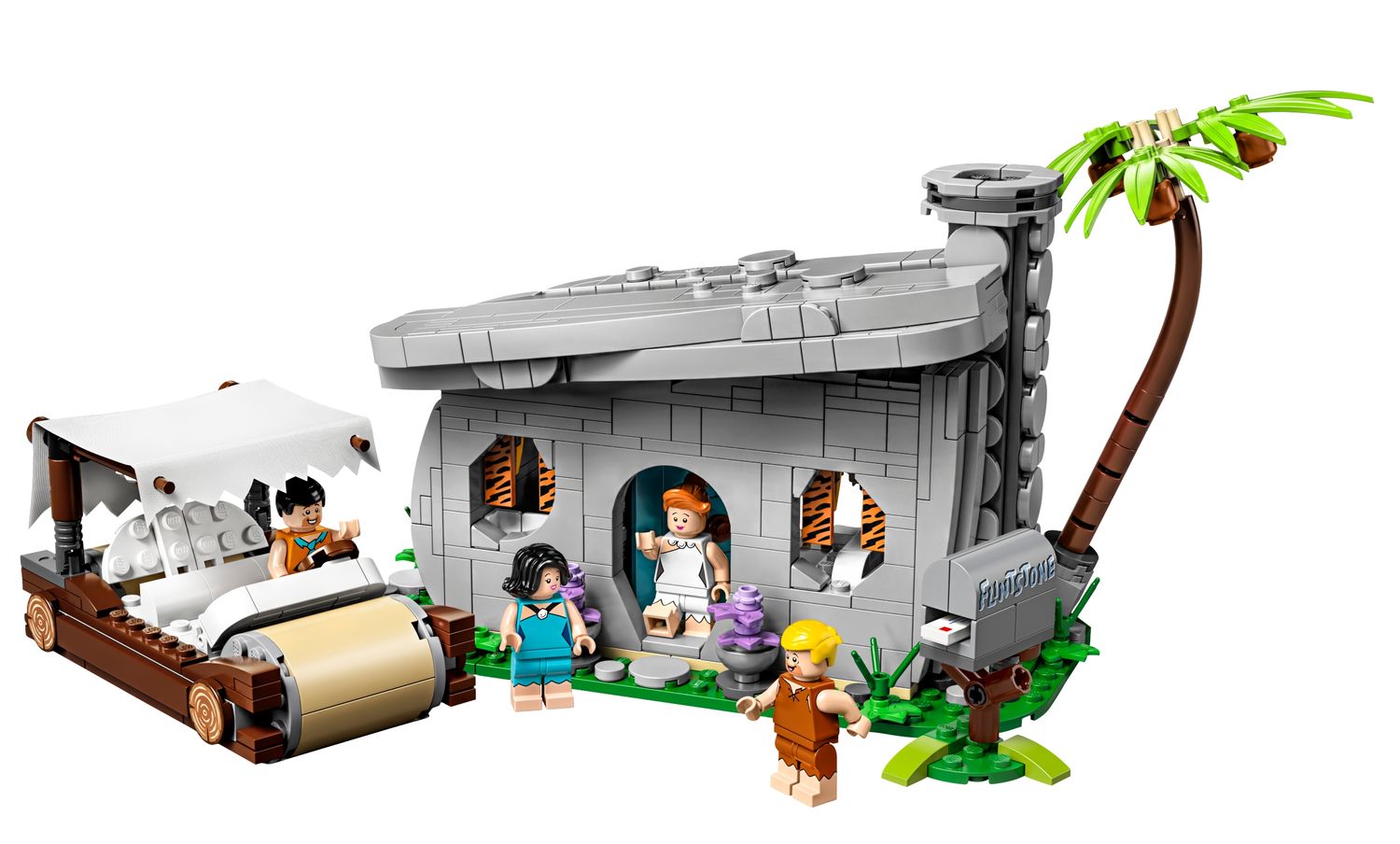
The finished model supplies Fred and Wilma Flintstone with Barney and Betty Rubble, plus a car that accommodates all four. The house has a removable roof, while its small domestic objects include a television, telephone, sofa and kitchen sink. LEGO’s product record lists 748 pieces and now marks the set as retired. This is a look back at the design, rather than an announcement of a new release.
Together, the rooms and car establish two scales of activity. The vehicle can carry the whole cast away; the house gives them individual places to stand or sit. Its ordinary furniture makes the stone-age joke legible without requiring a replica of every location from the series.
What the fan could still recognize
Clark was candid about the changes. He found his own house too visually busy in places and the final front wall a little too plain, while welcoming its improved stability and opening rear. He also preferred the finished car’s fabric canopy for its closer resemblance to the cartoon.
Those judgments make the collaboration more interesting than a simple before-and-after celebration. Fidelity does not sit in just one place. A cleaner wall can lose texture while a canopy gains it; a sign can vanish while a joke becomes playable. Here, the most memorable surviving detail is not a larger building or an additional character. It is the moment the family’s dinner outweighs the car.
Reporting checked November 4, 2026. Plans and programs can change; follow the linked organizations for current information.