
Andrea Lattanzio’s A-Frame Cabin began with a book and a sketch
The fan-designed woodland retreat shows how a strong outline can give a detailed LEGO scene its identity.
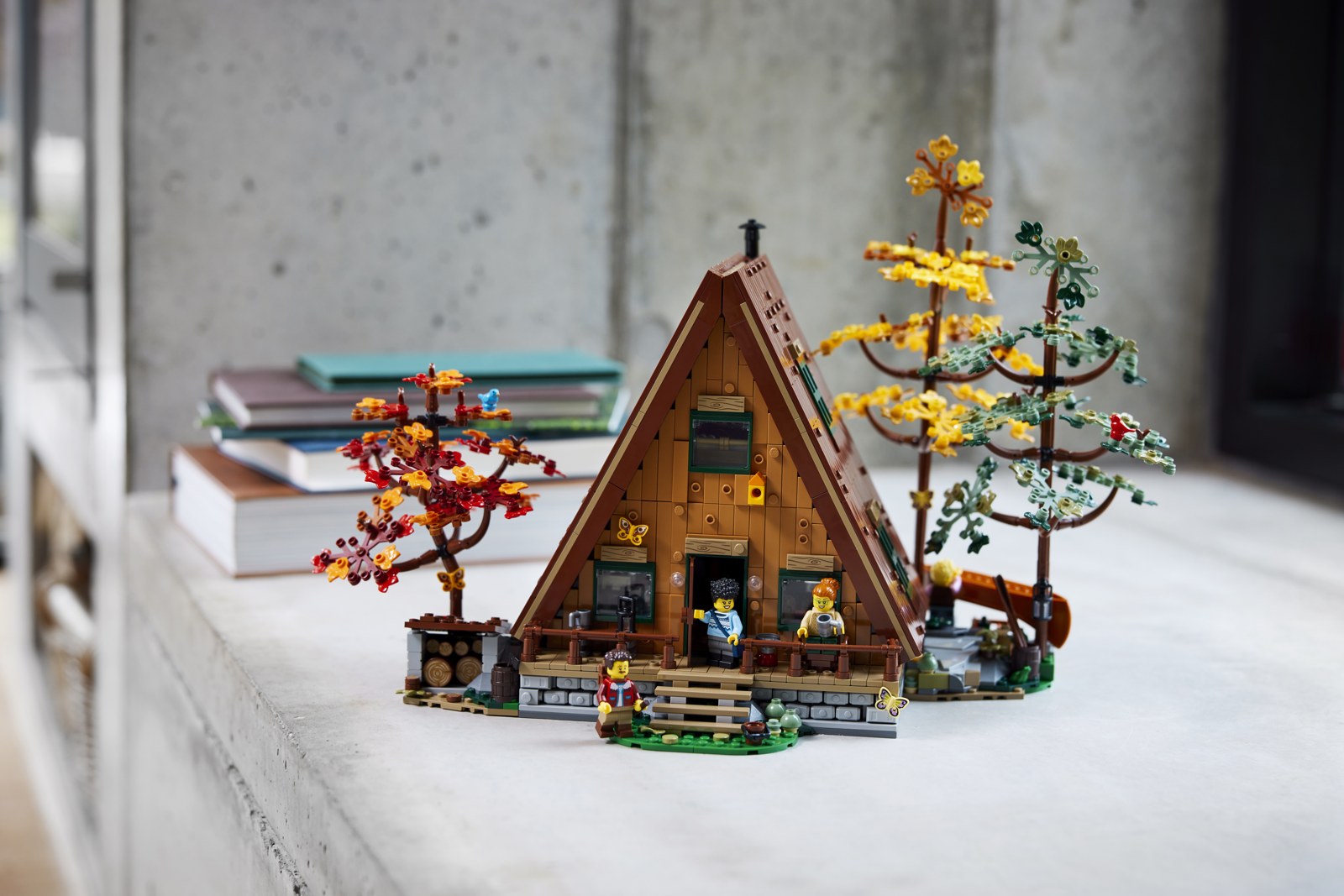
A house worth stopping to look at
Before it became LEGO Ideas 21338, Andrea Lattanzio’s A-frame began with an encounter on a page. In LEGO’s January 2023 announcement, the Italian fan designer describes finding the architectural form in a book of unusual houses, making a sketch and building his original design in about ten days.
That last detail describes the fan concept, not the time required to develop the retail set or a promise about how quickly someone else should build. The interesting part is the sequence: a recognizable structure caught his attention, and drawing helped him decide what he wanted to make before the bricks came out.
The roof establishes the whole scene
The official set arrived in February 2023 with 2,082 pieces. Its steep roof gives the cabin a silhouette that remains readable among the surrounding trees. LEGO’s product description explains that the roof detaches to reveal an upstairs bedroom and a lower floor containing living, study and kitchen spaces.
Our reading is that the contrast between those views is central to the model. Closed, it presents a simple geometric outline. Open, it becomes a collection of smaller domestic moments. The details can reward a closer look without having to compete with the outline that first draws the eye.
The woodland can change the composition
The three trees can stand separately or join into a small island, according to LEGO’s description. A canoe, four customizable minifigures and animal figures give the setting activity beyond the front door. Those separate landscape pieces make the cabin more than a fixed arrangement on a single base.
For an existing owner planning a display, it is worth choosing the viewing direction before placing every tree. A clear view of the entrance can make the scene welcoming; a partly hidden doorway can make it feel tucked into the woods. Neither arrangement requires adding another building. The same components can tell slightly different stories through their spacing.
A retrospective, with the fan idea still visible
LEGO’s US page marks the cabin as retired as of October 4, 2026. This is a look back at its design, not a new-release announcement or a hands-on review.
What remains useful about Lattanzio’s starting point is the attention given to one distinctive shape. A complex model does not need a complicated first idea. Here, the triangular outline provides a clear identity, while rooms, trees and small objects supply the reasons to keep looking. That balance makes the cabin an appealing example of how a fan’s architectural curiosity can become a setting other builders recognize and make their own.
Reporting checked October 4, 2026. Plans and programs can change; follow the linked organizations for current information.