
Alex Storozhuk’s Home Alone turns a favorite film into a building sequence
A retrospective on LEGO Ideas 21330, where a fan’s holiday memories became an opening house and a story told across 24 building bags.
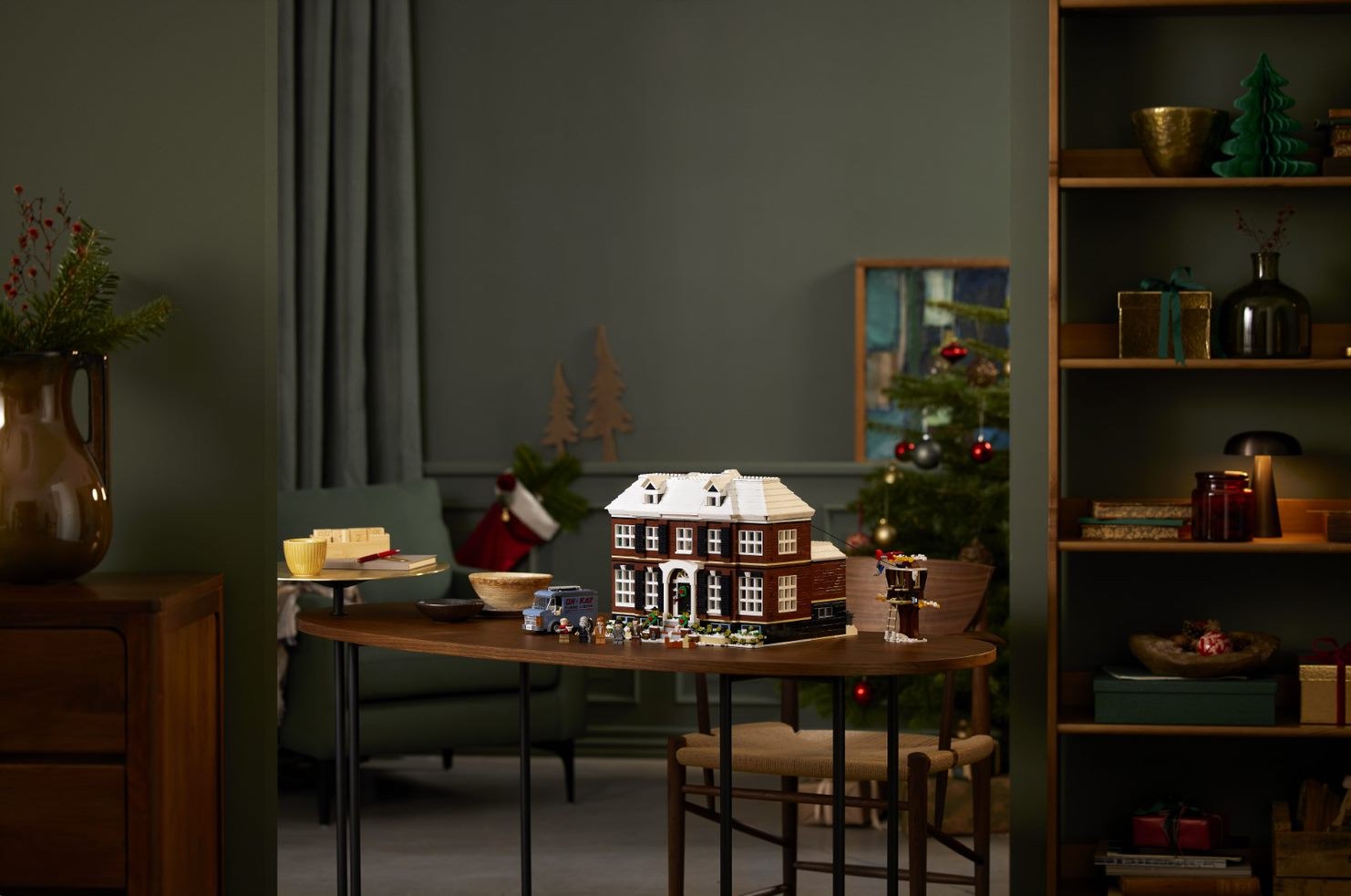
A holiday memory became the premise
Alex Storozhuk’s Home Alone project began with an attachment many movie fans will recognize: a film woven into the holidays. In LEGO’s October 2021 announcement, the Ukrainian fan designer described childhood memories associated with watching the comedy. His idea became LEGO Ideas 21330, released on November 1, 2021.
The retail design credits include Antica Bracanov and Enrique Belmonte Beixer. Bracanov specifically praised the attention Storozhuk had given to the rooms, colors and film details. That combination is central to the model’s appeal in our reading: the exterior provides immediate recognition, while the rooms give returning viewers reasons to linger.
The order of building carries the story
LEGO organized the set into 24 build bags, describing a progression from the burglars and their van to Kevin’s reunion with his mother. The announcement compares that structure with an Advent calendar. This was a deliberate part of the original 2021 release, rather than a newly announced seasonal feature.
That is an unusually direct relationship between instructions and storytelling. A film unfolds over time; a display model is normally encountered all at once. Here, the assembly order supplies an intermediate experience, letting different elements arrive before the whole house is complete. It offers an explanation for the sequence beyond simply working upward from the foundations.
The house has to open for the action
The official product page documents opening walls and roof sections, detachable floors, swinging paint cans, a light-brick furnace and a zip line connecting the attic with the tree house. Kevin, Kate, Harry, Marv and Marley are represented as minifigures.
Those access points do practical storytelling work. From the front, the model can read as a festive home. Open it, and the viewer can follow the situations associated with individual rooms. We have not built or tested this set, so this assessment concerns the documented layout and functions, not their reliability or ease of operation.
Why the creator’s choice still matters
A film-inspired model needs to decide what viewers should do after recognizing it. Storozhuk’s chosen house gives the finished set an answer: look inside, follow the rooms and revisit the action. The architecture becomes a way of organizing memories rather than simply a facade to reproduce.
For a display, that also creates a real choice. Keeping the house closed emphasizes its familiar appearance; leaving room to open it makes the smaller scenes accessible. The model’s identity survives either arrangement, but the experience changes when someone can explore beyond the front door.
Reporting checked October 13, 2026. Plans and programs can change; follow the linked organizations for current information.